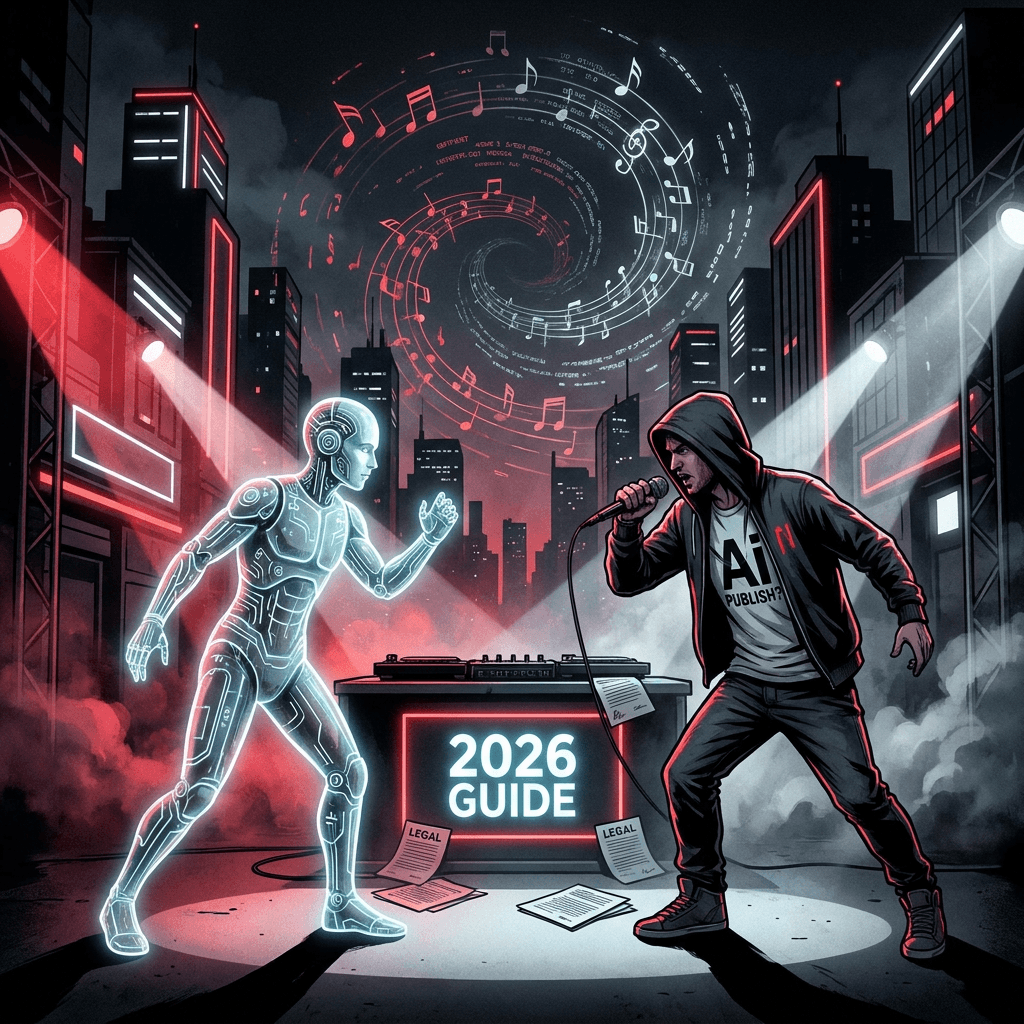
Can I Publish a Song Written by AI? the 2026 Guide
Yes, you can publish a song made with AI. But if the track is entirely AI-generated, you don't own copyright in the U.S., and if you want real protection your song needs meaningful human authorship and proper disclosure of the AI parts.
That's the part often overlooked while individuals are busy exporting the file, slapping on cover art, and thinking they're one upload away from glory. Uploading is easy. Ownership is where the legal knives come out.
If you're here, you probably have a track sitting in your laptop right now. Maybe it's a savage diss record. Maybe AI wrote the first draft of the bars, generated a hook, or spit out a beat nasty enough to make you grin like a villain. You're asking a simple question, can I publish a song written by AI? The honest answer is yes, but the smarter question is this: what exactly will you own after you publish it?
That distinction matters more for edgy tracks than almost any other genre. A love song usually picks one fight. A diss track can pick six before the second verse. So your risk isn't just copyright. It's also defamation, platform complaints, takedowns, impersonation issues, and the classic internet disease of someone stealing your file, claiming it, and making you prove your own work is yours.
The law isn't built for your creative chaos. Fine. We work with what we've got.
So You Cooked Up a Banger with an AI
You fed the machine a prompt. It gave you venom. You tweaked a few lines, bounced the session, and now you're staring at the upload button like it owes you money.
That feeling is normal. So is the confusion.
 A happy music producer pointing at a computer screen showing digital audio workstation software in his studio.
A lot of creators are in the same lane. In a survey summarized by Ari's Take, 87% of producers said they already use AI tools in their workflow, and 66% use AI creatively for songwriting, melodies, or vocals (Ari's Take coverage of AI tools in music workflows). So no, you're not some outlaw weirdo for using AI. You're just early enough to still get tripped by the rules.
Uploading isn't the same as owning
Spotify, YouTube, TikTok, and distributors care first about whether they'll accept the file under their rules. Copyright law cares about something else entirely. It asks who authored the expressive parts of the work.
Those are not the same question.
You can often upload a track that later turns out to be a legal paper tiger. It may stream. It may earn. It may even pop off. But if someone copies it, reposts it, remixes it, or jams your monetization with a dispute, you may discover your “ownership” is mostly vibes.
Practical rule: If your biggest contribution was typing a prompt, you probably created a release, not an asset.
Why diss tracks make this mess worse
Battle records live close to the line by design. That's the sport. But when AI gets involved, the line gets fuzzier.
A machine doesn't care whether a line sounds like satire, opinion, insult, or a factual accusation that can trigger a legal headache. It'll happily rhyme “fraud” with “facade” and let you sort out the lawsuit later. If you're publishing AI-assisted roast content, you need to think beyond “can it go live?” and ask:
- Did I add enough of myself to claim rights?
- Did the tool license allow commercial use?
- Did the lyrics make factual claims about a real person?
- Would I want to defend every line in front of a platform reviewer or a lawyer?
That's where the grown-up version of this conversation starts.
The Copyright Gold Rush Who Owns an AI Song
Here's the rule. In the U.S., copyright protects the human-authored parts of a song. Pure AI output doesn't get copyright protection by itself. That standard isn't some squishy rumor. The U.S. Copyright Office requires disclosure of AI-generated content and only registers works with substantial human authorship, and commentary notes that the Supreme Court declined to review the human-authorship requirement on March 2, 2026, leaving that rule standing (summary of U.S. AI song copyright rules and the March 2, 2026 development).
 A flowchart explaining the copyright status of AI generated songs based on the level of human authorship.
That's the law's blunt instrument. It doesn't care that your prompt was “genius.” It cares whether you authored protectable expression.
AI is the instrument, not the artist
Treat AI like a synthesizer with a law degree and no soul. The synth doesn't own the melody. The person making protectable creative choices does.
If you hit a button and the system spits out lyrics, melody, arrangement, and vocal, the machine did the writing. You may have initiated the process, but initiation is not authorship. Courts and the Copyright Office want human control over the expressive result, not just a request typed into a box.
A prompt is closer to giving directions than composing.
What counts as meaningful human authorship
Not every human touch counts. Renaming the track, trimming the intro, or changing two adjectives won't magically turn robot output into your private kingdom.
Human authorship usually gets stronger when you contribute expressive elements such as:
| Situation | Copyright position |
|---|---|
| AI generated the whole song from a prompt | Weak to none for the AI-only output |
| You rewrote lyrics and changed structure | Better argument for protection in those human-made parts |
| You performed original vocals or instruments | Stronger claim in those performances and expressive additions |
| You substantially rearranged and remixed the material | Better case than simple prompt use, but facts matter |
The system rewards creators who can show real creative control, not creators who can write the fanciest prompt.
That's why this isn't just a U.S. problem either. If your music travels internationally, legal treatment can vary. If you need a comparative read on another jurisdiction, Israel's AI copyright and liability laws are worth reviewing because they show how copyright and broader AI liability questions can split apart fast.
The ugly truth about ownership
Creators ask who owns an AI song as if there must be one clean winner. Sometimes the answer is uglier. Sometimes nobody owns the AI-only parts in the way you think. Sometimes you own only the slices you wrote, performed, or transformed.
That means a published AI-heavy track can be commercially alive but legally fragile. You can stream it. You might license parts of it depending on the platform terms. But enforcement gets shaky if the most recognizable bits came from the machine and not from you.
If you want rights, act like an author, not a prompt jockey.
From Robot Rhymes to Registered Rights
If you want to move from “I generated this” to “I can defend this,” you need to add your fingerprints all over the record. Not cosmetic fingerprints. Copyrightable ones.
A practical summary from Songbay puts it plainly: a simple text prompt doesn't grant creative control sufficient for authorship, and creators should add human elements such as original lyrics, live vocals, or substantial rearrangement to strengthen ownership (Songbay's practical breakdown of ownership for AI-assisted songs).
What to change so the track is actually yours
Start with the parts listeners remember. The hook. The verse structure. The lead vocal. The melodic turns. The beat drop. If the machine gave you all of that and you barely touched it, you're standing on ice.
Do this instead:
- Rewrite the lyrics in your own voice. Not line edits. Rewrite bars so they sound like you, your rhythm, your references, your pacing.
- Record your own vocal performance. Delivery is expression. Cadence matters. So does tone, ad-lib placement, and phrasing.
- Change the arrangement. Move sections, cut bridges, add breaks, build tension differently, alter transitions.
- Add new musical parts. Live guitar, keys, drums, bass, programmed percussion, or a new melody line can all matter.
- Remix with intent. If your remix changes the expressive character of the track, you're in stronger territory than someone who just normalized the volume.
Think like a producer, not a button-pusher
A common mistake is that a lot of creators get lazy. They treat AI output like a finished meal when it should be treated like raw ingredients.
Write over it. Re-perform it. Chop it up. Put your own hook on it. If the AI generated a savage opening line, cool. Keep the attitude, not the exact sentence. If it built a beat, rebuild enough of the musical identity that the final song reflects your choices, not just the model's default instincts.
A good test is simple: if another person used the same tool and a similar prompt, would your final version still stand apart because of what you added? If yes, you're moving in the right direction.
Registration strategy matters too
If you later apply for copyright registration in the U.S., accuracy matters. You don't pretend the AI parts came from your sacred genius. You identify the human-authored material and exclude the AI-only material from the claim.
That means your paperwork needs to match reality. If you wrote the second verse, performed the vocal, and rebuilt the arrangement, say that. If the chorus melody came straight from the generator, don't play cute. Cute gets expensive.
Your leverage comes from documented human creativity. Save drafts, stems, session files, lyric revisions, and vocal takes.
That paper trail can matter when someone challenges ownership later.
Read the Fine Print Before You Press Upload
Copyright is only one bouncer at the door. The other bouncer is the AI tool's own license. And that guy is usually wearing cheaper shoes and causing more problems.
You can create a track with an AI platform and still have limited rights to use it commercially. That means the platform may let you generate it, preview it, maybe even download it, while still restricting monetization, distribution, or branding use. If you ignore that license, your legal position gets weak fast.
 Screenshot from https://aidisstrackgenerator.com
Personal use versus commercial use
This is the split that wrecks people.
| License type | Usually lets you do | Usually does not let you do |
|---|---|---|
| Personal use | Generate, test, share privately, post casually depending on terms | Monetize broadly, distribute commercially, claim broader business rights |
| Commercial use | Release on stores and channels if permitted by the platform terms | Ignore restrictions on attribution, prohibited content, or ownership limits |
You need to read the exact terms for the tool you used. Not a summary from a Reddit comment written by a guy whose legal strategy is “lol send it.”
If you're using a lyrics generator or diss-track tool, check whether your plan includes commercial rights and whether the platform imposes restrictions on generated content, brand use, or output ownership. For creators trying to understand the copyright side of the process in plain English, this free guide on how to copyright songs is a useful companion to the licensing question.
One tool can have multiple legal lanes
A platform can offer free or lower-tier access for experimentation and separate plans for broader use. That doesn't mean the expensive plan magically gives you copyright in AI-only output. It means the company may give you permission under contract to use the output more broadly.
That's a different thing.
If you use DissTrack AI, for example, the practical question isn't “did the site generate bars?” It's “what rights does the plan give me, and what did I add before publishing?” The product can help generate roast lyrics and variations. Your legal footing still depends on the license and your human contribution afterward.
Before you upload, ask four rude questions:
- Can I monetize this exact output under the plan I chose?
- Do the terms require attribution or disclosure?
- Does the company reserve any rights in the generated output?
- Are there content restrictions for harassment, impersonation, or abusive use?
A lot of creators skip the last one because they confuse “edgy” with “immune.” Platforms don't.
Here's a useful demo if you want to see how this kind of AI music workflow looks in practice before you start publishing:
Contracts still matter when the robot helped
The dirty little secret of AI music is that contract law often decides what you may do long before copyright law decides what you own. If the tool's terms box you into personal use, your “but I made it” speech won't save you.
Read the license like someone trying to take your money wrote it. Because someone did.
Monetization Mayhem and Content ID Nightmares
You upload the song. It gets traction. Then a claim hits your video or track. Some stranger says your audio belongs to them.
Welcome to the dumbest corner of modern music law.
The risk isn't just whether your AI-assisted song can go live. It's whether you can enforce anything once other people touch it. As Rimon Law explains, there's a major difference between publishing a work and owning enforceable copyright, and AI material without sufficient human control can fall into the public domain, which creates platform risks for creators on places like YouTube (Rimon Law on the gap between publishing AI work and enforceable copyright).
The public domain trap
If the core of your track is AI-only output, the law may not give you exclusive rights in that portion. That creates an ugly opening.
Someone else can use the same or similar material. A platform system may not understand who really created what. Then the fight becomes administrative before it becomes legal, which is bad news because platform systems are not philosophers. They are forms with deadlines.
If money is involved, this can turn into a royalties mess fast. If you need a plain-English refresher on where revenue flows in the first place, this guide to music royalties is worth your time.
Why YouTube disputes get nasty
Content ID is built to match audio and automate claims. It's efficient. It's also not your friend.
When AI-generated material circulates widely, the chance of overlapping or duplicated outputs gets uglier. If your song contains chunks you can't clearly claim as human-authored expression, your dispute position weakens. You're left arguing around a system designed for cleaner ownership stories than “the robot wrote the skeleton but I swear the vibe is mine.”
Use an AI song checker before release if you want a practical pre-screen for obvious overlap issues and authorship red flags. It won't solve legal ownership by itself, but it can help you catch trouble before the platform does.
Uploading gets you distribution. Ownership gets you leverage when the platform bot sends you into the penalty box.
My blunt advice on monetization
Don't rush an AI-heavy track into monetized channels just because it sounds hard. Harden the rights first.
If the hook, beat identity, and vocal style came from the machine, go back and add more of yourself. Recut vocals. Rewrite the nastiest bars. Build a new arrangement. Create evidence that a human made the protectable parts. That's what gives you a fighting chance when revenue, claims, and copycats show up.
Your Pre-Flight Checklist Before Publishing
Before you release the track, stop acting like the upload button is a finish line. It's a checkpoint. If you miss something here, you don't get applause. You get cleanup work.
 A pre-flight checklist infographic for creators outlining steps for publishing AI-generated songs and content.
The checklist that saves headaches
Run this list before the file leaves your laptop:
- Check your human authorship. Assess your contribution. Did you write lyrics, record vocals, add instruments, or substantially reshape the arrangement?
- Review the tool terms. Confirm your plan allows the kind of release you want. Streaming, monetization, and brand use are not automatic.
- Document what AI did. Keep notes on which parts came from the generator and which parts you created afterward.
- Prepare for registration. If you register later, identify your human-authored material accurately.
- Check platform rules. Distributors and platforms may have content rules beyond copyright.
- Think about royalties and enforcement. Publishing is one lane. Getting paid and defending ownership is another.
- Save your proof. Drafts, stems, project files, exports, and dated lyric versions matter.
If you want a broader framework for reviewing terms and obligations before signing up for anything, Redline's guide for reviewing agreements is a solid sanity check.
The legal risk check for diss tracks
In this context, battle rappers and roast creators need to wake up.
Copyright might be the first issue, but it's not the one most likely to ruin your week. A diss track can trigger complaints for defamation, privacy violations, impersonation, harassment, or misuse of someone's name or likeness. The risk jumps when your lyrics sound like factual accusations instead of obvious opinion, parody, exaggeration, or insult.
Ask yourself:
| Question | Why it matters |
|---|---|
| Did I name a real person? | Real people can complain, threaten, or sue |
| Did I accuse them of actual misconduct? | Statements that sound factual are riskier than insults |
| Did I use private details? | Privacy claims can show up even when copyright doesn't |
| Did I use their voice, likeness, or identity cues? | That can trigger separate rights issues |
| Would a platform moderator read this as harassment? | Platform enforcement can happen before any court gets involved |
A smart diss record punches with style, not fake factual allegations. “You're corny” is one lane. “You committed specific crimes” is another lane, and that lane has lawyers in it.
Final go or no-go decision
If your answer to “can I publish a song written by AI” is based only on whether a file can be uploaded, you're asking a small question. Ask the bigger one.
Can you publish it and defend it and monetize it and survive a dispute?
If the answer is shaky, keep cooking. Don't release a legal rough draft just because the bars made your friends scream in the group chat.
For the actual distribution step after your rights and risk review, this walkthrough on how to add songs to Spotify can help you handle the platform side cleanly.
If you want a fast way to draft roast lyrics before you rewrite, record, and legal-check them, DissTrack AI is one option for generating structured diss verses and variations. Just use it the smart way. Treat the output as raw material, add your own authorship, read the license, and make sure your best punchlines stay funny instead of becoming evidence.