7 Knock Knock Jokes with Song Lyrics to Win Any Roast
You're in the circle, the room's buzzing, and somebody just aimed a weak bar at you like it was meant to finish the job. That's the exact moment knock knock jokes with song lyrics stop being playground filler and start acting like a clean-up crew. The format gives you timing, repetition, and a built-in reveal, which is why it works so well for punchlines that need to land fast and hard, especially in short-form settings like crowd banter or meme clips. A tight five-line knock-knock structure gives the joke a predictable scaffold, and lyric-based versions lean on musical recognition instead of just a plain verbal pun, which makes the payoff feel sharper when the audience catches it. RemotionAI's video generator for lyrics fits the same logic, because lyric-driven comedy lives or dies on pacing, rhythm, and the visual confidence behind the bit.
1. The Eminem Reference Knock-Knock
Eminem-style knock-knock material works because it borrows the pressure and precision people expect from his rhyme schemes. The joke doesn't need to quote a whole verse to feel mean, it needs to sound like it's building toward a technical payoff, then hit with a line that twists the setup into a roast.
 A professional studio microphone with a pop filter in front of soundproof foam acoustic wall panels.
Why the Eminem angle lands
Use internal rhyme, misdirection, and a setup that sounds serious before it turns ridiculous. That's the same energy that makes battle rappers grin before the punch even lands. If the crowd knows the reference, the joke feels denser than a standard knock-knock. If they don't, you still have a clean roast because the structure carries the timing.
Practical rule: keep the setup short and let the final word do the heavy lifting. The punchline should arrive immediately after the repeated cue, because that's where the joke earns its snap.
The best versions feel like they could sit next to a boom-bap verse without embarrassing themselves. A line like “Stan” can work as a setup because it sounds like a name, then flips into a jab about obsession, delusion, or being hopelessly outclassed. If you're generating support bars with a tool like DissTrack AI's Eminem AI style approach, lean into layered wordplay, not imitation for imitation's sake.
A weak Eminem joke tries too hard to be clever and forgets to be funny. A strong one sounds effortless, even though the mechanics are doing parkour behind the curtain.
2. The West Coast G-Funk Knock-Knock
West Coast lyric jokes move at a different pace. They're smoother, cooler, and a little smug, which is exactly why they hit when you want the roast to feel like it's cruising past the target instead of sprinting at them.
A lowrider vibe works here because the humor depends on laid-back confidence. You're not shouting the punchline, you're letting it roll out like a verse that knows it already won. That attitude pairs naturally with references to Dr. Dre, Snoop Dogg, and Warren G, because the audience hears the style before you finish the joke.
Delivery makes the joke
Keep the cadence relaxed, almost lazy, then puncture the room with the final word. The contrast is the punch. If you rush West Coast humor, you lose the swagger that sells the bit in the first place.
- Use car and lifestyle imagery: lowriders, chrome, sunny streets, and long drives give the joke a visual frame.
- Keep the insult polished: the joke should feel cool enough to quote, even while it's dragging somebody.
- Let the groove breathe: a slower setup can make the punchline feel more humiliating because the room has time to anticipate the fall.
That's where West Coast material differs from more frantic styles. It doesn't need to sound aggressive to sting. It needs to sound like it already knows your opponent is behind the curve.
The biggest mistake is forcing West Coast slang like you're reading it off a costume rack. The joke lands when the delivery sounds natural, not when it sounds like you borrowed a whole personality for one minute.
3. The Trap Music Double-Entendre Knock-Knock
Trap-inspired knock-knock jokes are built for speed. The rhythm is faster, the flex language is sharper, and the joke usually works best when the setup sounds like it's about status, money, or image before collapsing into a roast about the opposite.
When trap energy works, it feels current without getting sloppy. The audience should hear the glossy confidence of modern rap, then realize the joke is using that confidence as a knife. That's why double meanings help. A word like drip, trap, or flex can frame the setup and the insult at the same time.
Keep the flex culture in check
The trap lane rewards specificity, but it punishes over-explaining. A joke that explains the reference has already lost half its edge. You want the audience to catch the vibe first, then laugh at the turn.
The best trap joke sounds expensive for one second, then reveals it's talking about somebody who can't afford the illusion.
That's also why short-form delivery matters here. Trap jokes are the kind you can fire off in a clip, a livestream, or a group chat and still keep the bounce. If you're using DissTrack AI's song lyric structure guidance, treat the knock-knock frame like a beat drop, not a sentence exercise.
Current slang can make the joke feel alive, but it ages fast. The safer play is to keep the structural rhythm modern and the cultural references broad enough to survive beyond this week's feed. Otherwise the joke starts reading like a screenshot from a trend graveyard.
4. The Battle Rap Aggressive Knock-Knock
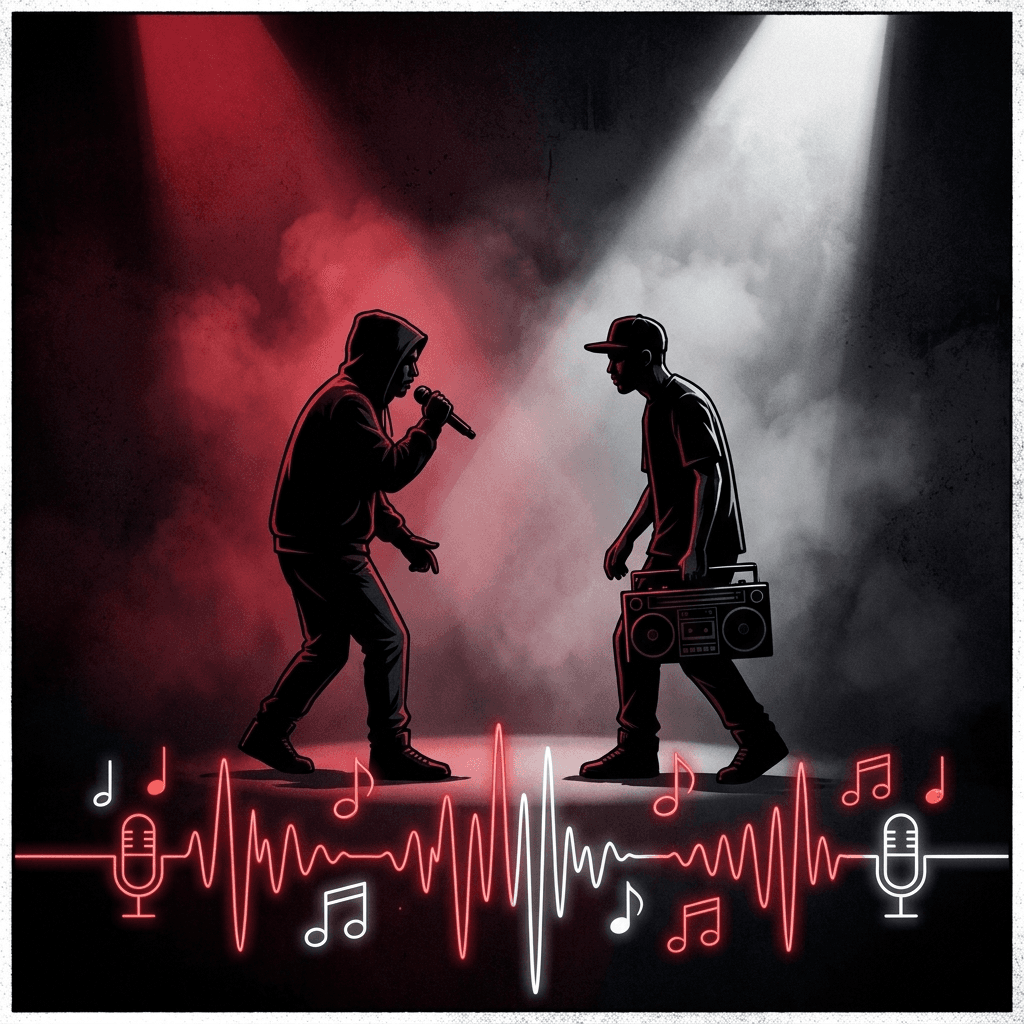
Battle rap knock-knock jokes work when the audience can feel the pressure. You're not just telling a joke, you're staging a miniature face-off with setup, rebuttal energy, and a finish that sounds like it belongs on a crowded stage with a mic in one hand and a grudge in the other.
 Two rap performers stand face to face on stage during an intense hip-hop battle rap competition.
Build the tension like a round
The structure should feel confrontational even before the punchline arrives. Use a setup that sounds like a challenge, then make the final line land like a verdict. That's what battle rap fans expect, and it's why this style translates so well to roast battles and live events.
You also need boundaries. Hard disses are fine in a performance context, but the joke has to stay in comedy territory. If the target feels threatened instead of roasted, the room goes cold and the bit turns from funny to awkward fast.
Boundary check: aim at ego, style, and credibility, not real-world harm. The audience should laugh at the cruelty, not worry about the fallout.
If you're building material with DissTrack AI's battle rap style approach, stack the lines so the joke escalates. A setup, then a counter-punch, then a closer. That makes the joke feel like it's winning rounds instead of just making one isolated hit.
Battle rap humor lives on conviction. Half-speed delivery kills it. Flat voice kills it worse. The crowd needs to believe you'd say the same line in a real cipher, even if the actual line is just a murderous little joke in a tuxedo.
The trick is to sound mean without sounding lost. If the crowd can't tell where the joke ends and the performance begins, you've done the job right.
5. The UK Grime Rapid-Fire Knock-Knock
Grime knock-knock jokes hit differently because the tempo is doing part of the joke's work. The delivery needs to feel fast, clipped, and alert, like the punchline is jumping the queue and daring anyone to keep up.
That speed gives the joke a different shape from West Coast cool or trap swagger. Grime is more urgent. It sounds like somebody's already halfway through the insult before the listener has finished processing the setup. That's why Wiley, Skepta, and Stormzy-style references work best when the joke is snappy and the diction is clean.
Speed is the weapon
Don't overstuff the line. A grime joke that tries to cram in too many references starts tripping over itself. The best ones sound like they could be shouted across a clash and still be understood by the second listen.
Use London-specific texture if the crowd earns it, but don't fake the voice. Grime audiences can hear cosplay from a mile away, and the joke loses credibility the moment the cadence sounds rented. If you're pairing the joke with generated support bars, a UK grime style tag in DissTrack AI can help you keep the momentum without flattening the character.
- Keep consonants sharp: hard stops make the rhythm punchier.
- Avoid over-explaining slang: the joke needs motion, not translation.
- Make the final word snap: the last beat should feel like a door slam.
Grime works best when the joke sounds like it's already in motion. You don't tell the room a joke and then rev it. You arrive at speed, hit the target, and keep moving.
That's what makes it dangerous in a fun way. It feels less like a setup and more like a verbal drive-by with a punchline attached.
6. The Drill Music Menacing Knock-Knock
Drill-inspired knock-knock jokes need restraint, which sounds backwards until you try one. The genre's dark tone gives you instant atmosphere, but if you push too far, the bit stops reading as a roast and starts feeling like a threat, which kills the comedy immediately.
The sweet spot is menace used for emphasis, not actual intimidation. Keep the language focused on confidence, credibility, or image collapsing under pressure. That preserves the drill mood without crossing into uglier territory. It also makes the joke easier to share at parties, streams, and roast clips where people want edge, not alarm.
Minimalism wins here
Drill production is often stark, and the joke should feel just as lean. Short setup, tight pause, hard finish. If you need extra texture, use silence as part of the punch. The pause can create more tension than another adjective ever will.
A drill joke works when the room feels the shadow before the laugh arrives.
If you're using DissTrack AI's drill style approach, keep the savagery calibrated. The strongest drill jokes target a person's weak bars, fake confidence, or borrowed persona, not anything that sounds like a real-world threat. That distinction matters because comedy needs room to breathe after the hit.
This style also benefits from minimal backing music if you're recording it. Too much production muddies the joke. A hard, stripped-down beat lets the words carry the weight and keeps the focus on the turn.
Drill humor is a knife, not a chainsaw. Use it with control, and it cuts clean. Swing wild, and it just makes noise.
7. The Emo Rap Vulnerable Knock-Knock
Emo rap knock-knock jokes land because they mix confession with cruelty. The emotional honesty softens the room just enough for the punchline to feel more personal, and that contrast is what gives the joke its sting.
This style draws power from vulnerability, which means the joke can't be all contempt. It needs a little self-awareness, maybe even a crack in the armor. That's what makes the final line feel more human than a plain insult. Artists in the emo rap lane, including Lil Peep, Juice WRLD, and XXXTentacion, gave this style a palette that blends sadness, irony, and directness.
Use vulnerability as bait
The mistake is turning emo rap into melodrama. The joke should feel emotionally aware, not emotionally tangled. Keep the language intimate, then make the punchline land with enough precision to show the speaker still knows exactly what they're doing.
That balance works especially well when the crowd expects pure aggression and gets a softer entry point instead. The surprise alone gives the joke extra lift. It's the rare roast that can make people laugh and wince in the same breath.
- Start with a feeling: insecurity, doubt, loneliness, or regret creates texture.
- Shift to the jab cleanly: don't linger in the sadness so long that the joke forgets to hit.
- Keep the wording sharp: emotional does not mean vague.
If you're producing a clip or building supporting verses, a moody backing track helps, but it should stay in the background. The voice and the punchline still have to dominate. Emo rap works best when the audience feels a little seen before they get verbally ambushed.
Used sparingly, this style is brutal. Used too often, it gets heavy and predictable. Save it for the moment when the crowd thinks they know your angle, then flip the room with a line that hurts twice because it sounds honest.
7-Style Knock-Knock Lyrics Comparison
| Style | 🔄 Implementation Complexity | ⚡ Resource Requirements | ⭐ Effectiveness / Quality | 📊 Expected Outcomes | 💡 Ideal Use Cases |
|---|---|---|---|---|---|
| The Eminem Reference Knock-Knock | 🔄 Medium, multi‑syllabic rhyme + callbacks | ⚡ Low–Med, needs lyric familiarity or lookup | ⭐ High for rap‑literate audiences; niche otherwise | 📊 Strong viral/nostalgia engagement; targeted reach | 💡 Nostalgia roasts, hip‑hop audiences, personalized punchlines |
| The West Coast G‑Funk Knock-Knock | 🔄 Medium, tempo & slang must feel natural | ⚡ Low, cultural references & delivery style | ⭐ Medium‑High with nostalgic/older fans | 📊 Shareable, party‑friendly; broad social appeal | 💡 Party openers, West Coast style tags, casual roasts |
| The Trap Music Double‑Entendre Knock-Knock | 🔄 Low–Med, fast wordplay and puns | ⚡ Med, current slang and trend tracking | ⭐ High among Gen Z / short‑form audiences | 📊 High virality on TikTok/IG; quickly dated if stale | 💡 Short videos, trendable roasts, frequent updates |
| The Battle Rap Aggressive Knock-Knock | 🔄 High, multi‑turn structure, rebuttals | ⚡ High, deep battle‑rap knowledge & calibration | ⭐ Very High for battle communities; risky elsewhere | 📊 Strong engagement but potential controversy | 💡 Competitive battles, roast wars, experienced performers |
| The UK Grime Rapid‑Fire Knock-Knock | 🔄 High, cadence and rapid internal rhymes | ⚡ Med, authentic UK slang & cultural context | ⭐ High with UK/international grime fans | 📊 Distinctive style; growing international reach | 💡 UK‑targeted content, grime channels, rapid delivery clips |
| The Drill Music Menacing Knock‑Knock | 🔄 Med, tone calibration to avoid crossing lines | ⚡ Med–High, sensitivity checks & audience vetting | ⭐ High shock value; polarizing quality | 📊 Memorable impact but risk of alienation/legal issues | 💡 Advanced users, calibrated shock‑roasts only |
| The Emo Rap Vulnerable Knock‑Knock | 🔄 Medium, balance vulnerability with punch | ⚡ Low–Med, emotional nuance and tasteful framing | ⭐ High emotional resonance when handled well | 📊 Deep audience connection; niche but memorable | 💡 Surprise emotional twist, Gen Z audiences, sparing use |
Your Turn to Write the Kill Shot
You've got the blueprints now. Eminem brings technical misdirection, West Coast brings cool swagger, trap brings speed and flex culture, battle rap brings pressure, grime brings urgency, drill brings menace, and emo rap brings vulnerability with a blade hidden in it. The objective isn't memorizing jokes; it's understanding why the joke works so you can build one that fits your voice, your crowd, and your moment.
The five-line knock-knock frame matters because it gives you timing you can trust. That structure stays recognizable even when you bend it with lyric fragments, parody hooks, or a quote-based punchline. When the audience hears the repeated cue, they know the joke is charging, and that expectation is exactly what lets you twist the landing. If the room doesn't recognize the song reference, the safest move is to make the final line funny on its own, so the joke still pays off even without the musical key. That's the difference between a gimmick and a weapon.
Sharp performers don't just chase the funniest line, they manage the room. They know when to pause, when to speed up, and when to keep the reference broad enough for the whole crowd to catch. If you want supporting bars, style variations, or a full roast built around one of these lanes, use a tool like DissTrack AI to generate the framework, then edit it until it sounds like you. The goal is simple, make the joke hit fast, sound confident, and leave the other person standing there like they just got body-slammed by a hook.
A CTA for DissTrack AI.