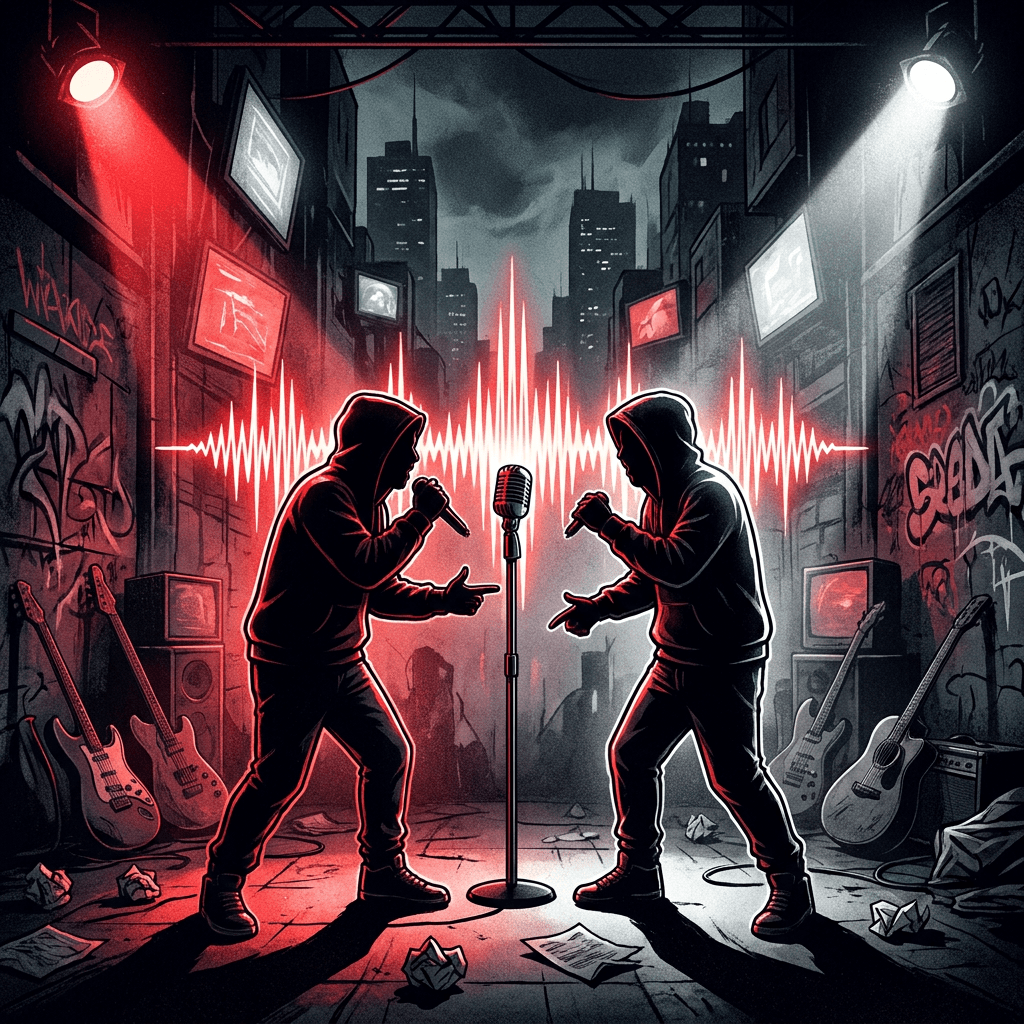
The One Man One Jar Song: An Unfiltered Guide
Why does searching for the One Man One Jar song feel like opening a cabinet where every shelf is mislabeled?
You type in a music question and get a jumble of reaction clips, meme reposts, warnings, AI uploads, and vague internet folklore. Some results act like it's a famous song. Some treat it as a cursed relic from the early web. Some avoid explaining it at all, which somehow makes it feel worse.
That confusion is the central point. Search results around this phrase are fragmented, and many of them blur together the original graphic video, later parody songs, and newer platform releases, leaving people without a clean explanation of what the term means or how it changed over time, as shown by a documentary-style YouTube result that highlights the muddled situation around the phrase (overview of the search confusion around "One Man, One Jar").
So let's clear the fog without reenacting the trauma. You don't need to watch anything disgusting to understand the reference. You just need a timeline, a little internet anthropology, and a firm distinction between the original shock video, the parody-song era, and the later official music-platform version.
So You Googled the One Man One Jar Song
The typical search for this phrase isn't for building a road trip playlist. It occurs because a reference was heard, a joke seen, or a title stumbled upon on Spotify or TikTok, leading to the thought, "Wait, is this a real song, or is the internet doing that thing again?"
The answer is. Yes, but only if you separate the layers.
Why people get confused
The phrase One Man One Jar points to more than one object at once:
- The original source material was a graphic shock video from the late 2000s.
- The meme layer turned that notoriety into jokes, remixes, and parody lyrics.
- The music layer includes later tracks that use the title as a reference point rather than as a formal continuation of one canonical song.
That's why a simple search feels so slippery. You're not looking up one stable artifact. You're looking up a phrase that migrated across formats.
The safest way to understand this meme is to treat it like folklore. The title stayed recognizable while the meaning shifted depending on the platform.
What you're actually trying to identify
When people ask about the One Man One Jar song, they usually mean one of three things:
| What they mean | What it actually is |
|---|---|
| "That old gross internet song" | A loose family of parody tracks inspired by the original viral clip |
| "Is there an official release?" | A later formally released track carrying the same title |
| "Why do people still reference this?" | A long-running internet in-joke tied to shock culture and meme memory |
Internet culture, in its more unusual manifestations, can prove surprisingly useful. A title can outlive its original context. It can become shorthand. Then somebody can release a track with that shorthand as the title, and suddenly an old taboo reference looks like a searchable music entry.
The Infamous Origin Story You Can't Unsee
Before there was any song worth discussing, there was a video. It came with the kind of reputation early internet users passed around in the same tone they'd use for haunted basements and cursed flash games.
Content warning applies here. The original clip is graphic, sexual, and physically disturbing. You don't need the explicit details to understand why it spread.
The upload that turned into internet lore
The clip first appeared on YouTube in 2008, and it drew attention because it showed a man performing a dangerous act with a glass jar. It wasn't famous because it was artistic, clever, or even especially novel by meme standards. It became notorious because it crossed a boundary many viewers didn't expect to encounter in ordinary browsing.
Within its first year, the original clip gained over 10 million views, and it triggered parodies, including a satirical 2009 song by anonymous creators that was never officially registered or charted, according to the verified background provided in this brief.
 A four-step infographic showing the evolution of a viral shock video's influence on early internet culture.
Why it spread so fast
Early web culture had a strong appetite for "don't click this" content. People shared shocking material partly to test one another and partly to perform internet toughness. If you recognized the reference, you signaled that you'd survived a certain era of online initiation rituals.
That made the clip more than a video. It became a social password.
A few things pushed it into legend status:
- Taboo intensity made people talk about it even when they refused to link it.
- Forum and chatroom sharing gave it the structure of a dare.
- Reaction culture turned viewers' disgust into content of its own.
- Name recognition made the title travel farther than the clip itself.
The meme was bigger than the footage
Many notorious internet artifacts fade because they depend on one specific file or one platform. This one stuck because the title itself became portable. People could reference it in jokes, reaction videos, or warnings without replaying the original.
Practical rule: The phrase survived because users kept circulating the idea of the clip, not just the clip.
That distinction matters. The phrase became a marker of being "extremely online." For many people, knowing what it refers to became more important than seeing it.
From Gross-Out Video to Satirical Anthem
The internet rarely processes discomfort with silence. It turns it into jokes, edits, remixes, and songs with suspiciously cheerful choruses.
That's what happened here. The One Man One Jar song wasn't born as a polished, industry-backed single. It emerged from the internet's oldest coping mechanism: make something awful catchy, then laugh at the fact that it exists.
 A woman wearing glasses typing on a keyboard while looking intently at her computer screen.
How parody songs usually work
Most meme songs in this lane follow a familiar recipe. The creator takes source material people already know, then wraps it in a tune that feels wildly out of proportion to the original event. The contrast is the joke.
With One Man One Jar, parody versions often leaned on:
-
Narration disguised as comedy
The lyrics usually retell or allude to the infamous event, but in an exaggerated, sing-song style. -
Upbeat sound against ugly subject matter
A bright melody makes the reference feel absurd instead of merely revolting. -
Audience participation
People who know the meme feel included. People who don't know it feel confused, which is also part of the meme's engine. -
Anonymity
These tracks were often uploaded by users with no formal artist identity, which fit the chaotic style of the era.
Why songs were the perfect format
A parody song does something a reaction clip can't. It compresses the reference into a repeatable form. You can quote a line, borrow a melody, or use the title as shorthand without showing the disturbing footage.
That's why meme songs often become the safer layer of the joke. They let people be "in on it" while keeping one step removed from the source. If you're interested in how weird internet audio gets reshaped into musical form more broadly, this look at turning speech into song offers a useful parallel.
Here's an example of the meme-song ecosystem in motion:
Important clarification
There isn't one universally recognized, historically canonical One Man One Jar song from the old meme era. That's where many articles go sideways. They write as if there was a singular famous track with a stable artist credit and a clean release history.
There wasn't. The older "song" identity is better understood as a cluster of satirical derivatives. The title traveled. The joke traveled. Specific uploads came and went.
That difference is small on the surface and huge in practice. It explains why people remember "the song" while struggling to identify a single definitive version.
The Meme Evolves Official Releases in 2026
The strangest part of this story isn't the original meme. It's what happened later, when the title started showing up in mainstream music-discovery systems instead of only in shady reposts and half-remembered forum jokes.
A major shift came when "One Man, One Jar" appeared as a 2024 single by Lil Yass and Jorsh Groban on Spotify, which means the title entered a formal release environment rather than staying an informal meme upload (Spotify listing for "One Man, One Jar").
What changed when the title hit Spotify
Once a title is listed on Spotify and indexed in music-discovery systems, it stops being only folklore. It becomes a track object inside the platform economy. That doesn't erase the meme history, but it does alter how audiences encounter it.
Someone can now discover the phrase in a context that looks normal:
- a streaming app
- a search bar
- a playlist share
- a social snippet discussing the release
That changes the cultural posture of the joke. The meme doesn't need an underground forum anymore. It can sit next to ordinary singles, which is both funny and a little unsettling.
 A comparison chart showing the evolution of a shock meme into a satirical song format.
Old meme song versus formal release
| Trait | Older parody versions | Later platform release |
|---|---|---|
| Identity | Anonymous or loosely attributed | Artist-credited |
| Distribution | Reuploads, shares, meme circulation | Streaming platform listing |
| Function | In-joke and shock parody | Searchable standalone track |
| Context | Early web subculture | Creator-era music ecosystem |
This is part of a broader internet pattern. Memes don't just die. They reformat. A phrase starts as taboo folklore, then becomes an ironic title, then gets packaged into a discoverable music object.
If you're curious how artists think about discoverability once a track is on-platform, this practical guide to Spotify growth and profile strategy from Taap.bio gives useful context for the mainstream side of that shift.
Why the year label can be confusing
The heading here says "Official Releases in 2026," but the verified release fact available is for 2024, not 2026. So the cleaner takeaway is this: by the mid-2020s, the meme had clearly moved into official-platform territory. That's the meaningful change.
The title now exists in two different cultural registers at once. It still points backward to a notorious shock meme, but it also functions as a modern music release people can encounter without any knowledge of the original clip.
Decoding the Meme's Bizarre Lasting Impact
People still reference this meme for the same reason they still reference old jump scares, cursed chain emails, and infamous forum dares. It isn't because the original material remains artistically important. It's because the memory of it became a cultural badge.
The phrase has cross-medium cultural persistence, with TikTok posts and documentary-style YouTube videos framing One Man, One Jar as part of the broader "one guy one jar" meme phenomenon, with the song acting as a music-layered derivative (TikTok example of the phrase's modern meme framing).
 An infographic titled The Enduring Echoes of Internet Infamy exploring the cultural impact of the viral meme.
Why the meme outlived the moment
The staying power comes from several overlapping forces.
Shared recognition
People don't need to revisit the source. They just need to recognize the title. That recognition creates instant social sorting. If you get the reference, you're in one audience. If you don't, you're in another.
Reaction as content
Modern platforms love secondhand engagement. A user can make a retrospective, a joke, a warning, or a "you had to be there" post without reproducing the original material. The meme keeps moving because reaction content is easier to circulate than the original taboo object.
Safer retellings
As the web matured, more users started looking for explanation rather than exposure. That's one reason broader guides to viral mechanics matter. A framework for how content spreads on social media helps explain why notorious references keep resurfacing in softer, more indirect formats.
Dark memes often survive by becoming less explicit and more referential.
What it means now
Today, the phrase functions less like a live shock event and more like internet folklore shorthand. It signals an era when online culture rewarded boundary-testing, but it also shows how later platforms sand down rough edges and turn them into commentary.
A quick way to think about the meme's evolution:
- Then it was a dare.
- Later it was a punchline.
- Now it's a reference object.
That last phase is why younger audiences keep running into the term even if they never touched the original corners of the web where it spread. They meet it through retrospectives, jokes, and music metadata. The meme survives because the reference became cleaner to pass around than the source ever was.
A Creator's Guide to Referencing Controversial Memes
If you're a rapper, comedian, streamer, or meme-page admin, controversial references can make a line hit hard or fall flat immediately. One Man One Jar is a perfect test case because almost nobody wants a vivid explanation, but plenty of people recognize a light-touch allusion.
That means the smartest creative move isn't to describe the source. It's to use the title as a trigger for shared memory, then move on before the room gets uncomfortable.
Use allusion, not reenactment
A reference works when the audience fills in the blank. If you overexplain it, you kill the joke and make people wish they hadn't clicked.
Try this decision filter before using any notorious meme:
- If the punchline needs graphic detail, cut it. The reference is doing too little work.
- If the title alone lands, keep it short.
- If your audience spans age groups or platforms, assume some people only know the safer retrospective version.
- If the joke can be swapped for a cleaner reference, test both versions and choose the one with better replay value.
Creative test: If the line makes sense without forcing the audience to picture the original clip, you're probably using the meme well.
Match the reference to the room
A private roast among longtime internet users can handle a different level of darkness than a branded TikTok or a public diss track. Context decides whether the line feels sly or reckless.
Here's a simple comparison:
| Context | Safer move | Riskier move |
|---|---|---|
| Battle rap among friends | Brief title drop | Graphic callback |
| YouTube commentary | Historical reference | Detailed recap |
| TikTok comedy | Reaction-style allusion | Literal description |
| Songwriting | Metaphor or coded bar | Shock-value namecheck repeated too often |
Respect legal and platform realities
Creators sometimes forget that meme material can overlap with music rules, platform moderation, and copyright questions. If you're borrowing any audio fragment, vocal element, or recognizable piece of another work, use a real legal framework rather than internet guesswork. This legal music sampling guide from Isolate Audio is a solid place to start.
Lyrics bring their own questions too. If you're writing parody bars or reference-heavy verses, it helps to understand how lyric copyright works before you publish.
Keep the joke smarter than the source
The reason audiences still engage with controversial memes in 2024 and 2025 is that newer users often want safer-context explanations and retrospective commentary rather than the original shocking material, as reflected in ongoing reaction and revisit posts on Instagram (Instagram example of continuing retrospective interest). That's a clue for creators.
People aren't asking for more gore. They're asking for better framing.
So if you reference a meme like this, aim for one of these angles:
-
Cultural shorthand
Use it to signal "old internet trauma" without dragging people through it. -
Character writing
A single reference can show that a speaker is deeply online, tasteless, nostalgic, or trying too hard. -
Comedic contrast
Put an infamous title in a clean or overly formal context. That mismatch often lands better than blunt shock. -
Controlled escalation
Start with a subtle bar. Let the audience connect the dots. Don't club them with the jar, metaphorically speaking.
The best edgy material still respects the audience's threshold. Cleverness scales. Grossness usually doesn't.
The Final Verdict on a Legendary Meme
The One Man One Jar song isn't one neat historical artifact. It's a stack of internet layers that people often confuse with each other.
At the bottom sits the original 2008 shock video. Above that sits the parody era, where anonymous users turned disgust into dark humor through song. Later, the phrase entered formal music platforms through a credited release, which gave the title a new life outside its original underground setting.
That's why this topic feels so messy in search. You're not dealing with a single song history. You're dealing with a meme that kept changing formats.
The clean takeaway
If you want the shortest accurate version, it's this:
- The original reference comes from a graphic viral video.
- The older "song" identity mostly refers to satirical meme derivatives, not one canonical classic.
- The modern platform version shows how internet folklore can become an official music listing.
- The reason people still care has more to do with shared online memory than with the original content itself.
This is internet culture in miniature. Something disturbing appears. People turn it into a joke. Platforms repackage the joke. Future audiences inherit the title without the full context. Then everyone ends up googling the same phrase, hoping someone will finally explain it plainly.
Now you've got the plain version, with your appetite hopefully intact.
If you make roast tracks, parody bars, or meme-heavy diss content, DissTrack AI can help you turn chaotic internet references into sharper, funnier lyrics without staring at a blank page. It's built for creators who want punchlines, structure, and battle-ready lines fast, whether you're roasting a friend, writing a character track, or cooking up something aggressively online.