8 Battle Rap Videos Every Creator Should Study
The best battle rap videos aren't just records of people trading insults. They're compact lessons in research, rhyme architecture, performance, pacing, and audience psychology. The format has already scaled far beyond local cyphers. PBS reports that the Ultimate Rap League drew over 650 million YouTube views over more than a decade, while FlipTop in the Philippines had surpassed 2 billion YouTube views by 2021, proving that filmed battles can become mass entertainment in both English-speaking and non-English-speaking markets. PBS traces that evolution.
Use the list below as a viewing exercise, not a popularity contest. Find a memorable bar or scheme, observe how the rapper delivers it, watch the crowd react, then turn the lesson into an original prompt, rewrite, or performance experiment with DissTrack AI. If you want to study the words closely, you can get a YouTube transcript with Captapi, mark the setup and payoff, and compare the written line with what the audience hears.
Several examples involve offensive language, real conflict, violence, or harmful consequences. Study the technique without imitating harassment, threats, or private accusations. The strongest creative exercise takes the mechanics of a great battle and applies them to a consensual, playful, original scenario.
1. King of the Dot Championship Battles
King of the Dot battles reward close listening because the best rounds rarely depend on one isolated insult. A rapper may establish a detail early, twist it through several meanings, then return to it after the audience has forgotten the setup. That structure teaches personalization, the skill of making a line feel impossible to use against anyone else.
Look at examples such as Hollow Da Don vs. T-Top, Rum Nitty vs. B Magic, and Danny Myers vs. John John Da Don. Track the difference between a generic attack and a researched one. A generic line says an opponent is weak. A personalized line identifies the opponent's habits, public image, career history, or contradictions, then turns that material into a punchline with a clear setup and payoff.
Study the architecture
Write down four things while watching:
- The setup: What information does the rapper make the audience understand first?
- The turn: Where does the meaning change?
- The punchline: Which final phrase creates the laugh, shock, or reaction?
- The callback: Does a later bar return to an earlier image?
Delivery matters as much as construction. Rum Nitty's force often comes from compression and emphasis, while other performers stretch pauses or let the room anticipate the final word. The crowd becomes part of the timing. A reaction can interrupt the next line, so experienced battlers leave space after a heavy punch.
Practical rule: If a punchline needs five lines of explanation after the fact, its setup probably needs sharpening.
Use the same method in DissTrack AI. Start with a fictional target or a friend who has agreed to the joke, add three harmless personal details, and request several versions in a battle-rap style. The battle rap song guide can help you think in terms of rounds, setups, punchlines, and callbacks rather than disconnected insults. Edit the strongest version until the attack sounds specific without exposing sensitive information or making claims you can't verify.
The stage image tells you something too. A single microphone and a focused room can make every pause feel dramatic.
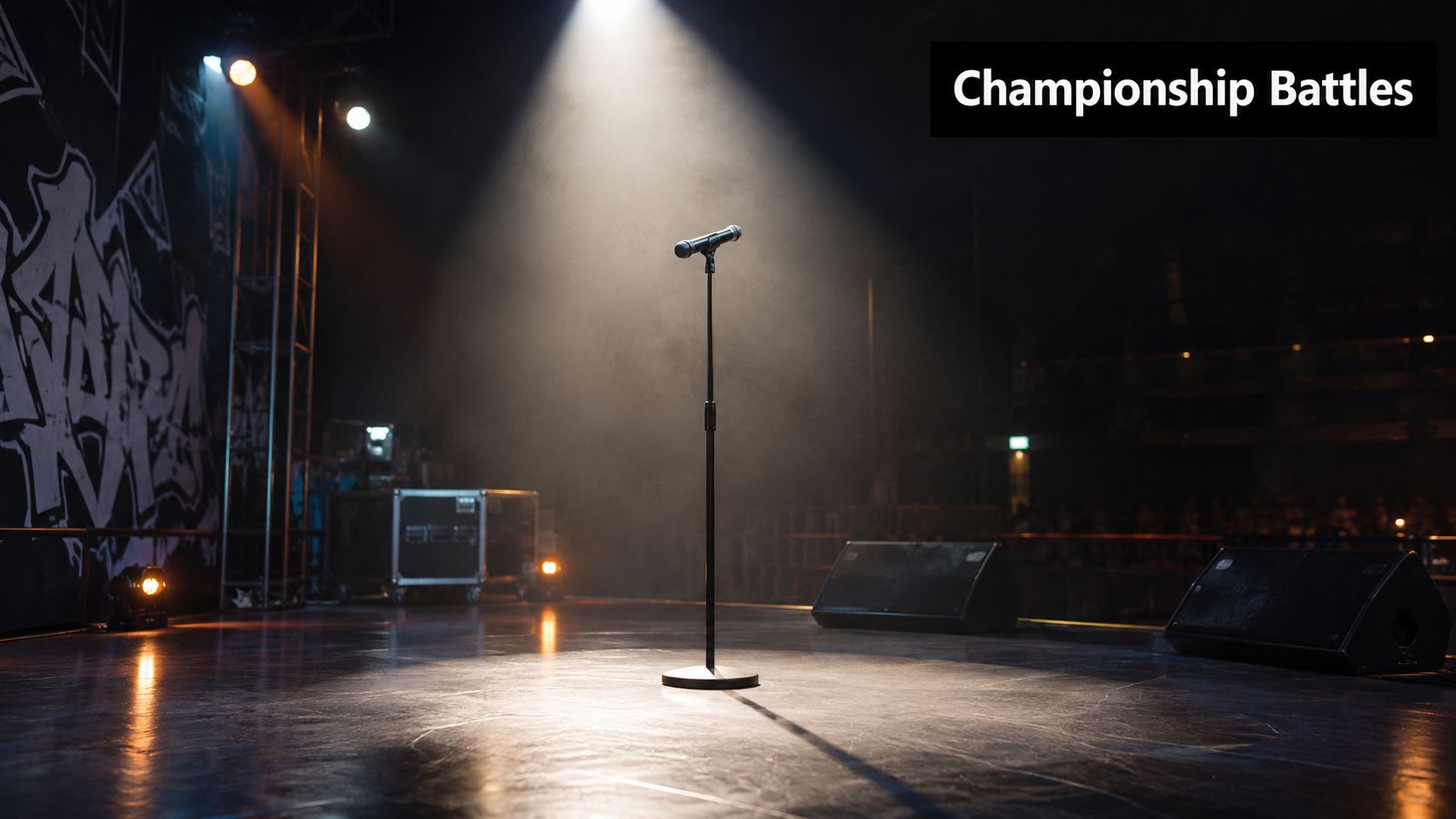 A lone microphone stands on a dark, empty stage lit by a single spotlight at a venue.
Here's the video lesson to carry into your own recording: write the line first, then perform it three ways. Try a flat reading, a controlled pause before the punch, and an exaggerated crowd-facing delivery. Keep the version where the voice adds meaning instead of merely making the volume louder.
2. Ultimate Rap League Classics and Archives
The Ultimate Rap League archive reveals how modern battle rap built its standards. Older battles strip away production support, leaving the rapper responsible for rhythm, breath, emphasis, and silence. That makes each performance useful for studying delivery as well as writing.
Watch Eminem vs. Supernatural, Eyedea vs. Slug, and Aesop Rock vs. Illogic with a different question for each matchup. Which rapper makes a personal detail feel specific? Which one builds a rhyme pattern across several bars? Which one places a simple insult after a dense passage so the contrast gives it extra force? These viewing choices turn an archive into a set of creator lessons: personalization, rhyme architecture, and controlled timing.
A useful test for extended writing is simple. Choose one round and describe its main image in a single sentence. Mark every bar that develops that image. You will see whether the rapper is building one argument or merely repeating nearby words.
That structure teaches narrative cohesion. A diss verse becomes easier to remember when its lines share the same world. The target might appear as a failing athlete, bad manager, weak superhero, or counterfeit product. Each comparison should add evidence, just as scenes in a short story push the same conflict forward.
Build your own version with four decisions:
- Choose one frame: Set the verse in a courtroom, kitchen, boxing gym, or classroom.
- Assign the target a role: Keep it funny and recognizable rather than cruel.
- Build three layers: Start with an observation, add a comparison, then show the consequence.
- Return to the frame: Echo the opening image at the end.
The archive also demonstrates pacing. Dense rhyme can carry an argument, but the audience still needs to understand it on the first listen. Mark the words that create the turn, give them extra emphasis, and move more quickly through the connecting language. If every line receives the same weight, the listener cannot tell what matters most.
Use DissTrack AI to request an old-school battle verse built around one extended metaphor, with a clear setup, two escalating comparisons, and a final callback. Then rewrite the result in your own voice. The exercise develops analytical editing and shows how one coherent image can organize an entire round without copying an archived rapper's wording.
3. Eminem Battle Rap and Freestyle Archives
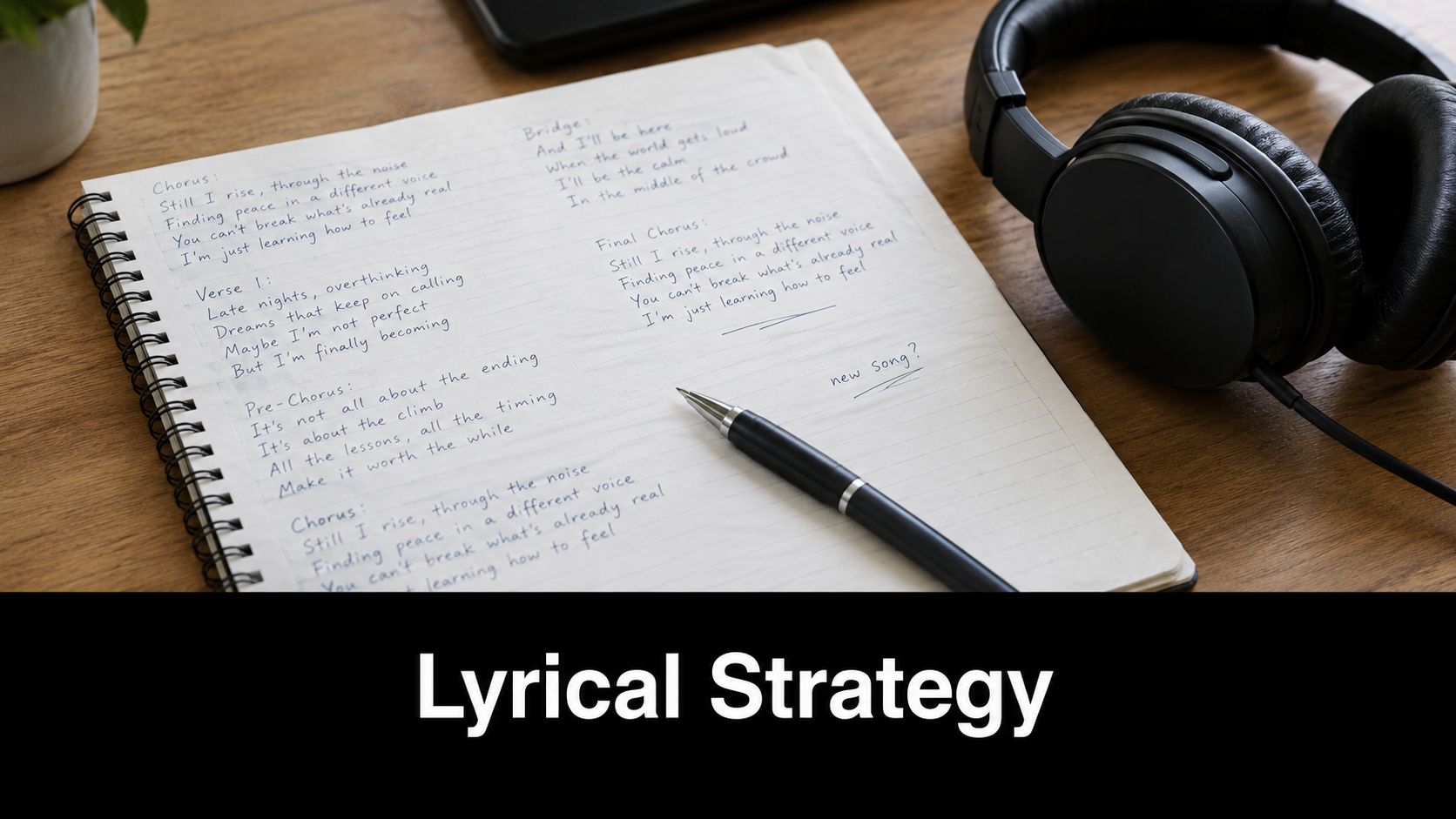 Handwritten song lyrics on an open notebook next to a black pen and headphones on a table.
Eminem's battle footage turns technical rhyme into something you can hear, test, and edit. Review Eminem vs. Supernatural at Freestyle Fest, Scribble Jam-era freestyle material, and the tournament battles dramatized in 8 Mile. Treat 8 Mile as a performance reference, not documentary evidence. Together, these examples connect viewing choices to rhyme architecture, delivery, and the pressure of answering an opponent in real time.
Follow the sounds beneath each joke. Eminem often links multisyllabic patterns across several syllables instead of matching only the final word. The result gives a bar forward motion, much like a drum pattern that keeps moving under the melody. Complexity still needs purpose. A dense rhyme that produces a weak punchline remains weak, so mark the moment where sound strengthens meaning and where it merely fills space.
Try this listening exercise:
- Choose a short passage.
- Mark stressed syllables, internal rhymes, end rhymes, pauses, and the word receiving the strongest emphasis.
- Write four new bars with the same sound pattern, but change the subject completely.
- Read the new version aloud and check whether the pattern supports the idea.
Turn a personal attack into a harmless scene, such as a friend who always arrives late or a producer who names every beat “final_final2.” The exercise teaches analytical editing because you preserve the underlying structure while replacing the content.
Delivery supplies another lesson. A rapper may accelerate to signal confidence, then slow down before the key phrase. A ridiculous image can lower the listener's resistance to criticism, while a factual allegation carries a different responsibility. Separate comic exaggeration from claims about a real person.
For a practical DissTrack AI experiment, enter a fictional opponent, a relationship, and a few safe inside jokes. Request variations with multisyllabic rhymes, a humorous opening, and a serious final turn. The Eminem and AI discussion offers context for considering style. Ask for technical traits, such as dense internal rhyme, rapid cadence, or comic escalation, rather than an artist's exact voice or recognizable lines.
Record the verse twice. Prioritize exact rhythm in the first take and conversational clarity in the second. Compare which version makes the punchline easier to understand. Technical control matters, but the listener must still catch the thought.
4. 2Pac vs. The Notorious B.I.G. Diss Track Videos
“Hit ’Em Up,” “Who Shot Ya,” and related recordings show how personal stakes can turn a diss into a larger narrative. Study them carefully. They belong to a real history of conflict, grief, accusation, affiliation, and violence, so creators should examine the writing without treating the material as a harmless prompt.
The practical lesson is personalization. A focused diss identifies the conflict, the people and loyalties around it, and the contradiction at its center. Reputation becomes part of the argument. The rapper is not just stating that an opponent failed. The verse presents a public identity, a surrounding circle, and a reason that identity deserves scrutiny.
A creator can build that pressure safely with a fictional rivalry. Start with a clear disagreement, add one small private irritation, show how others react, and set boundaries before drafting. Lateness, poor taste, competitive habits, or a ruined party playlist can create tension without turning rumors, medical information, family details, or unverified accusations into content.
Use DissTrack AI to write a scene about two fictional crews arguing over who damaged the playlist at a party. Ask for an opening that establishes the dispute, middle bars that name the opposing sides, and an ending that escalates through absurd consequences. Then remove any line that sounds like a factual claim about a real person.
Follow the stakes, then edit the framing
Watch how each response changes the audience's understanding of the conflict. Mark the line that identifies the issue, the detail that gives it personality, and the moment when the consequences grow. This turns viewing into narrative escalation practice. A strong sequence raises pressure while keeping a recognizable point of view, much like a story that adds complications without losing its central plot.
For a compact overview of a video or diss exchange, a fast YouTube summary service can help you map accusations and responses before reviewing the original performance. Use the summary for navigation, then check the full context, delivery, and surrounding history yourself.
Finish by asking whether the final turn clarifies the conflict or merely raises the volume. That distinction helps creators write sharper fictional battles while keeping real-world harm out of the material.
5. Pusha T Diss Track Strategy Videos
Pusha T's diss-track strategy rewards creators who study the whole package, not just a sharp line. “Exodus 23:1” and “The Story of Adidon” show how research, production, timing, and framing can work together. The subject matter involves real people and serious personal claims, so the right lesson is construction, not imitation or harassment.
Start with research-based personalization. Pusha T's attacks land because they choose details that support one core idea about image, credibility, or identity. That is useful for writers who want their bars to feel specific instead of random. A strong diss reads like a targeted argument, the way a good cross-examination keeps returning to the same weak point.
Production matters just as much. The beat gives the lyrics a setting, and the visual presentation tells the audience how to read the target before the verse begins. That is why creators should study both the audio and the edit, then ask which element does the heavier lifting.
Build the story in layers
Draft a three-stage campaign for a fictional rivalry.
- Establish the contradiction. Show the gap between the character's public image and what the story reveals.
- Narrow the focus. Replace broad insults with one or two harmless details that support the claim.
- Deliver the reveal. End with the detail that makes earlier lines click into place.
This same method works in a roast video. A creator can open with a friend's claim to culinary skill, show a few burned meals, then reveal that the “signature dish” came from a delivery app. The joke lands because each beat pushes the same idea forward.
 A man and woman having a serious discussion at a table in a cozy, dimly lit cafe.
Use DissTrack AI to generate several versions of a fictional diss campaign at different intensity levels. Try Battle Rap for direct punchlines, then Old School Boom Bap for a more measured, sample-driven feel. Edit the strongest lines by hand, and compare the structure with a greatest diss tracks guide to see how attack, reveal, and payoff are arranged.
Timing deserves the same attention. Release order, cover art, clips, and captions can shift how an audience interprets a line. For your own project, make the first video clear without private backstory. Context should sharpen the joke, not hide it.
6. Nas vs. Jay-Z Ether Analysis and Reaction Videos
“Ether” rewards close listening because its force comes from several kinds of attack working together. Nas moves through credibility, style, reputation, humor, and direct disrespect, so each passage changes the listener's angle on the conflict. Reaction videos make that process visible: a host may laugh at one bar, explain another, then connect both to the rivalry's wider context.
Watch one analysis twice, with a different task each time. First, follow the host's interpretation. Then close the video and reconstruct the record from memory. Mark the opening accusation, the central comparisons, and the final crescendo. The exercise separates rhyme architecture and argument from the mythology surrounding a famous exchange.
A useful way to map the verse is as a chain of functions:
- Credibility: Establish why the speaker can criticize the target.
- Diagnosis: Identify the target's central contradiction.
- Evidence: Add concrete, recognizable details.
- Release: Finish with humor, exaggeration, or a sharp image.
That sequence works like a courtroom argument with better rhythm. Credibility opens the door, evidence supports the case, and the final image gives the audience something memorable to repeat. Humor helps because it lowers resistance before a harder line arrives.
Reaction content also offers an editing lesson. Pause whenever the host explains why a bar works, then label the comment context, wordplay, delivery, timing, or reputation. Cut those observations into a short educational clip, giving each technique its own moment. If you capture material for commentary, review the platform's rules and use screen recorders for YouTube clips responsibly. Keep the emphasis on analysis rather than reposting another performer's work.
Use DissTrack AI to create a fictional rivalry with three planned movements: credibility, evidence, and a humorous crescendo. Generate several versions, test whether each section advances the argument, and remove unsupported claims. Then revise the delivery so the verse sounds like a deliberate case, not a loose pile of insults.
7. GrindTimeNow Freestyle and Battle Compilations
GrindTimeNow compilations show how improvisation turns limited information into usable material. A performer may notice an opponent's clothing, movement, or hesitation, then shape that detail into a bar while the crowd reacts. The lesson is practical: observation supplies the raw material, while confidence and timing determine whether it becomes memorable.
Watch the recovery, not only the punch. After a weak response, one rapper may redirect toward the room, the opponent's reaction, or an awkward silence. Another may keep the original rhyme scheme and use the next line to repair the moment. Those choices reveal how creators handle pressure in livestreams and short-form videos, where editing cannot remove every pause.
Try the exercise without copying a performer's lines. Set a short timer and write five neutral details about a fictional opponent. Turn each detail into an attack, using only what you observed. Select one detail and reshape it three ways:
- Plain: State the observation clearly.
- Comic: Add an exaggerated comparison.
- Technical: Build an internal rhyme around the same idea.
The three versions work like different camera lenses. The plain bar gives the audience a clear picture, the comic bar changes its emotional angle, and the technical bar draws attention to sound. Complexity should sharpen the idea rather than hide it.
Performance changes when an audience enters the exchange. Laughter creates space for a pause, while a boo can become the setup for the next line. Deliver the same bar to a camera, a friend, and an imagined crowd. Compare your posture, eye contact, volume, and timing. Those adjustments teach personalization because the same words can feel observational, conversational, or confrontational.
DissTrack AI can generate possible angles from a few safe details. Ask for short battle bars, then write the transitions and respond to imagined interruptions yourself. Use it as a sparring partner for preparation. Your final verse should still come from what you notice in the room.
8. Diss Track Reaction and Breakdown Channels
Reaction and breakdown channels teach analytical editing by showing how an explanation is built. Genius's Verified series, HotNewHipHop analysis, TheNeedleDrop's reviews, and NoLifeShaq's reactions prompt useful questions: why does a line work, what context does it assume, and how do delivery or production choices change its effect?
Study the construction, not only the conclusion. Track which phrase appears on screen, where the host pauses the music, and when background information enters. A breakdown forms an argument through selection, sequence, captions, replay, and tone. For creators, that makes each viewing choice a lesson in editing.
Choose one analysis video and annotate it in five columns:
- Lyric function: setup, punchline, callback, transition, or conclusion
- Context: what the audience needs to know
- Sound: rhyme, cadence, emphasis, or beat choice
- Reaction: laughter, surprise, silence, or debate
- Edit: cut, caption, zoom, replay, or graphic
This workflow shows how battle rap videos become social viewing experiences. One case study recorded over 1.3 million views across six videos and about 2,500 comments, illustrating how audience discussion can become part of the content itself. The case study examines that comment-driven layer. Edit for the bar, then give viewers a clear way to follow the disagreement around it.
Use DissTrack AI to generate three versions of one fictional roast in playful, competitive, and theatrical tones. Cut a short comparison video and explain which version has the clearest setup, strongest rhyme, and safest audience context. Caption the key words that support your point. Extra motion can distract from the line.
Nicholas Martin's analysis of more than 10,000 rap battles reported a long-term popularity decline from around 2013 despite broader YouTube growth, with estimated league revenue falling from about $1.3 million per year to under $250,000. Treat packaging as part of the creative work. A clear title, readable thumbnail, strong opening clip, and focused transcript help viewers understand why the video deserves their attention.
Battle Rap Video Comparison Matrix
| Resource | Implementation Complexity 🔄 | Resource Requirements | Expected Outcomes ⭐📊 | Ideal Use Cases 💡 | Key Advantages ⚡ |
|---|---|---|---|---|---|
| King of the Dot Championship Battles | High 🔄, Long, technically dense battles require detailed analysis | Significant viewing time and hip-hop knowledge | Strong understanding of professional structure, personalization, delivery, and crowd control ⭐ | Studying championship-level battle rap and research-driven disses | High production quality, advanced rhyme schemes, and elite performance examples ⚡ |
| Ultimate Rap League Classics and Archives | Moderate 🔄, Requires historical and cultural context | Moderate research time; older footage may need interpretation | Clearer understanding of battle rap's evolution, formats, and foundational techniques 📊 | Learning classic structures, extended metaphors, and genre history | Broad historical coverage and influential performances 💡 |
| Eminem Battle Rap and Freestyle Archives | Very high 🔄, Complex rhyme patterns and rapid delivery are difficult to replicate | Advanced lyrical analysis and technical listening skills | Improved understanding of multisyllabic rhymes, timing, and vulnerability-based attacks ⭐📊 | Studying technical lyricism, freestyle execution, and delivery | Exceptional rhyme density, precision, and personalized wordplay ⚡ |
| 2Pac vs. The Notorious B.I.G. Diss Track Videos | High 🔄, Requires sensitive historical and cultural interpretation | Contextual research and careful content review | Better understanding of narrative escalation, reputation attacks, and long-term impact 📊 | Analyzing culturally significant, high-stakes diss tracks | Authentic conflict, memorable narratives, and production-enhanced impact ⭐ |
| Pusha T Diss Track Strategy Videos | High 🔄, Multi-track campaigns require planning and strategic analysis | Research time, production resources, and campaign coordination | Strong insight into escalation, timing, public-information research, and narrative coherence 📊 | Planning modern diss campaigns and coordinated releases | Strategic structure, precise personalization, and polished production ⚡ |
| Nas vs. Jay-Z “Ether” Analysis and Reaction Videos | Moderate to high 🔄, Line-by-line interpretation demands focused study | Detailed analysis time and hip-hop cultural knowledge | Advanced understanding of punchline construction, credibility, humor, and layered attacks ⭐📊 | Studying canonical diss-track structure and lyrical breakdowns | Clear educational analysis and highly effective personalization techniques 💡 |
| GrindTimeNow Freestyle and Battle Compilations | Moderate 🔄, Content quality and structure vary widely | Flexible viewing time and performance-focused attention | Better improvisation, adaptability, confidence, and audience awareness ⚡📊 | Practicing rapid personalization and live performance skills | Raw energy, diverse styles, and minimal-preparation techniques |
| Diss Track Reaction and Breakdown Channels | Low to moderate 🔄, Accessible, but analytical depth varies by channel | Basic viewing time plus selective source evaluation | Practical understanding of lyrics, context, production, and audience reception 📊 | Beginner education, technique comparison, and content refinement | Accessible explanations, artist insights, and efficient learning 💡⚡ |
Turn Watching Into Your Next Verse
Watching a great battle is easy. Turning it into a repeatable creative practice takes a small amount of structure. Choose one video from this list and watch it once without pausing. On the second pass, mark the setup, punchline, rhyme pattern, delivery shift, and crowd response. On the third pass, summarize the technique without copying the original wording.
That summary should sound like an instruction. “The rapper uses a public contradiction, develops it through one extended image, pauses before the final comparison, and lets the crowd reaction create space for the next bar” is useful. “This verse is fire” isn't. You're extracting a method that another creator could test.
Next, build an original scenario. Enter a target's name, relationship, and harmless inside jokes into DissTrack AI. Use a style tag such as Battle Rap or Old School Boom Bap, then generate several variations. If you want a different performance feel, experiment with tags such as West Coast, Trap, Drill, Emo Rap, or UK Grime. Treat the results as raw material. Keep the lines that sound natural in your voice, rewrite awkward phrasing, and remove anything that relies on a private fact, an unverified allegation, or an identity-based insult.
A simple production pass can make the difference between a draft and a usable clip:
- Read for accuracy: Check every factual detail and remove claims you can't support.
- Read for originality: Replace familiar comparisons with images from your own scenario.
- Read aloud: Mark any line that breaks your breath or loses its meaning at performance speed.
- Review the audience: Decide whether the joke fits a private message, a friend-group video, a livestream, or a public upload.
- Confirm consent: Keep personal roasts private and playful unless everyone involved has agreed to publication.
If you're collecting reference clips, use screen recording tools for YouTube with respect for copyright and platform rules. A transcript, timestamp, and short note about the technique may be all you need. You don't need to build a new archive of someone else's full performance to learn from it.
Battle rap videos reward close observation because they combine writing and theater. One creator teaches personalization, another demonstrates multisyllabic rhyme, another shows how a crowd changes timing, and another reveals how editing shapes interpretation. DissTrack AI can help you move from observation to experimentation, but your judgment supplies the originality, boundaries, and final voice.
Start with one battle today. Mark five moments, write one technique summary, and create three original versions of a short verse. Keep the version that sounds like something you'd actually perform, not a copy of the rapper you studied.
DissTrack AI helps you turn battle rap techniques into personalized roast lyrics with structured verses, multiple variations, and style options such as Battle Rap and Old School Boom Bap. Bring a consensual target, a few safe inside jokes, and one technique from this list to DissTrack AI, then edit the strongest lines into your own voice.