
Best AI Writing Tools in 2026: 7 Picks for Every Creator
You're staring at a blank doc, the deadline's breathing down your neck, and every AI tool on the internet is promising to be your “all-in-one writing solution.” Cute. Simpler, the best AI writing tools are the ones that fit the job you're doing, whether that's writing a savage roast, keeping a brand voice on rails, chasing AI search visibility, or just making your rough draft less embarrassing. If you want a quick sanity check on how these tools are being compared in the wild, 30 days testing AI writing tools is a decent reality check. Below, I'm cutting straight to seven picks, grouped by what they're best at, so you can stop doom-scrolling and start writing.
1. DissTrack AI
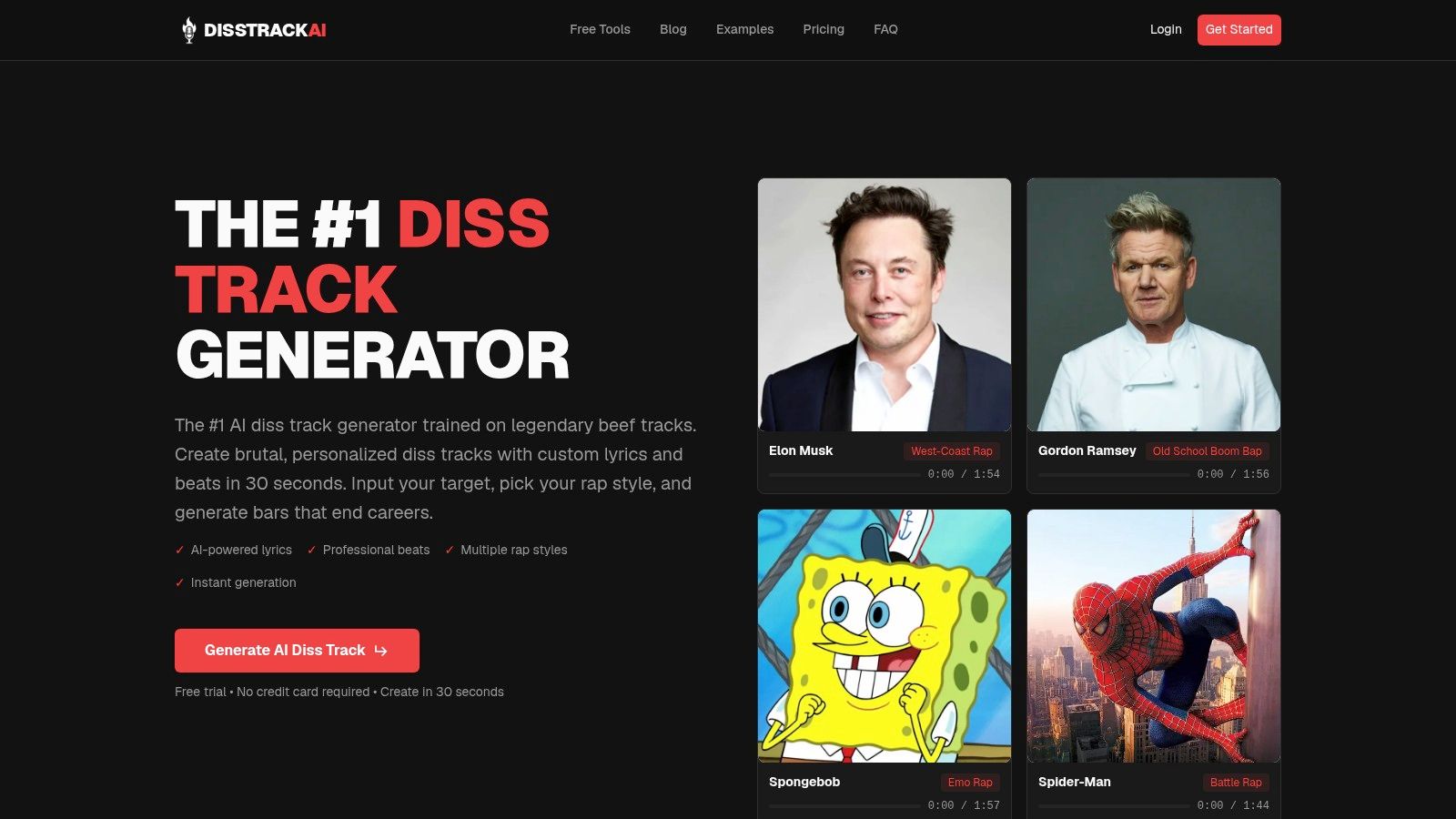
If the job is “make this vicious, funny, and catchy,” DissTrack AI is the right tool. It exists for one thing, turning beef, inside jokes, and a target name into roast lyrics that sound like someone who knows battle rap, not a generic chatbot in a costume.
That specialization is the point. Writing tools work better when they are built for a clear use case, and the broader adoption pattern for generative AI keeps rewarding tools with a narrow job instead of vague text-spitting promises.
The setup is refreshingly simple. Drop in the target, the relationship, and the roast fuel, then pick a style tag such as West Coast, Trap, Battle Rap, Drill, Emo Rap, or UK Grime. Push the savagery dial until it feels right, and you get structured verses with multiple variations, ready to edit, export, or share.
Why it wins for roast writing
DissTrack AI cares about tone, structure, and performance. That matters because writing professionals say controllability matters more than raw generation, and many still worry about bland output and hallucinated errors writing professionals survey. This tool answers that concern with presets, examples, and enough variation to keep the result from sounding mass-produced.
Practical rule: use DissTrack AI when you need a track or roast that sounds intentional, not generic.
The pricing setup also fits creators. There is a free tier, then paid plans that include commercial licensing, which is what you want if the output goes on stream, into a meme page, or onto a stage. Skip it if you need polished prose, long-form articles, or brand-safe corporate copy. Those jobs belong to a different tool.
Skip DissTrack AI if you want a general writing assistant, a blog engine, or anything that needs careful compliance review. It is a specialist, and that is the appeal. Visit the DissTrack AI site if your job is to turn a target into a punchline without spending your whole evening drafting bars.
2. ChatGPT
ChatGPT is the Swiss Army knife of this list. It's what you grab for a fast brainstorm, a rough outline, or a rewrite that needs a human-sounding pass. It sits at the center of the modern AI-writing era, which started when GPT-3 arrived in June 2020 and ChatGPT launched on November 30, 2022, making conversational drafting mainstream rather than niche ChatGPT timeline.
That history explains the appeal. You don't need to learn a workflow or decode a dashboard. You just talk to it, push it, and keep refining until the draft stops being annoying. For creators, that makes it the best first-pass tool on the list, especially when the task is messy and the brief keeps changing.
The strength here is iteration. If a hook feels flat, ask for a sharper one. If a paragraph sounds stiff, tell it to loosen up. That back-and-forth is why so many people keep ChatGPT open even when they use other tools for the final pass.
Use it when the job is messy
ChatGPT works well for lyrics, captions, scripts, outlines, and mixed-media brainstorming. If you want lyric-specific tooling, see our rap lyrics AI generator guide. It also helps when you need to get from “I have a vibe” to “I have a draft” without spending an hour staring at the cursor. The catch is brand consistency. Generic prompting drifts, so you need to keep the brief tight and push for rewrites in the same voice until the output holds together.
Keep the brief tight, then push for rewrites in the same voice until the output stops sounding generic.
Skip ChatGPT if you want a tool that owns the whole content workflow, handles SEO structure for you, or bakes in brand governance from day one. It is flexible, not opinionated, and that is both the charm and the headache. For a direct look at how people are framing it as an AI agent platform, ChatGPT AI agents explained gives you the broader context.
3. Claude
Claude is the drafting partner I'd hand to someone who wants cleaner structure and less noise. It handles long-form writing, sustained context, and instruction-heavy tasks well, so it fits people who care about the shape of the argument as much as the words. If ChatGPT feels like a quick improviser, Claude feels like the editor who read the assignment.
That matters for serious writing work. A 2025 controlled graduate-writing study found that scaffolded AI assistance cut median research-and-writing time from 150 minutes to 65 minutes and lifted average assessed performance from an A- to an A, a solid case for structured help over random prompting controlled writing study. Claude matches that approach because it rewards a clear brief and steady context.
Best when the draft needs discipline
Claude works well for documents that have to stay on track, hold together across multiple sections, and keep a defined tone. It fits client deliverables, structured explainers, and any draft where detours cost time. The Projects and Docs-style workspace features help keep material organized instead of scattered across a dozen chats.
If your drafting job leans musical, our AI song lyrics generator guide covers that lane.
Claude is for people who hate sloppy drafts more than blank pages.
Skip Claude if you want a flashy creative generator or a tool built around aggressive marketing workflows. Its voice can feel conservative unless you push it, which is fine when control matters more than surprise. Start at Claude if you want a writing assistant that respects the outline.
4. Jasper
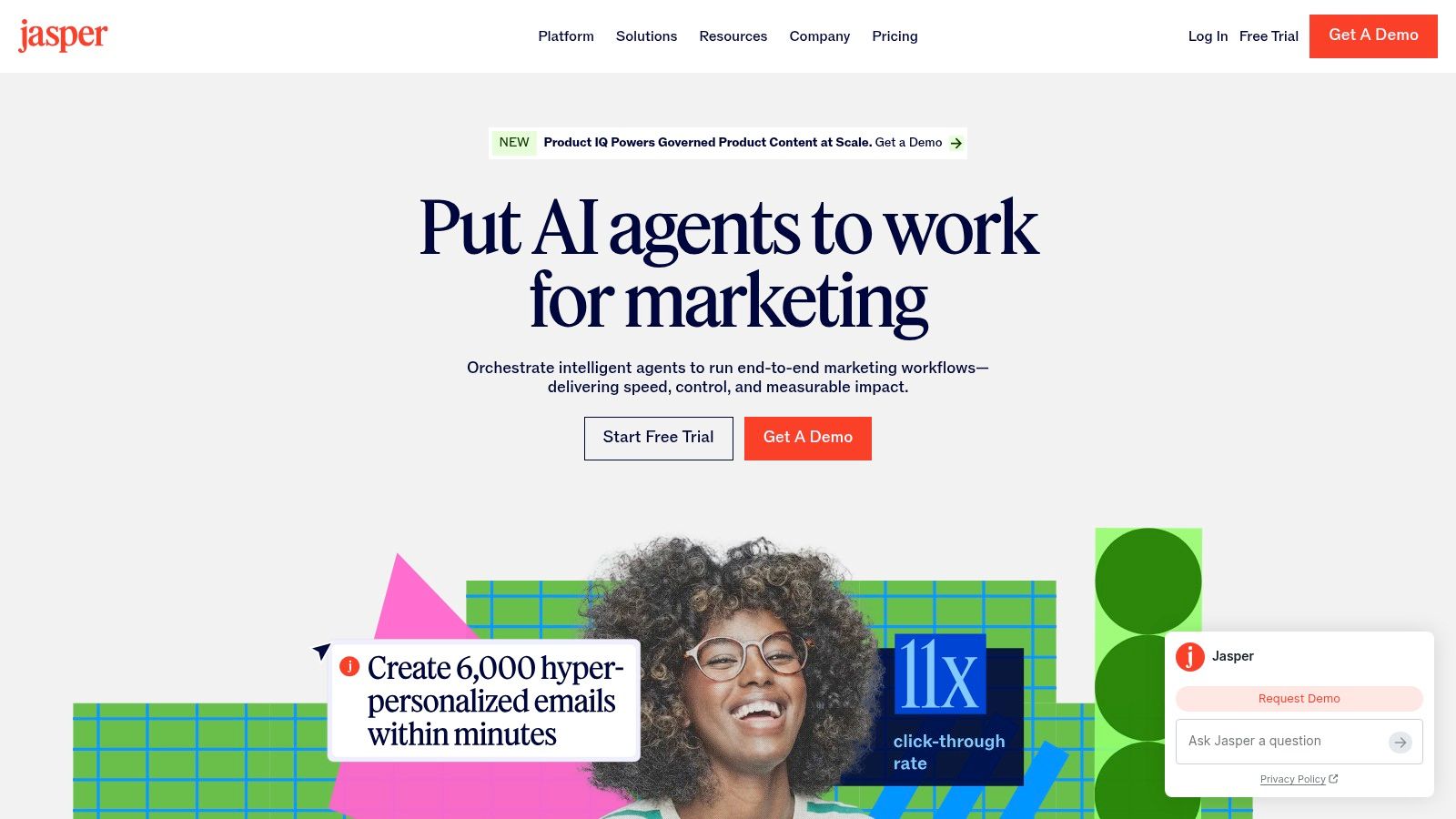
Jasper is the pick for teams that care about sounding like one brand instead of six freelancers in a trench coat. Its Brand Voice setup, audience profiles, and marketing workflows make it the strongest fit for consistent long-form output when multiple people are touching the same content pipeline. That's the whole game for marketing teams, keep the tone steady, keep approvals tidy, and keep the copy from drifting every time someone new logs in.
The platform's focus is obvious the moment you open it. You're not just getting a chat box, you're getting a marketing system with long-form tooling, structured workflows, and governance built around the way actual content teams work. That's also why it's not the cheapest option on the shelf. You're paying for discipline, not just drafting.
Brand control is the whole pitch
Jasper is where you go when “make it on brand” has become a recurring sentence in every content review. It's useful for blogs, ads, landing pages, emails, and the kind of mixed campaign work that needs one voice across multiple assets. The trade-off is that it feels heavier than a casual writing app, because it's built to serve teams, not just solo creators.
If your team keeps rewriting the same paragraph three different ways, Jasper cuts down the nonsense.
Skip Jasper if you want something light, cheap, or purely conversational. It can feel like overkill for a solo writer who just needs a cleaner draft, and it's not the most playful tool on the list. Use Jasper when brand consistency is the job, not a nice-to-have.
5. Copy.ai
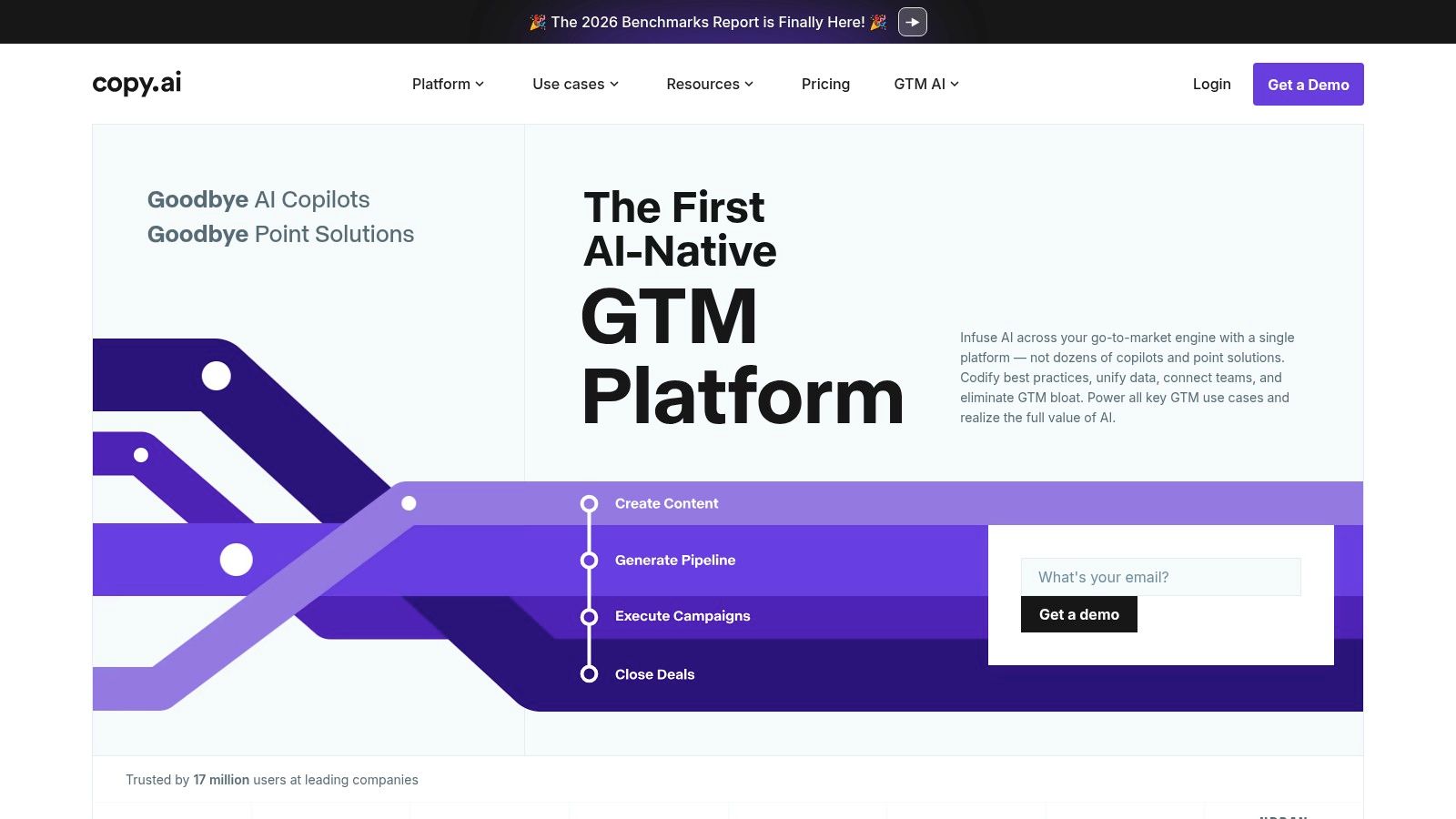
Copy.ai is for teams that need repeatable content operations, not one-off “please make this sound better” requests. It's built around Workflows, Brand Voice, and shared knowledge layers, so marketing and sales can run campaign copy, localization, and content ops through the same system. In plain English, it's what you buy when content has to behave like a process.
That makes it very different from a standard AI writer. Instead of treating each draft as a one-off request, Copy.ai lets you codify the steps and reuse them across campaigns. The payoff shows up when the same structure gets used again and again, and no one wants to paste the same prompt into six places.
Better for systems than for sparks
Copy.ai works best when the job is scale and consistency. The chat-plus-workflow setup is built for bulk generation, multi-step processes, and brand-aligned content that does not need a human to rebuild the wheel every time. If you are running go-to-market motions and content is part of that machine, it fits.
If you want a lighter lyrical tool first, see our free rap lyrics generator guide.
Copy.ai is the tool for people who want the machine to remember the playbook.
Skip it if you are a solo creator who just wants a fast, affordable drafting buddy. The workflow system is powerful, but it can feel like too much machinery for one person and one blog post. For teams that want that structure, start at Copy.ai.
6. Writesonic
Writesonic is the pick for brands that care about showing up inside AI answers, not just in blue links. It positions itself as an AI Search Visibility Platform, and that tells you where its weight sits. The writing features are still there, but the core pitch is citation tracking, AI-platform visibility, and SEO support.
That makes it a smart choice for teams that have outgrown the old “rank on Google and call it a day” mindset. As generative AI adoption spreads, being cited in AI answers is becoming a distribution channel of its own, and Writesonic is built for that job. If your content strategy includes getting mentioned by chatbots, this is one of the few tools on this list that treats that as the point.
This is for visibility, not just drafting
Writesonic gives you dashboards for AI citations, competitors, sentiment, and content creation with brand controls. That suits teams with a real publishing engine and a real measurement problem. The interface is not trying to win a beauty contest, and that is fine.
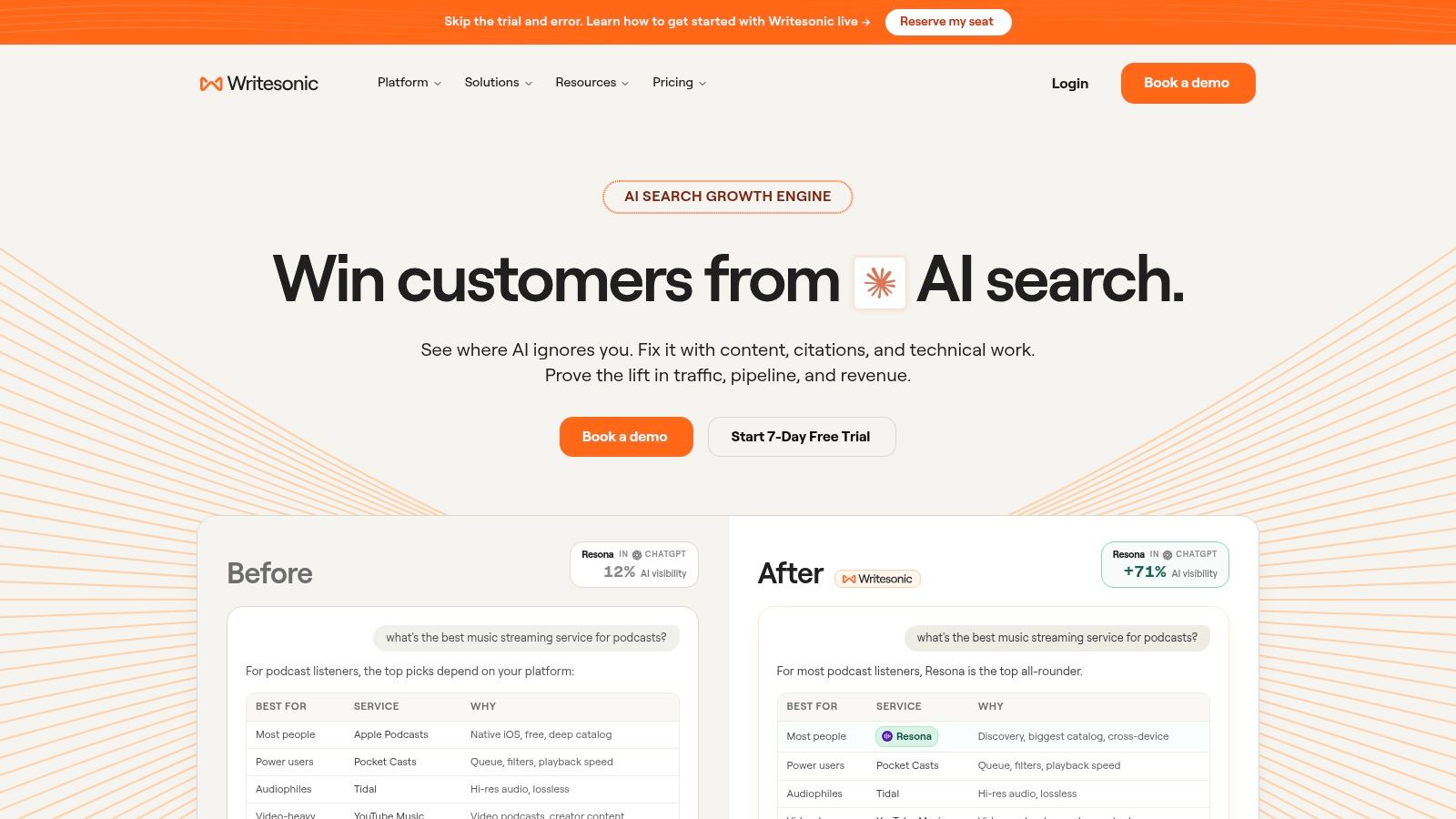
If your team asks, “Are we showing up in AI answers?”, Writesonic makes that question measurable.
Skip it if you just want a clean blog draft or a cheap writing assistant. It gives solo writers more machinery than they need, and the SEO-plus-visibility stack can feel heavy for small jobs. If AI visibility is part of your brief, go straight to Writesonic.
7. Grammarly
Grammarly is the finishing tool you reach for after the draft exists and still sounds a bit too much like a rushed intern. It handles correctness, clarity, tone, and rewrites across apps, so it fits the job of polishing copy that already has a shape. If the other tools help you get words onto the page, Grammarly helps those words stop tripping over themselves.
Its real strength is speed and ubiquity. It follows you in the browser and desktop apps, so it catches awkward phrasing where you work instead of making you copy text into another tab. For teams, the brand controls help keep tone from drifting into office-paste hell.
Use it as the last pass, not the first
Grammarly is sharp at cleanup, but it is not a creative generator. That is fine, because its job is to tighten, correct, and standardize finished copy, not invent the voice from scratch. It works well for captions, outreach, press copy, and any draft where wording carries the load.
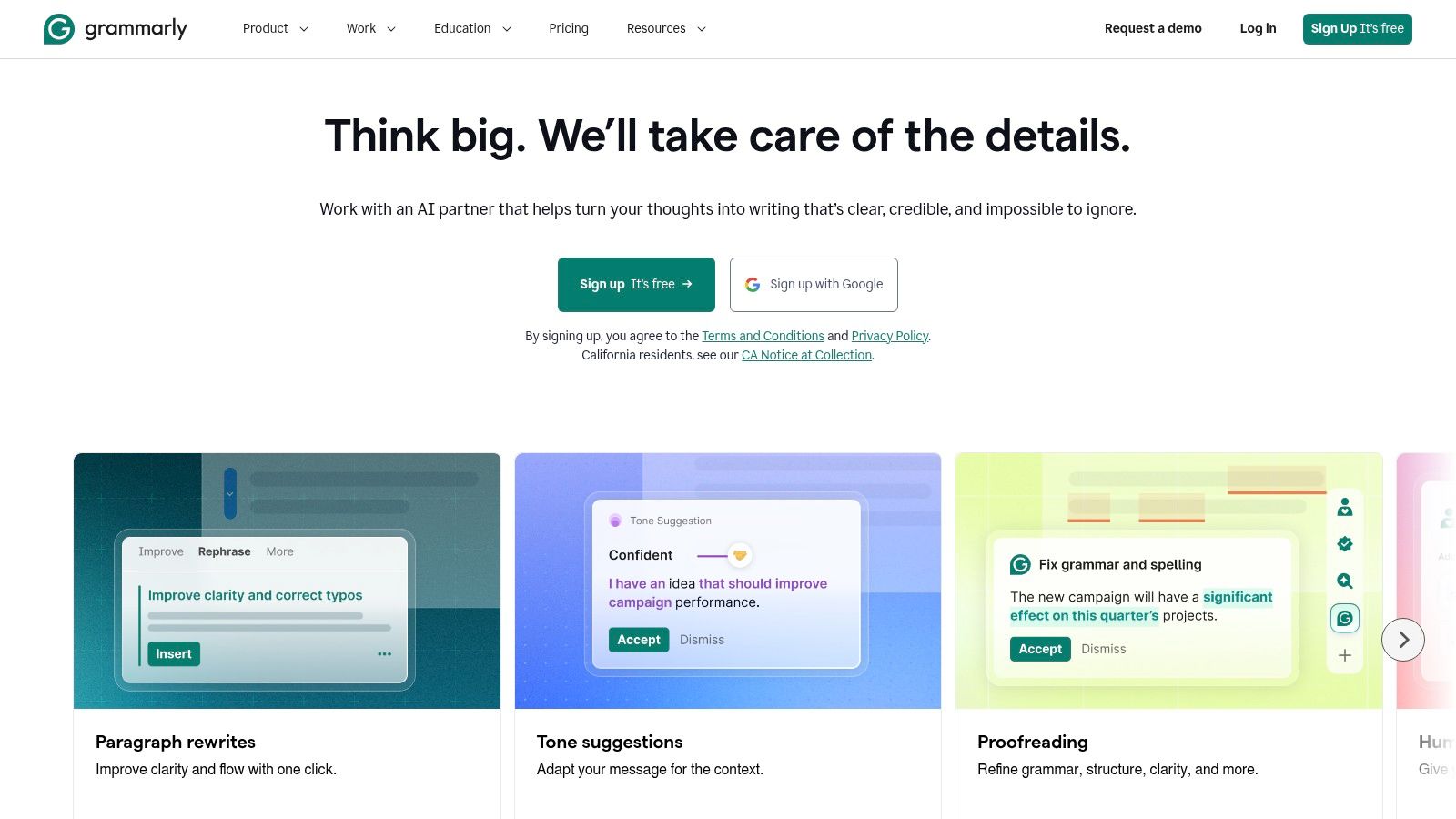
Grammarly won't save a bad idea, but it will keep you from shipping a sloppy one.
Skip Grammarly if you want a full drafting engine or a more creative workflow. If its rewrites feel too shallow, this comparison of free AI rewriters compared covers stronger alternatives. Grammarly polishes, it does not invent. Keep it for the final pass and let a drafting tool handle the first.
Top 7 AI Writing Tools Comparison
| Product | Implementation Complexity 🔄 | Resource Requirements ⚡ | Expected Outcomes ⭐📊 | Ideal Use Cases 💡 | Key Advantages ⭐ |
|---|---|---|---|---|---|
| DissTrack AI | Low, web UI, presets; quick start | Low cost tiers; minimal user setup | High for diss/battle lyrics; ~30s generation | Battle rap, streamers, roast content | Specialized lyrical quality; privacy & commercial ownership |
| ChatGPT (OpenAI) | Low–Medium, plug‑and‑play; custom GPTs for brand | Variable by plan; multimodal needs more resources | Versatile drafts & ideation; strong iterative refinement | Creative drafting, brainstorming, multimodal projects | Extremely flexible; large ecosystem & frequent updates |
| Claude (Anthropic) | Medium, projects/docs workspace | Medium–High for Pro/Max and heavy contexts | Strong coherent long‑form and instruction following | Instruction‑heavy writing, sustained reasoning tasks | Stays on brief; transparent pricing and controls |
| Jasper | Medium–High, Brand Voice & workflow setup | High for teams: seats, governance, API access | Consistent, on‑brand marketing content at scale | Marketing teams, campaign workflows, content ops | Purpose-built brand guardrails and marketing agents |
| Copy.ai | Medium, build Workflows and automations | Medium–High: workflow credits, seats | Scales repeatable content generation and localization | Bulk posts, campaign automation, GTM playbooks | Workflow automation; multi‑model access and Tables |
| Writesonic | Medium, GEO and visibility setup | Medium: integrations and monitoring tools | Improves SEO and AI visibility; analytics-led impact | Publishers/brands focused on AI citations and SERP presence | GEO/AI‑visibility dashboards and citation discovery |
| Grammarly | Low, browser/desktop integrations | Low–Medium; team features add cost | Polished grammar, tone consistency, rewrite suggestions | Final polishing, brand tone enforcement, real‑time edits | Real‑time feedback across apps; team style controls |
Pick Your Lane and Start Writing Today
The easiest way to choose among the best AI writing tools is to stop shopping for a fantasy tool and pick the one that matches your actual job. If you're writing diss tracks, roast clips, or battle-ready punchlines, DissTrack AI is the clear first stop. If you're a generalist, ChatGPT and Claude give you the best balance of flexibility and control, while Jasper and Copy.ai are the better bets for marketing teams that need brand consistency and repeatable workflows.
If your priority is AI search visibility, Writesonic is the specialist. If the draft is already there and just needs cleaning up, Grammarly is the finishing layer that keeps the copy from looking rushed. That's the actual split, not “which tool has the most features,” but “which tool owns the part of the workflow that's currently killing your time.”
Don't overthink this. Pick one tool, run one real project through a free tier or trial, and judge it on your own voice, your own output, and how much editing it makes you do. The right choice is the one that gets you from blank page to finished work without turning the process into another software hobby.
If you want the fastest way to make roast writing feel less like work and more like a weapon, DissTrack AI is built for that exact lane. It turns target details, inside jokes, and style choices into ready-to-edit diss lyrics in seconds, so you can spend your energy on the punchlines, not the blank page.