
10 Creative Writing AI Tools: Honest Picks for 2026
You're on chapter twelve, the plot is finally moving, and your protagonist has just confessed something they'd never say. You open a chatbot for help. It gives you a fluent paragraph, complete with atmosphere and a suspiciously elegant metaphor, while ignoring three established character traits, the missing clue from chapter four, and the fact that your detective hates coffee.
That isn't necessarily a writer problem. It's often a tool-to-task mismatch. A fiction workspace, a general chatbot, a roleplay platform, and a lyric generator may all produce words, but they're built for different jobs.
This list matches creative writing AI tools to the work they handle well, then points out where each one breaks. You'll see which tools help with plot architecture, dialogue, persistent worldbuilding, lyrics, brand voice, and search-focused content. You'll also see the habits that keep AI from sanding your style into generic mush. If you're an independent musician looking for human-sounding support, a ghostwriter for independent musicians can fill a gap AI still struggles to cover.
1. Sudowrite
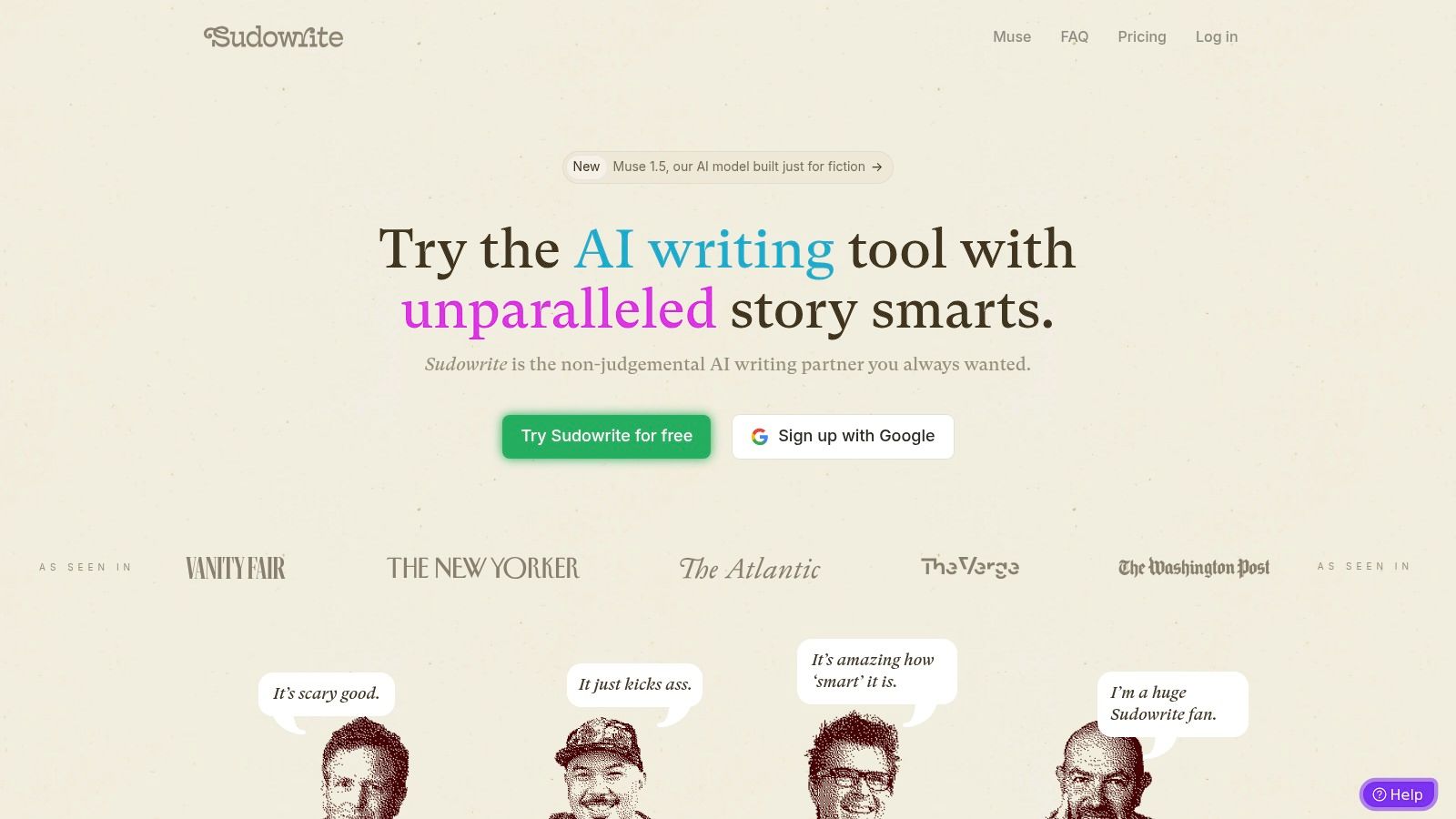
Sudowrite makes the most sense when the draft is long, fictional, and already living in your head as a messy pile of scenes. Its interface is built around novel and screenplay work rather than marketing templates, so you can move from a rough idea to a beat, then from a beat to prose without constantly rebuilding context.
The useful tools are practical. Story Engine helps shape an outline and develop scenes beat by beat, while Describe, Brainstorm, and Rewrite handle different kinds of friction. Need a sensory detail? Use Describe. Need five possible complications? Use Brainstorm. Have a paragraph with the emotional temperature of a tax form? Rewrite it with a style direction.
Where it earns its place
Sudowrite's advantage is workflow, not just generation. It gives fiction writers a place to develop scenes, revise lines, and maintain a project without treating every request as a blank chat window. The iOS app also suits writers who capture fragments away from a desk.
Its privacy pledge says user writing isn't used to train Sudowrite's or OpenAI's models. Still, you should read the current terms before uploading confidential client work or unpublished material. Product policies can change.
Practical rule: Use Sudowrite to create options, not to make final decisions. Keep the sentence that sounds like your character, even when the generated version sounds more polished.
The main irritation is credits. Lower tiers can make experimentation feel measured, especially when you're generating several versions of the same scene. It's also less flexible than a general chatbot for nonfiction, research-heavy work, or odd jobs outside long-form fiction.
Best fit: Novelists and screenwriters who want structured drafting and revision.
Break point: Credit pressure and limited usefulness beyond fiction.
Try Sudowrite.
 Sudowrite
2. NovelAI
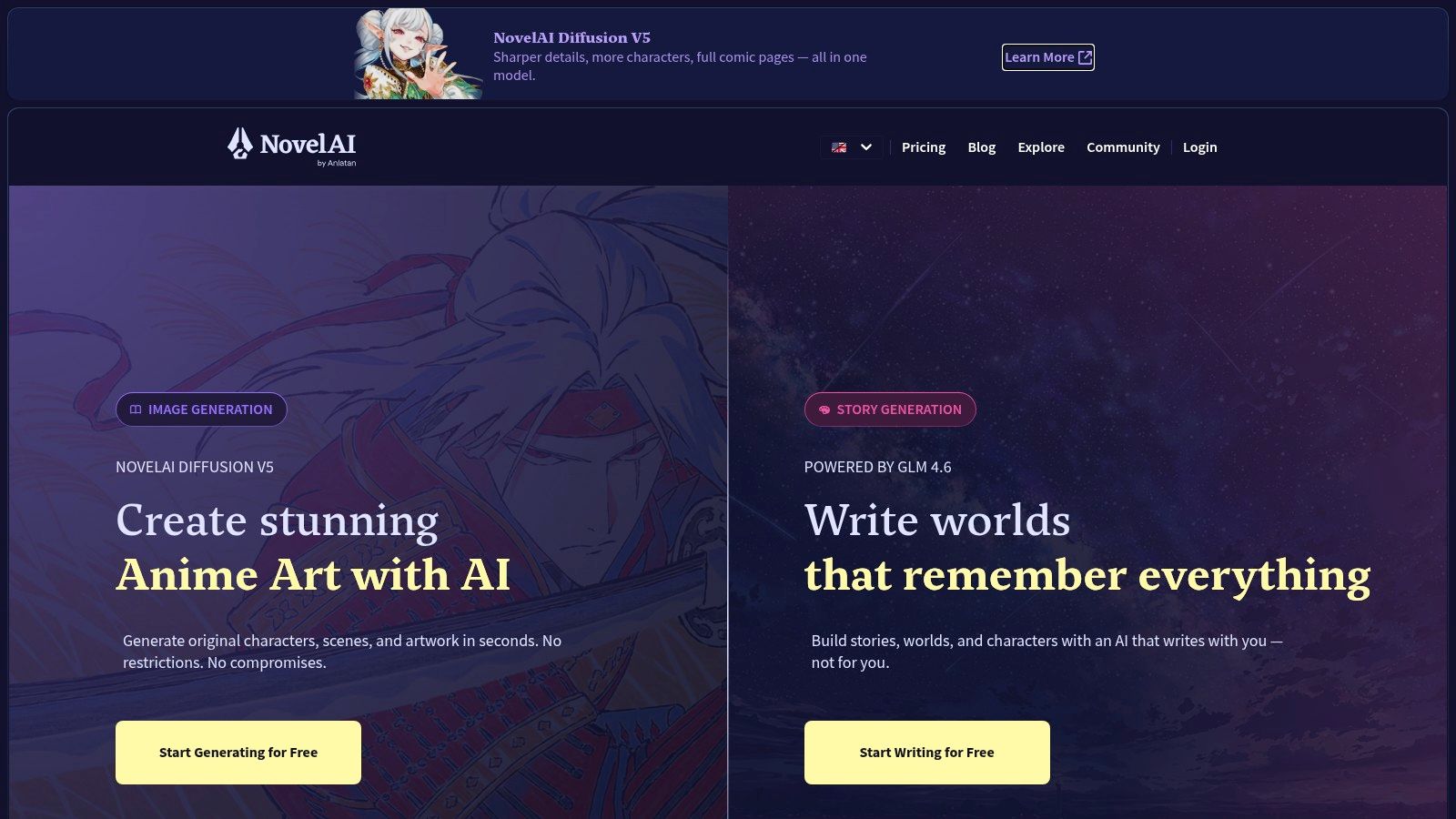
NovelAI is for writers who care less about a polished office-style interface and more about keeping an invented world alive over a long series. Its Lorebook stores recurring information about characters, places, factions, and rules, which gives serialized fiction a sturdier memory system than repeatedly pasting the same character sheet into a chat.
That distinction matters when your story has a large cast. A general assistant may remember the emotional direction of a scene but forget that the queen lost her left hand, the city bans horses, or the magic system has a very specific cost. NovelAI's persistent context gives you more control over what the model should know and when it should know it.
The useful trade-off
NovelAI uses proprietary text models from the Erato and Kayra family. Paid tiers provide unlimited text generations, while image and text-to-speech features can involve credits. The Opus plan offers a context window of up to 28,672 tokens, which is useful for writers maintaining substantial serialized material.
The interface is denser than a simple chat box. That's a feature if you want controls. It's a nuisance if you want to type “make this scene tenser” and move on. New users may need time to understand how entries activate, how context is selected, and how model behavior changes with settings.
NovelAI also offers a free Paper tier with limited text, image, and text-to-speech access. Treat that as a way to test the writing environment, not as a complete production workflow.
Best fit: Worldbuilders writing fantasy, science fiction, fan fiction, or serialized stories.
Break point: The learning curve and credit use around non-text features.
Explore NovelAI.
 NovelAI
3. Anthropic Claude
Claude is the sensible choice when your job is less “invent a whole novel from scratch” and more “help me think clearly about this large, awkward draft.” It's strong at sustained conversations, structural feedback, dialogue polishing, and prose that needs to remain controlled rather than theatrically overwritten.
Give it a scene plus a character brief, then ask for a diagnosis before requesting a rewrite. That sequence matters. If you ask for “make this better,” you may get smoother sentences and a weaker scene. If you ask Claude to identify where the character's motivation becomes unclear, list continuity risks, and preserve the narrator's emotional restraint, you give it a job it can perform.
Strong editor, imperfect author
Claude's long-context capabilities make it useful for reviewing substantial material. It can also work with downloadable documents, depending on the available tools and plan. Pro and Max plans support heavier usage, while Team and Enterprise options add administration and governance features. API use is billed separately from chat or subscription plans, so a workflow that moves between the two needs its own budget check.
The limitation is consistency across plans and regions. Available models, usage limits, and advanced features can vary. A writer who builds a daily process around one feature should verify that feature on the current plan instead of relying on an old review.
Claude can also become too agreeable. Ask it to preserve a weak scene and it may politely improve the wallpaper around the problem. Give it permission to challenge the premise, name the missing turn, and offer alternatives.
Best fit: Structural critique, dialogue cleanup, line editing, and long-draft reasoning.
Break point: It can polish a flawed scene instead of forcing the hard rewrite.
Use Claude.
 Claude
4. OpenAI ChatGPT
ChatGPT is the all-purpose workbench. It can brainstorm a premise, outline a screenplay, suggest lyric variations, rewrite a paragraph in a colder voice, inspect an uploaded file, or help you turn a chaotic idea into a usable brief. That range is its appeal, especially for writers who move between fiction, scripts, social content, and personal projects.
It's also where prompt quality becomes painfully visible. A vague instruction produces familiar filler. A detailed prompt that names the audience, scene goal, forbidden clichés, character knowledge, rhythm, and revision limits gives you something much more workable.
The generalist tax
ChatGPT supports multimodal interaction, including text, images, voice, and file uploads. Depending on the plan, writers may also get research and analysis tools. Business workspaces add administrative controls and data protections, which can matter for teams handling shared creative projects.
The downside is variability. Available models, usage, and features depend on the plan and system conditions. A prompt that works beautifully one day may produce a flatter answer after a model or setting changes. Don't build your entire voice around one lucky generation.
For a reliable drafting loop, separate the stages:
- Ideate: Ask for contrasting premises, not one “best” idea.
- Structure: Request beats with cause-and-effect links.
- Draft: Provide the exact scene constraints.
- Edit: Mark what must remain untouched.
- Select: Compare alternatives yourself.
Writing about AI-assisted work also benefits from a specialist workflow. This ChatGPT guide for marketers is more useful for content production than for literary craft, but that's precisely the point. ChatGPT works best when you define the job narrowly.
Best fit: Writers who need one flexible assistant for many formats.
Break point: Generic output when the prompt doesn't carry enough creative direction.
Try ChatGPT.
5. Google Gemini
Gemini earns its spot when your writing already happens inside Google's ecosystem. If the draft lives in Docs, notes sit in Notebook, research arrives through Search, and collaborators comment in shared files, Gemini reduces the friction of moving material between apps.
That doesn't automatically make it the best fiction writer. It makes it convenient. Convenience is valuable when you're revising a proposal, turning research notes into a treatment, or preparing several versions of a script for collaborators who already use Google Workspace.
Best for connected projects
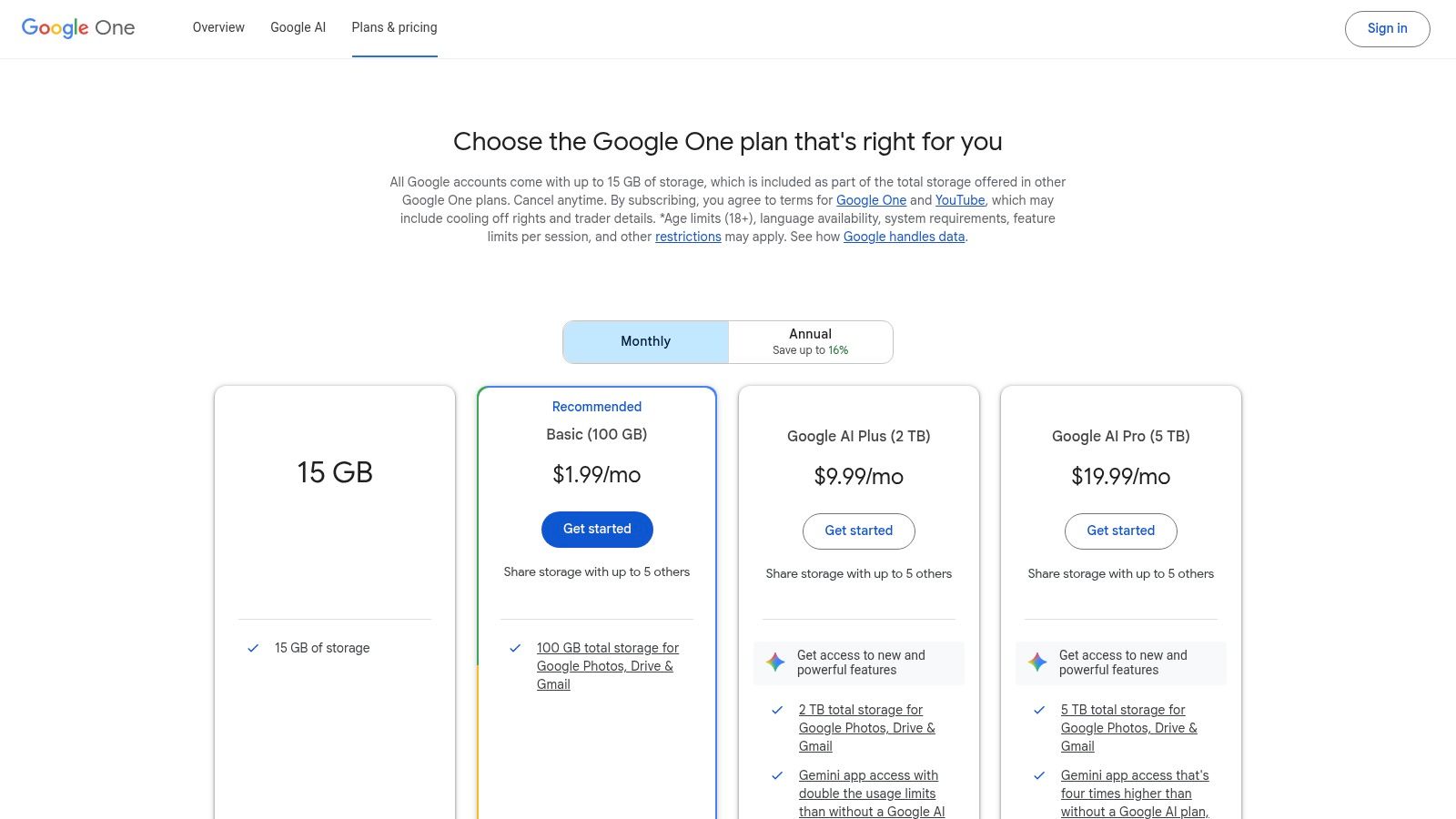
Google AI plans provide Gemini access with increased usage caps, and higher plans include access to Deep Research. Plan names, benefits, and availability can vary by country, so check the current Google One page rather than treating an old comparison as permanent. Some plans also bundle storage, YouTube benefits, and family sharing.
The creative controls are less specialized than those in fiction-first products. Gemini can help with a scene outline, character questions, or a clean rewrite, but it won't give you the same dedicated story architecture as Sudowrite or the same persistent worldbuilding emphasis as NovelAI.
I'd use it when the surrounding information matters as much as the prose. Draft a chapter summary in Docs, pull relevant notes from your working material, ask for contradictions, then rewrite the actual scene yourself. That workflow keeps Gemini in the research and organization lane, where its ecosystem is more useful than a pile of disconnected chat tabs.
Best fit: Google-based collaboration, research organization, and document-centered drafting.
Break point: Less control for specialized fiction and voice work.
Check current Google AI and Google One plans.
 Google Gemini via Google AI and Google One plans
6. Character.AI
Character.AI is a dialogue gym. Don't open it expecting a clean chapter outline or a carefully paced novella. Open it when you need to hear how a character argues, dodges a question, flirts badly, lies under pressure, or responds when someone finally says the thing you've been avoiding.
You can create custom personas and return to recurring interactions, which makes the platform useful for voice discovery. A villain who sounds impressive in your notes may become laughably generic in conversation. That's good news. Better to discover the weakness in a roleplay session than in scene forty.
Conversation beats polished prose
The social, fast-moving experience makes experimentation easy. The free tier lowers the barrier to trying different personas, while the paid c.ai+ tier offers faster responses, priority access, and early features. The community also provides examples of how users frame characters and situations.
The writing still needs serious editing. Character.AI often produces dialogue that works as a response but not as a scene. It may forget narrative constraints, over-explain emotion, or turn a sharp exchange into repeated banter. It's even less dependable for strict rhyme, meter, or battle-rap structure.
For roast writing, it can help you test a target's fictional persona and generate call-and-response energy, but you'll need to check every factual implication and remove anything that becomes harassment rather than playful performance. A focused example of this kind of character-driven prompt appears in Drill Sergeant Grey.
Best fit: Dialogue sparring, character POV, roleplay, and banter.
Break point: Long-form coherence, polished narrative, and exact lyrical constraints.
Visit Character.AI.
7. Suno
Suno is less a writing assistant than an idea-to-audio loop. You enter a concept, lyric direction, or style prompt and get vocalized material with an arrangement. That makes it valuable when the question isn't “Is this verse elegant?” but “Does this hook survive contact with a beat?”
For rappers and performers, hearing cadence exposes problems that look fine on a page. A line may contain a clever internal rhyme but stumble when delivered. A chorus may read as memorable and sound disposable. Suno helps you test those weaknesses quickly.
Use audio to challenge the page
Suno supports lyric and arrangement generation, and Suno Studio adds editing, stems, and remixing tools. Paid plans provide commercial rights and downloads, with download allowances and custom model options depending on the tier. Check the current terms before releasing monetized work, especially if your workflow combines generated lyrics, vocals, and production.
The credit and download limits are the practical constraint. High-volume experimentation can run into caps, and the platform is aimed at music rather than prose. Its first output is rarely the finished lyric. Treat it as a performance sketch that tells you where the rhythm, tone, or hook needs work.
You can also use Suno after a dedicated lyric generator. Generate several hooks, choose the one with the clearest performance identity, then rewrite the verse around its cadence. This text-to-music workflow shows why audio testing belongs after ideation, not instead of editing.
Best fit: Testing hooks, cadence, vocal tone, and fast song concepts.
Break point: Credit limits and lyrics that need human curation before release.
Try Suno.
 Suno
8. Rytr
Rytr is the pocket notebook of this group. It's quick, approachable, and useful when you need several rough directions before lunch. Short stories, lyric fragments, social captions, character descriptions, and alternate openings are all within its comfort zone.
The editor uses character-based generation, tone and style presets, and a straightforward interface. It also offers plagiarism checks and a browser extension. Higher tiers add multilingual support, and the free and unlimited plans make it accessible to creators who don't want a heavyweight fiction environment.
Fast sparks, not a novel brain
Rytr doesn't maintain long-form structure as well as a tool built around a story bible or lore system. Feed it a chapter-length project and you'll spend time reminding it what happened, who knows what, and why the emotional turn matters. That isn't a defect if you're using it for fragments. It becomes a defect when you mistake speed for memory.
The best workflow is deliberately small. Ask for ten opening images, five chorus concepts, or three versions of a social post. Then combine the strongest pieces yourself. Avoid asking for a complete polished song or story unless you're prepared to rewrite heavily.
For lyric ideation, use the output as raw material and then apply your own rhythm, target details, and punchline choices. This AI song lyrics generator guide is relevant when your goal is a fast lyrical starting point rather than a finished performance.
Best fit: Budget-conscious writers generating short-form ideas.
Break point: Long-form continuity and distinctive final prose without manual editing.
Use Rytr.
 Rytr
9. Jasper
Jasper belongs on this list because creative writing doesn't always mean novels and poems. Sometimes it means a campaign concept, a launch script, a social series, or a set of brand stories that all need to sound like the same organization wrote them.
Its strength is controlled consistency. Brand Voices, knowledge assets, the Canvas editor, AI Agents, and a no-code agent builder support repeatable marketing workflows. A team can establish the approved tone, feed the system relevant context, and produce variations without asking every writer to memorize the brand guide.
Strong at voice systems, weak at literary freedom
Jasper's team and business features include collaboration and administrative controls. That's helpful when several people create assets across campaigns and someone needs to manage access, standards, and workflow ownership.
The trade-off is obvious once you leave marketing. Jasper isn't the tool I'd choose for a literary novel, experimental poetry, or a character whose voice should become stranger with every page. Its defaults favor clarity, alignment, and usable business copy. Those are virtues in a campaign and potential constraints in fiction.
Pricing is also positioned above many hobbyist fiction tools. That can make sense for a team shipping many branded assets, but it's harder to justify for a single writer who only wants help with occasional scenes.
Best fit: Brand storytelling, campaign scripts, social content, and team production.
Break point: Literary work that depends on ambiguity, eccentricity, or uncontrolled voice.
Choose Jasper.
10. Writesonic
Writesonic is for creators who care about what happens after the draft leaves the document. It combines content generation with optimization and visibility features, so the writing job includes articles, landing pages, scripts, or campaigns that need to reach an audience through search.
Its tools include an AI Article Writer, content optimization, GEO and AI search tracking, an Action Center for fixes, WordPress and Google Search Console integrations, brand voice controls, and workflow automation. That makes it a practical production suite for content teams, not a quiet room for literary experimentation.
The published piece is the real test
Writesonic works well when you have a repeatable editorial process. You can create a draft, optimize it, connect publishing systems, monitor visibility, and return to the piece when performance or search changes. The workflow is especially useful for creators who produce educational articles alongside scripts, newsletters, or promotional material.
The same focus can get in the way of creative writing that doesn't have a discoverability goal. SEO guidance can flatten a strange premise into familiar phrasing, and optimization pressure can encourage repetition. Keep the unusual image, the sharp angle, and the human detail when they serve the piece. Not every memorable line needs to behave like a keyword.
Pricing tiers are higher than many hobbyist tools, so the value depends on whether you'll use the optimization and publishing workflow. If you only need occasional brainstorming, a general assistant may be simpler.
Best fit: Search-focused articles, content operations, and visibility-aware creative campaigns.
Break point: Literary work where optimization threatens originality.
Explore Writesonic.
Top 10 Creative Writing AI Tools Comparison
| Tool | Core features ✨ | Quality / flow ★ | Price / value 💰 | Target audience 👥 | Best fit / unique edge 🏆 |
|---|---|---|---|---|---|
| Sudowrite | Story Engine, scene expansion, rewrite tools ✨ | ★★★ | 💰 Mid (credits; rollover on Max) | 👥 Novelists, long-form writers | 🏆 Structured drafting & revision workflows |
| NovelAI | Proprietary models, Lorebook, huge context windows ✨ | ★★★★ | 💰 Mid (subs; optional credits) | 👥 Serialized writers & worldbuilders | 🏆 Persistent memory + style control |
| Anthropic Claude | Long-context models, editing tools, governance ✨ | ★★★★ | 💰 Mid-High (Pro/Max + API) | 👥 Teams needing consistency & safety | 🏆 Strong style consistency over long text |
| OpenAI ChatGPT | Multimodal chat, fast iteration, workspaces ✨ | ★★★★ | 💰 Flexible (Free → Business) | 👥 Creators who want versatility & integrations | 🏆 All-purpose drafting + ecosystem/tools |
| Google Gemini | Gemini in Docs/Gmail, Deep Research, bundles ✨ | ★★★ | 💰 Mid (Google One bundles) | 👥 Google Workspace users & collaborators | 🏆 Seamless productivity-suite integration |
| Character.AI | Custom personas, memory, social chat ✨ | ★★★★ | 💰 Low-Mid (free + c.ai+) | 👥 Roleplayers, dialogue & battle-rap sparring | 🏆 Persona-driven banter & voice practice |
| Suno | Text→lyrics + vocalized output & stems ✨ | ★★★★★ | 💰 Mid (credit-based; commercial tiers) | 👥 Musicians & creators testing hooks/cadence | 🏆 Rapid idea→audio loop with vocal output |
| Rytr | Simple editor, tone presets, multilingual ✨ | ★★★ | 💰 Low (budget-friendly; free tier) | 👥 Hobbyists & budget creators | 🏆 Fast, low-cost short-form ideation |
| Jasper | Canvas editor, Brand Voices, AI Agents ✨ | ★★★ | 💰 High (team/business pricing) | 👥 Marketing teams & brand-driven creators | 🏆 Brand-toned content at scale with agents |
| Writesonic | AI writer + SEO tracking, automations ✨ | ★★★ | 💰 Mid (marketing-focused tiers) | 👥 Content creators needing visibility | 🏆 Combines creative drafts with SEO/action center |
Match the Tool to the Job, Then Test It
The best creative writing AI tools aren't interchangeable. Sudowrite is a better fit for a novelist who needs scene-level support and a long-form workflow. NovelAI makes more sense for serialized worldbuilding with persistent lore. Claude is valuable when a large draft needs reasoning, critique, and controlled revision. ChatGPT covers the widest range, but it asks more from the person writing the prompt.
The same principle applies outside prose. Character.AI is a dialogue sparring partner, not a dependable plot architect. Suno tests a lyric in performance, not just on the page. Rytr supplies quick fragments without pretending to remember an entire novel. Jasper protects a brand voice, while Writesonic connects creative production to visibility and publishing.
That division of labor matters because AI assistance can improve an individual piece while making a body of work feel more alike. A 2024 Science Advances study examined 293 people writing short stories with and without generative AI assistance. The researchers found stronger assessed creativity in individual AI-assisted stories, especially among writers with lower baseline creativity, but also greater similarity among the stories overall. Read the study background and findings.
Writers need a workflow that creates useful options without surrendering selection. A 2025 survey of working writers reported by Publishers Weekly collected responses from 1,481 writers. It found that 61% used AI tools, users reported an average productivity increase of 31%, and 63% generated text and then edited it, while 7% used AI to produce text intended for publication. Review the survey PDF. The pattern supports a practical position: use AI for ideation, drafting, variation, and review, then keep human control over tone, detail, judgment, and release.
Run the same test before paying
Take one representative scene, chorus, or campaign brief and give it to two shortlisted tools. Use the same constraints, including character facts, audience, tone, forbidden phrases, and desired length. Mark every line you rewrite, then compare the time saved with the amount of voice drift you had to repair.
For creative work, don't judge output by fluency alone. WritingBench evaluated 1,239 prompts across six domains and 100 subdomains, and its method reached 83% alignment with human preferences, compared with 65% and 59% for static-criteria baselines. See the WritingBench methodology. The lesson is useful even if you never build a benchmark. Score the exact job: rhyme density, punchline originality, target-specific detail, flow, stylistic consistency, and adherence to the requested intensity.
Privacy deserves the same attention as prose quality. A 2025 author survey reported that 56% of respondents considered ethical issues such as plagiarism and confidentiality concerns, while 60% worried about the devaluation of authors' roles. Read the author survey PDF. Before uploading a target's real name, private joke, unpublished lyric, client material, or identifying detail, check retention, training, commercial-use, and disclosure terms. Anonymize where possible, separate playful opinion from factual accusation, and review every roast for defamation or harassment.
For roast-style battle verses, a purpose-built generator such as DissTrack AI is worth comparing with the general tools above. It focuses on target details, inside jokes, style tags, structured verses, variations, and editable lyrical drafts, which is a narrower job than writing a novel or optimizing an article. The right choice is the one that reduces blank-page friction without making you sound like everyone else.
DissTrack AI creates personalized diss-track lyrics from a target, roast details, and selected styles, giving rappers, creators, and friend groups structured verses they can edit, export, or share. Test it against the general creative writing AI tools above by adding your own inside jokes and rewriting the strongest punchlines, then visit DissTrack AI to start a roast.