8 Grime Rap Lyrics Examples and Writing Tactics
Effective grime rap lyrics don't hit hard because every line contains an insult. They work because compact structures, rhythmic control, memorable hooks, specific angles, and performance instinct turn a few words into a recognisable moment. Grime emerged in East London in the early 2000s, with scholarship placing its origins around 2002–2003 and connecting its development to pirate radio, street-corner sessions, and raves (University of Lancashire research). That grassroots beginning helps explain why grime writing values immediacy, local language, fast delivery, and lived experience.
This guide uses short, original illustrative excerpts, not copied song lyrics. Each example breaks down a reusable writing system, then converts it into a practical template and an AI prompt for original grime-inspired writing. You'll find methods for battle pressure, jokes, crowd participation, performance clips, status plays, technical rhyme, and DissTrack AI prompts. The aim isn't to imitate a specific artist's words. It's to understand the mechanism, then build something that sounds like you.
1. Wiley and the Foundational Grime Hook
A grime hook can be tiny and still control the whole track. Wiley's “Uh Oh” is a useful reference point because its repeated phrase demonstrates how brevity, rhythm, and instant recognition can create impact without a long melody or dense explanation. The hook becomes a signal. Once listeners know the signal, the verse has a firm platform for attacks, boasts, and jokes.
That structure suits modern short-form content because the central phrase can stand alone in a clip. A battle rapper might open every round with a signature tag. A streamer could repeat a roast line whenever a rival appears. A creator making a short diss video can establish the hook before the viewer has time to lose interest.
Build the hook as a rhythmic unit
Start with two to four syllables, then test how the phrase sounds when spoken rather than read. Internal rhyme helps the words bounce, while an ad-lib gives the hook a second identity. For example:
Original template: “Cold move, bold fool.”
The line uses a compact vowel pattern, a clear insult, and a natural place for an ad-lib after the second phrase. You can swap the subject without changing the structure:
- Battle version: “Weak claim, cheap fame.”
- Streamer version: “Lag spike, bad mic.”
- Friend-group version: “Big chat, no facts.”
Keep the emotion believable. Minimalism only works when the delivery carries conviction. Repeat the phrase with different emphasis, leave space after the final word, and let the beat answer you.
Writing move: Write one hook that can be repeated without explanation, then add one supporting ad-lib and one beat pause.
AI prompt: “Write an original UK grime-inspired hook using two to four syllables per phrase, internal rhyme, one memorable ad-lib, and a playful roast aimed at [target]. Keep it suitable for a short performance clip, avoid threats, and make the hook easy for a crowd to repeat.”
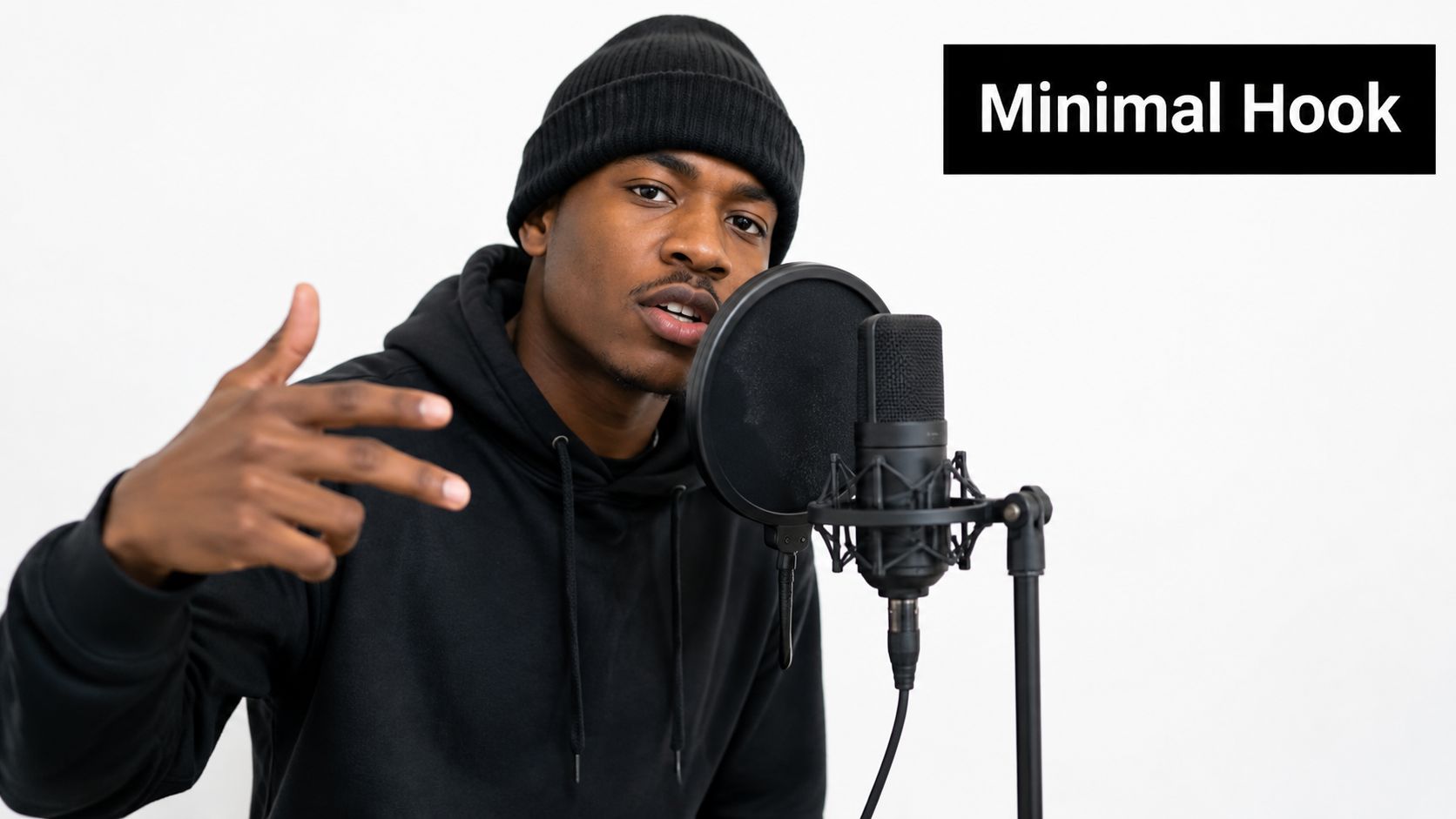 A young rapper in a black hoodie and beanie recording vocals into a professional studio microphone.
2. Dizzee Rascal and Rapid-Fire Bars
Rapid delivery creates pressure, but speed alone isn't the technique. The engine is density with control. Dizzee Rascal's early grime writing is often associated with tightly packed verses where multiple ideas, images, and attacks arrive in quick succession. The listener feels surrounded by information, yet the best bars remain clear enough to catch.
Think of a bar as a container with several compartments. One section can establish the target's flaw, another can add a comparison, and the final phrase can deliver the punchline. Alliteration gives the mouth a repeated route through the line, while internal rhyme makes the line feel fuller without relying only on the end rhyme.
Pack pressure into a repeatable pattern
Try this original structure:
“Late to the link, weak with the swing, speaks like a king but the team don't blink.”
The line moves through setup, sound pattern, status contrast, and payoff. It isn't valuable because it contains many words. It works because the repeated “ink,” “ing,” and “ink” sounds create propulsion while the final image undercuts the target's authority.
Use a metronome or drum loop and speak the line slowly first. Then increase speed only if every consonant survives. Your audience should hear the insult, not just the effort required to perform it.
For more controlled rhyme planning, use this practical guide to rap rhyme patterns. It can help you map end rhymes, internal echoes, and alternating sounds before you record.
Writing move: Draft four short lines. Give each line an internal rhyme, one concrete image, and one final word that changes the meaning of the setup.
AI prompt: “Write an original grime-inspired battle verse with rapid but intelligible delivery. Give each bar an internal rhyme, alliteration, a specific non-sensitive flaw about [target], and a clear punchline. Avoid threats, protected-class insults, and copied lyrics. Mark natural breath points.”
 A black notebook, a pen, headphones, and a stopwatch are neatly arranged on a wooden desk.
3. Skepta and the Call-and-Response Pattern
A grime hook becomes a group event when the performer leaves room for the audience. Skepta's “Shutdown” offers a strong model for call and response, where the lead voice makes a statement and the crowd answers with a repeated phrase, sound, or gesture. The structure creates participation without requiring the audience to learn a complicated chorus.
The trick is contrast. The call should contain the information or challenge. The response should be shorter, louder, and easier to remember. A stream chat, a live battle audience, or a group of friends can all fill the second half.
Write space into the lyric
Use a simple exchange:
- Lead: “Who brought the big talk?”
- Crowd: “Not you!”
- Lead: “Who lost the plot?”
- Crowd: “Not you!”
The response works because it remains stable while the call changes. You can also leave a blank for the crowd to fill:
“When I say [name], you say [short roast].”
For a live performance, pause after the call and resist the urge to fill the silence. That pause is part of the writing. It gives listeners a cue and makes their response sound intentional rather than accidental.
A creator can adapt the same system for a livestream by asking chat to complete the final word. A party host can divide the room into two sides and assign each side a response. The lyric becomes a social mechanism, not just a solo verse.
Writing move: Create a call with a concrete observation, then answer it with a two-word response that contains the main joke.
AI prompt: “Create an original UK grime-inspired call-and-response hook for a live crowd. Write four lead calls and one repeated audience response. Include pauses, keep the roast playful, and use a harmless detail about [target] without threats or private information.”
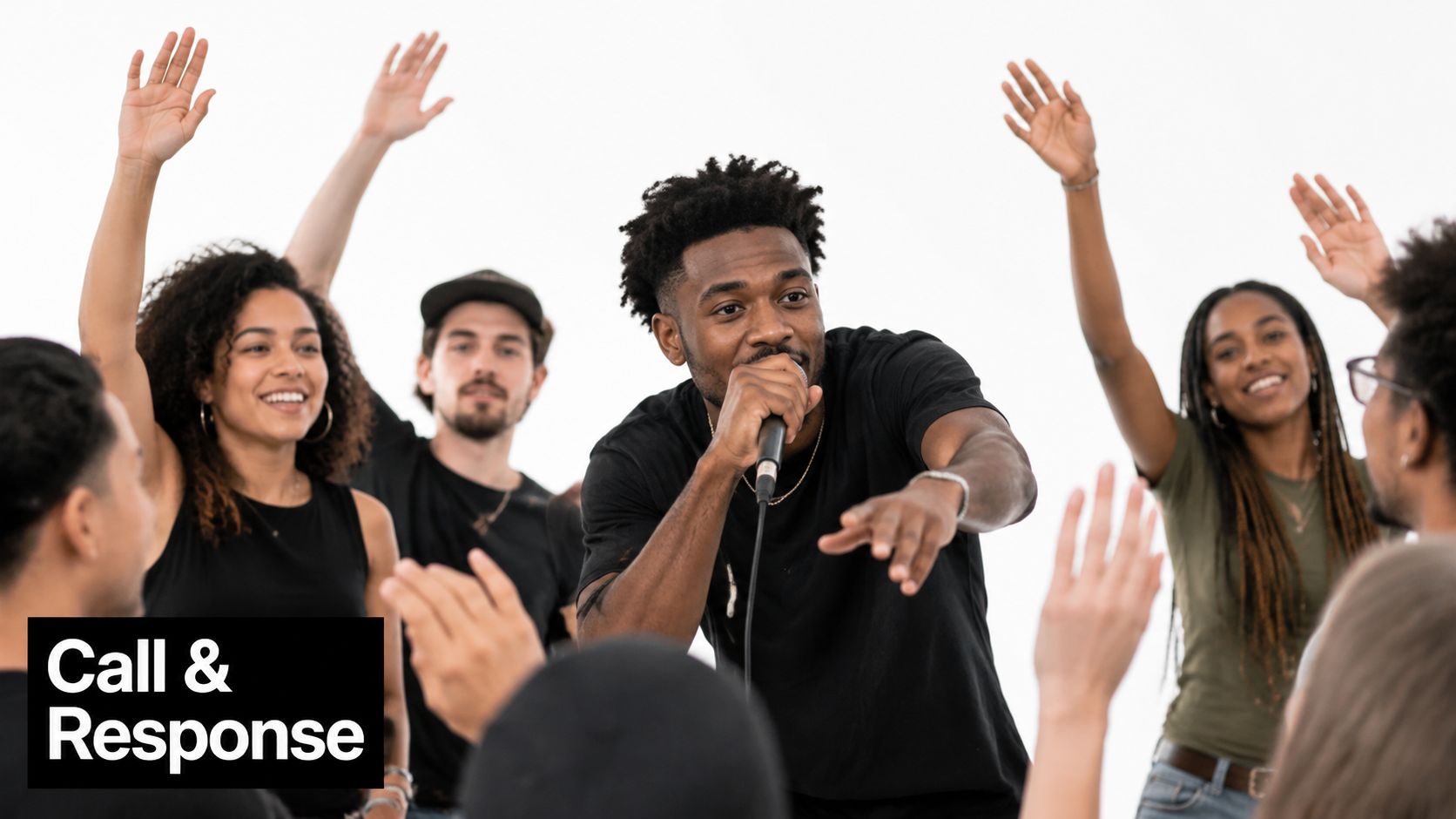 A group of diverse people cheering and raising their hands as a man performs with a microphone.
4. Lethal Bizzle and the Onomatopoeia Power Move
Some words carry their own percussion. Lethal Bizzle's “Pow! (Forward!!)” is a useful example of how onomatopoeia, or sound-effect language, can make a lyric feel physical. A sharp vocal sound can function like a drum hit, especially when the beat drops around it.
Used badly, sound effects become filler. Used well, they mark the exact instant when the insult lands. The sound should support the image, not replace it. A dismissive “zip,” a comic “boing,” or a dramatic “clang” can tell the listener how to interpret the line.
Make the sound earn its place
Try this original pattern:
“You promised a storm, brought a desk fan. Whoosh.”
The sound effect arrives after the contrast, so it acts as the final visual joke. For a more aggressive performance without threatening anyone, you might write:
“Big entrance, tiny impact. Tap.”
The shorter sound feels funnier because it undercuts the target's presentation.
Reserve these moments for important payoffs. A production pause can give the sound room, but the lyric should still work when read without effects. That test prevents the device from carrying a weak line.
Writing move: Write a setup that creates expectation, reverse it with a harmless comparison, then add one sound effect as the final punctuation.
AI prompt: “Write an original grime-inspired roast verse with one carefully placed onomatopoeic vocal sound. Build a clear setup and comic reversal before the sound effect. Keep the target fictional or use a consensual friend-group roast, avoid threats, and make the sound performable over a beat pause.”
5. JME and Clever Wordplay
Direct name-calling is easy to write and easy to forget. Clever grime rap lyrics make the listener perform a small act of discovery. JME's “Serious” represents the value of layered wordplay, double meanings, and precise references. The line can attack the target on the surface while also connecting to a job, hobby, phrase, name, or public habit.
A strong double entendre doesn't need a lecture after the punchline. The two meanings should be close enough that the audience can make the connection quickly. If the hidden meaning requires too much explanation, simplify the setup.
Build two meanings from one word
Suppose the target is always late and works with computers. You could build a harmless line around “lag”:
“You call it a schedule, I call it lag with a calendar.”
The line attacks lateness while borrowing language from technology. Another target might be obsessed with cooking:
“You bring heat to the kitchen, then freeze when the room gets loud.”
The same person is described through two contexts, and the contrast creates the sting.
Research the target only through information they've chosen to share publicly or that's part of a consensual joke. Don't turn personal vulnerability into material. Specificity should make a roast sharper, not invasive.
For more structured punchline construction, study this guide to writing rap punchlines. Use it to test whether the second meaning arrives naturally.
Writing move: Choose one ordinary word connected to the target, list its alternate meanings, and build a setup that makes both meanings relevant.
AI prompt: “Write four original grime-inspired punchlines using double meanings based on [public hobby, job, nickname, or harmless habit]. Each line should work on the surface and reveal a second meaning without explanation. Keep the humour playful, avoid sensitive personal details, and include one near-rhyme.”
6. Wiley and the Flex Paradox
A flex becomes more effective when it has a job beyond showing off. Wiley's “Wearing My Rolex” provides a reference point for the flex paradox, where confidence and mockery appear in the same passage. The performer establishes status, then uses that position to make the target's opinion seem less important.
The danger is empty boasting. A flex only strengthens a diss when it connects to the argument. If you mention an achievement, the next line should explain why that achievement changes the power dynamic.
Let status support the punchline
Use a three-step sequence:
- Credential: Name a real, verifiable achievement.
- Contrast: Show what the target claims or pretends to know.
- Dismissal: Explain why their criticism carries little weight.
An original example might read:
“I built the set, you reviewed the chairs. Different jobs, same room, no comparison.”
The speaker doesn't need a luxury object or invented number. The flex comes from contribution and competence. A streamer can mention a real project they completed before mocking a rival's advice. A rapper can reference an actual release or performance, then contrast it with the target's empty commentary.
Keep the balance natural. If every line boasts, the diss loses its target. If every line attacks, the status premise disappears. The strongest version uses one credible achievement to frame several sharper observations.
Writing move: Pick one achievement you can prove, connect it to the target's weak claim, and end with a calm dismissal rather than a louder insult.
AI prompt: “Write an original grime-inspired roast using one verifiable achievement from [speaker] and one harmless weakness in [target's public behaviour]. Make the achievement support the punchline, not dominate the verse. Use confident language, avoid invented statistics, threats, and sensitive information.”
7. Skepta and Absurdist Humour
A roast can win by making the audience laugh before it makes them judge the target. Skepta's “Man's Not Hot” is associated with absurdist humour delivered with complete seriousness. The joke comes from the gap between the performer's intense tone and the ridiculous claim being presented.
This approach works especially well for friends, parties, short videos, and streams because it reduces the sense of real hostility. The target becomes part of a comic scenario rather than the subject of a personal attack.
Turn exaggeration into the punchline
Start with one recognisable truth, then inflate it beyond logic:
“You missed one train, now the whole transport network waits for your apology.”
The grain of truth is lateness. The absurd escalation makes the line funny. Another example:
“You changed your profile photo, three councils declared a visual emergency.”
The claim is impossible, but the delivery can remain flat and authoritative.
Use a deadpan voice, steady rhythm, and a final pause after the exaggerated image. Don't explain why it's funny. The more seriously you perform the impossible scenario, the stronger the contrast becomes.
Writing move: Identify one harmless habit, exaggerate its consequences to an impossible scale, and deliver the final image as if it's official news.
AI prompt: “Write an original grime-inspired comedy roast about [harmless habit]. Start with one relatable truth, escalate it into an impossible public event, and deliver the exaggeration in a deadpan voice. Keep the tone friendly, avoid threats and identity-based insults, and end each bar with a clear visual joke.”
8. Jammer and Technical Precision
Technical grime writing doesn't need to sound academic. It needs to sound controlled. Jammer's “Know Your Ting” points toward a craft-led approach built from internal rhyme, complex bar structure, rhythmic variation, and deliberate word choice. The aggression comes from execution as much as content.
A technically strong verse gives the performer several ways to create movement. You can place a rhyme before the beat, stretch a vowel across the snare, interrupt a pattern with a short phrase, or switch from tightly packed syllables to open space for the final punchline.
Design the bar before you decorate it
Begin with a plain sentence:
“You talk like a leader, but nobody follows.”
Now build internal echoes around the idea:
“Big speech, weak reach, same screen, no team.”
The line is shorter, but its repeated vowel sounds and clipped phrasing create a rhythmic shape. Add a second layer only when the meaning remains clear. Technical density should sharpen the attack, not bury it.
You can also mark stresses with capitals during drafting, then remove the marks before recording. Speak the line over the track and move words until the stressed syllables land naturally. If the rhyme scheme forces an awkward accent, rewrite the sentence instead of cramming it into the beat.
For deeper practice with layered sound patterns, use this guide to multisyllabic rhymes. Treat rhyme as a tool for rhythm and meaning, not a decoration added at the end.
Writing move: Write a plain four-line message, add internal rhyme to each line, then cut any word that doesn't improve meaning, rhythm, or the final punch.
AI prompt: “Write an original UK grime-inspired four-bar verse with complex internal rhymes, varied syllable lengths, and one clear punchline per bar. Keep the message understandable, use specific harmless details about [target], mark breath points, and avoid copied phrases, threats, or sensitive information.”
8-Point Comparison of Grime Lyric Techniques
| Technique | 🔄 Implementation complexity | ⚡ Resource / execution requirements | ⭐ Expected effectiveness / impact | Ideal use cases | 💡 Key advantages / tips |
|---|---|---|---|---|---|
| Wiley, "Uh Oh" (Foundational Grime Hook) | Low, repetitive, minimal structure | Low, short hook, simple production | ⭐⭐⭐⭐, high memorability & virality | TikTok/Reels hooks, intro lines, simple diss openers | Use 2–4 syllable hook, add ad‑lib, test 15–30s |
| Dizzee Rascal, Rapid‑Fire Bars | High, dense internal rhyme packing | High, practice, breath control, tempo alignment | ⭐⭐⭐⭐, overwhelming impact in short windows | Battle rap, competitive roasting, high‑energy videos | Stack 3–4 insults per bar, match syllables to beat |
| Skepta, Call‑and‑Response Hook | Medium, leader/responder structure | Medium, needs participants/audience interaction | ⭐⭐⭐⭐, strong live engagement & shareability | Live shows, streams, group roasts, viral crowd moments | Design clear call (8) / response (4), build pauses |
| Lethal Bizzle, Onomatopoeia Power Move | Low–Medium, timing and placement critical | Low, simple words + production cue (drop/pause) | ⭐⭐⭐⭐, creates highlight moments & edit points | Video edits, meme clips, dramatic emphasis in live | Reserve SFX for payoffs; pair with beat pause |
| JME, Clever Wordplay & Double Entendre | High, layered meanings, careful construction | Medium–High, research, time, audience testing | ⭐⭐⭐⭐⭐, durable, discussion‑worthy impact | Sophisticated audiences, long‑form roast, replayable tracks | Research target, use homophones, test clarity |
| Wiley, "Wearing My Rolex" (Flex Paradox) | Medium, alternating flex/insult balance | Medium, credible achievements required | ⭐⭐⭐⭐, strong psychological undermining | Creators with verifiable success, brand positioning | Use verifiable flexes; balance ~40% flex / 60% insult |
| Skepta, Absurdist Humor & Anti‑Flex | Low, conceptually simple but needs timing | Low, minimal resources; comedic delivery key | ⭐⭐⭐⭐, highly shareable, low‑toxicity engagement | Party roasts, youth audiences, meme content | Deadpan delivery; exaggeration as punchline; one grain of truth |
| Jammer, Technical Precision & Bar Complexity | Very high, multi‑syllable, internal schemes | High, writing time, revision, skilled execution | ⭐⭐⭐⭐⭐, high credibility; ages well; respected craft | Competitive battles, craft‑focused releases, educational breakdowns | Use multi‑syllable pairs, match rhythm to drums, provide bar breakdowns |
Turn Technique Into Your Own Grime Blueprint
The eight methods work because each one solves a different writing problem. Minimalist repetition gives a track a memorable centre. Dense bars create battle pressure by making the listener process several ideas quickly. Call and response turns a solo lyric into a crowd event. Sound effects add immediate audio punctuation. Wordplay rewards attention. Flexes establish status before the attack. Absurdity keeps a roast funny instead of hostile. Technical rhyme demonstrates craft through control.
Grime's language also carries social information. A 2018 corpus study examined 589 nominal address and reference terms from 16 songs by six artists across London, Cardiff, and North England, finding that all the artists followed implicit address rules (Aston University's study record). That finding matters for writers because terms of address aren't random decoration. They can signal closeness, challenge, rank, mockery, or belonging. Choose them for the relationship and setting, not just because they sound recognisably British.
The genre's development also helps explain its directness. Grime emerged through grassroots scenes, pirate radio, raves, and local performance spaces before gaining wider UK recognition through artists including Dizzee Rascal, Kano, Lethal Bizzle, and Wiley (historical research on grime's origins). The writing needed to work immediately in a room, on a radio set, or over a hard backing track. That's why delivery, rhythm, and memorable phrases matter as much as the written page.
A practical workflow keeps the choices manageable:
- Define the target and audience. Decide whether you're writing for a battle, a livestream, a music video, or a friendly group roast. Use public, harmless details, and avoid threats or private sensitive information.
- Choose one primary technique. Pick repetition for memorability, dense bars for pressure, call and response for crowds, or absurdity for comedy.
- Add one supporting device. Pair a hook with an ad-lib, wordplay with a concrete image, or technical rhyme with a clear pause.
- Write an original hook and a four-bar test. Don't start with a full song. Test whether the core idea survives spoken delivery.
- Revise for clarity and performance. Remove filler, mark breaths, record yourself, and listen for words that disappear at speed.
- Use AI for variation, not replacement. DissTrack AI can provide original UK Grime-style drafts, alternate hooks, rhyme ideas, and prompt-based variations. Edit every result into your own voice, and check that the tone fits the audience.
Recent industry coverage describes grime moving toward melodic blending, while UK rap trend reporting highlights the role of shorter social content in helping tracks circulate organically (coverage of recent grime releases). That shift gives writers more room to combine hard verses with melodic hooks, but it also makes concise writing more valuable. A hook needs to work in the full track and in isolation. A punchline needs to make sense before the viewer scrolls away.
The safest roast is also the most durable one. Attack habits, weak arguments, fictional characters, performance choices, or consensual inside jokes. Don't threaten anyone, expose private information, or turn protected characteristics into targets. Strong grime-inspired writing doesn't need cruelty to sound dangerous. It needs timing, specificity, confidence, and a line the audience can remember.
DissTrack AI offers AI-generated roast lyrics with selectable styles, including UK Grime, plus variations you can edit for hooks, punchlines, rhyme patterns, and performance. Use it to turn the techniques in this guide into original drafts, then visit DissTrack AI to build a playful, personalised diss track.