
10 Punjabi Bhangra Songs for Parties, Weddings and Roasts
The dhol is loud, your cousins are warmed up, and the sangeet dance floor is finally packed. Then the playlist ends. Someone pulls out a phone, someone else starts searching, and your best dancers wander toward the food.
You don't need another folder of vaguely festive tracks. You need Punjabi bhangra songs with clear jobs: pull people back, carry a group routine, or give a birthday roast a hook everyone can shout. The useful question isn't which song is most famous. It's what you can borrow from its arrangement without flattening its personality.
These picks move between British bhangra, Punjabi pop, Bollywood celebration tracks, and Punjabi hip-hop. They aren't interchangeable, and that's useful. A chant that rescues a party won't necessarily leave enough room for a detailed roast verse.
Keep the crowd's job simple. Let them recognize the hook, answer the call, or land the dance move. Don't ask them to learn everything at once.
For a mixed-age celebration, EventUploader's retirement party music guide is a useful companion when planning beyond the dance-floor peak. Here, the focus is sharper: hooks, transitions, and remix decisions you can put to work.
Borrow the structure first. If you want to release a remix using an existing recording, sort out permission rather than assuming a short sample is automatically yours to use.
1. Mundian To Bach Ke – Panjabi MC
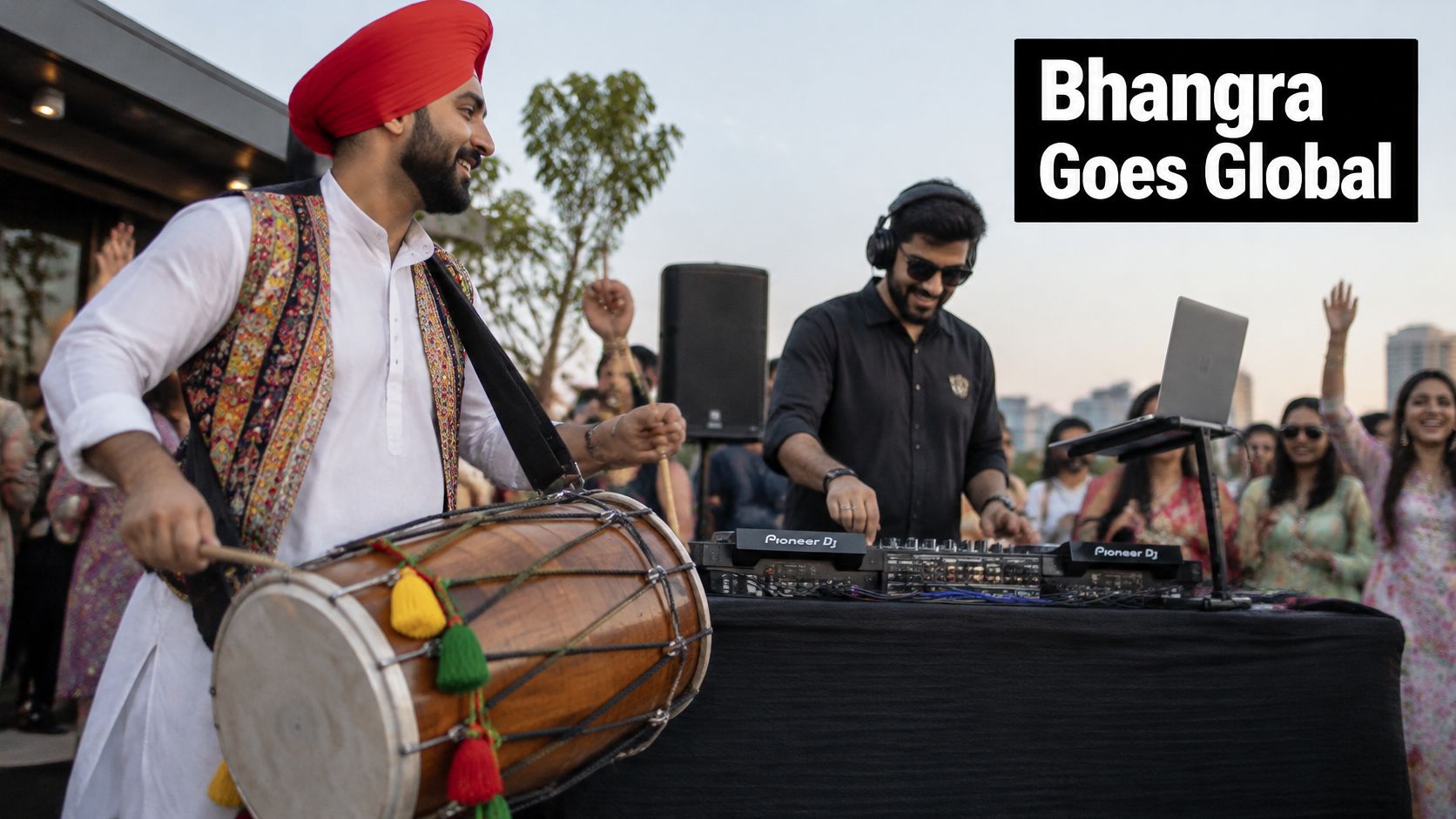 A man in a traditional red turban plays the dhol drum beside a DJ mixing music outdoors.
That repeating melodic figure gives the room something to recognize before anyone starts singing. Then the vocal hook slots into the groove without overcrowding it. For a DJ, that's useful: dancers can settle into the rhythm immediately.
The Britannica bhangra entry identifies “Mundian To Bach Ke” as a United States Top 40 hit, a concrete example of its crossover reach. For creators, the more useful lesson is how little the core arrangement needs to communicate its identity.
Borrow the Repetition, Not the Recording
For a friend's birthday roast, write an original warning about a harmless habit, such as always arriving after dinner. Repeat the central phrase, then change the final detail so the audience gets a fresh joke without losing the rhythm.
- Party use: Bring in the recognizable opening cleanly instead of covering it with a long microphone announcement.
- Roast use: Keep the recurring line shorter than the verse. The crowd needs somewhere easy to join.
- Remix move: Thin out competing bass parts before layering a new beat.
The Afrobeats playlist guide offers another route into groove-led programming. Compare how much space each rhythm needs rather than forcing both into an identical drum pattern.
2. Tunak Tunak Tun – Daler Mehndi
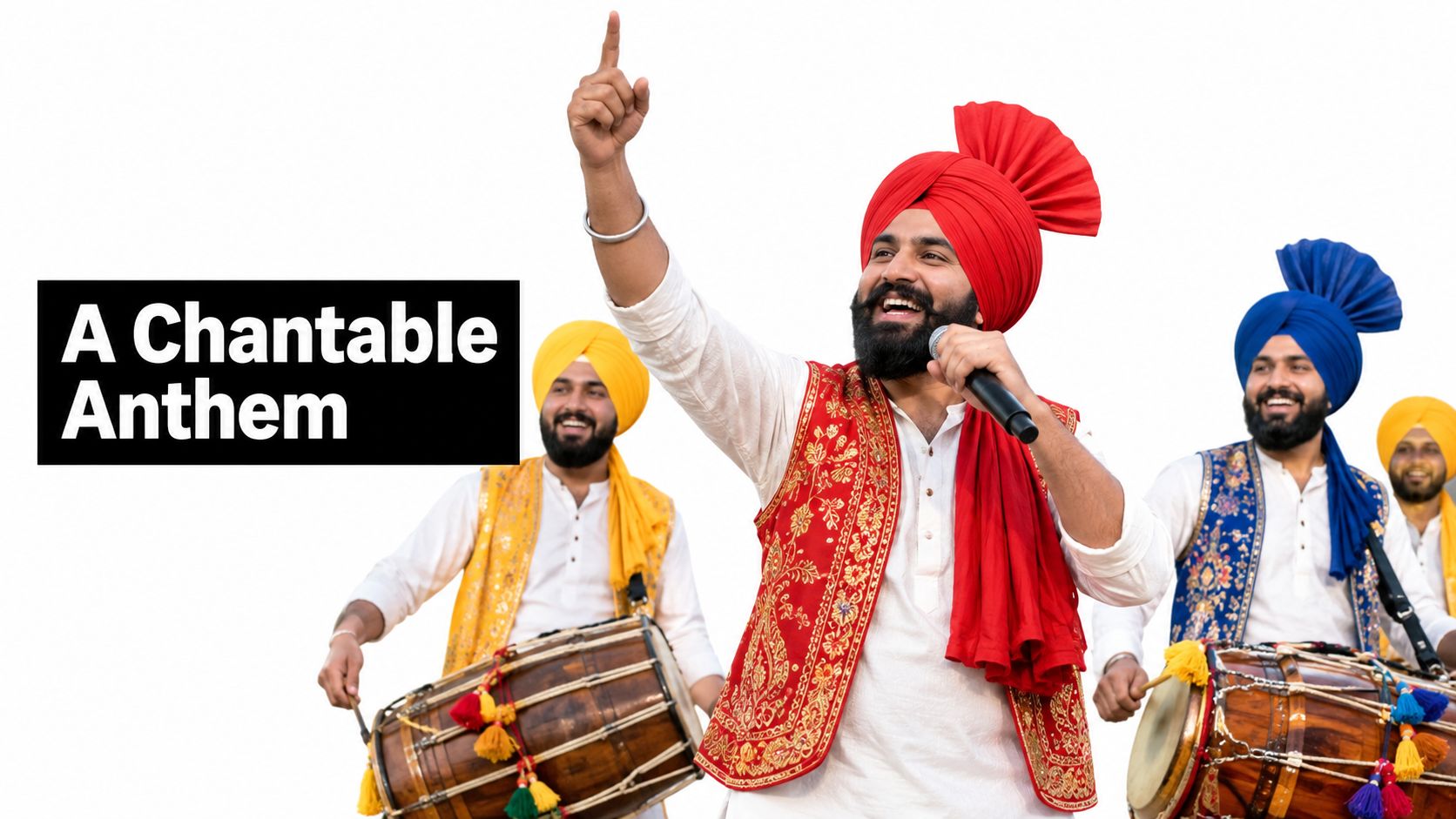 A group of Punjabi men in traditional attire performing Bhangra while singing and playing the dhol drum.
A crowd doesn't need to understand every lyric to enjoy a vocal rhythm. “Tunak Tunak Tun” makes that obvious: articulation, repetition, and theatrical delivery give listeners an immediate way into the performance.
This is a strong template for a streamer's roast intro or an exaggerated birthday entrance. It's less useful when you need the audience to catch a complicated story. Keep the comedy physical and the central phrase easy to repeat.
Performance rule: If the joke needs a paragraph of explanation, don't put it in the chant.
Build an original refrain around your friend's nickname, then answer it with a familiar habit. Say the target keeps abandoning games halfway through: the group can answer the name with a playful complaint about disappearing.
For an edit, alternate a full-energy refrain with a stripped-back response. That contrast gives the next entrance impact without adding another synth or louder percussion.
Don't pitch-shift the entire recording just to make it sound ridiculous. You can lose the vocal's clarity and make the joke feel cheap. Try your own exaggerated delivery over an original backing instead, with ad-libs placed between phrases rather than across the words everyone wants to shout.
3. Blue Eyes – Yo Yo Honey Singh
“Blue Eyes” suits a different moment from a full-throttle dhol anthem. Use it when you want a cooler, more self-assured party mood, or when a roast performer needs to sound amused rather than furious.
The useful template is the contrast between a melodic hook and rhythmically controlled delivery. You don't need to shout every punchline. A relaxed voice can make a specific joke sound more confident, especially when the backing track leaves room around it.
Let the Bass Support the Voice
Say you're making a roast clip about a friend who treats every outfit like a red-carpet appearance. Keep the setup conversational, pause before the revealing detail, and let the beat return after the punchline.
- Hook choice: Use a compact phrase that names the behavior, not a long description of the person.
- Production choice: Duck the bass slightly under important words if it masks the vocal.
- Editing choice: Cut to the reaction after the joke lands, not midway through the setup.
Don't treat this as a traditional bhangra reference just because it belongs in the wider Punjabi party conversation. Its value here is pop economy and controlled swagger. Adding busy dhol fills everywhere won't automatically improve it; those fills can interrupt the very space that makes the vocal work.
4. Lungi Dance – Honey Singh, Chennai Express
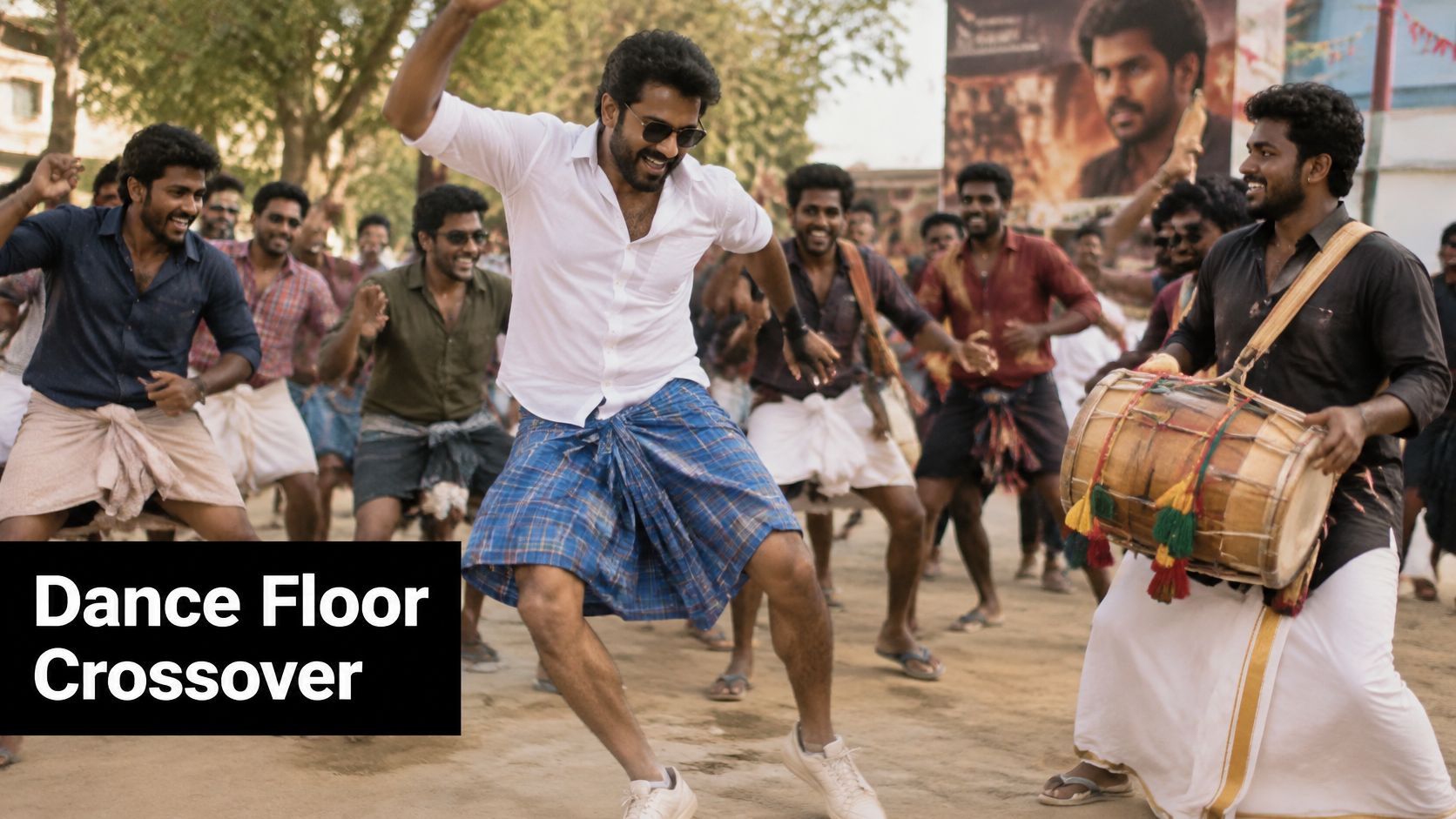 A group of men in traditional lungis dancing joyfully in a village setting outdoors during the day.
Treat “Lungi Dance” as a Bollywood crossover party pick, not a definition of Punjabi folk music. Its practical strength is the connection between an obvious refrain and a visual action. The audience gets something to say and something to do.
That makes it useful for a short wedding routine or a roast video with a recurring gesture. A friend who constantly checks their watch could inspire an original hook paired with an exaggerated wrist check.
Make the Reference Earn Its Place
Cultural references work when the audience understands them and the performer handles them with care. Don't mash together Punjabi, Tamil, and generic filmi imagery as though they mean the same thing.
For a remix, leave room before the refrain so dancers can prepare their entrance. An uncluttered lead-in often works better than a huge build packed with risers, snare rolls, and spoken instructions.
The trade-off is repetition. A simple dance cue gets people involved quickly, but it can become tiring if you extend the edit without adding contrast. Switch between the full group, a featured dancer, and a vocal response rather than looping the same moment indefinitely.
For a roast, make the target's behavior the joke. Clothing or regional identity shouldn't be the punchline.
5. Gallan Goodiyaan – Dil Dhadakne Do
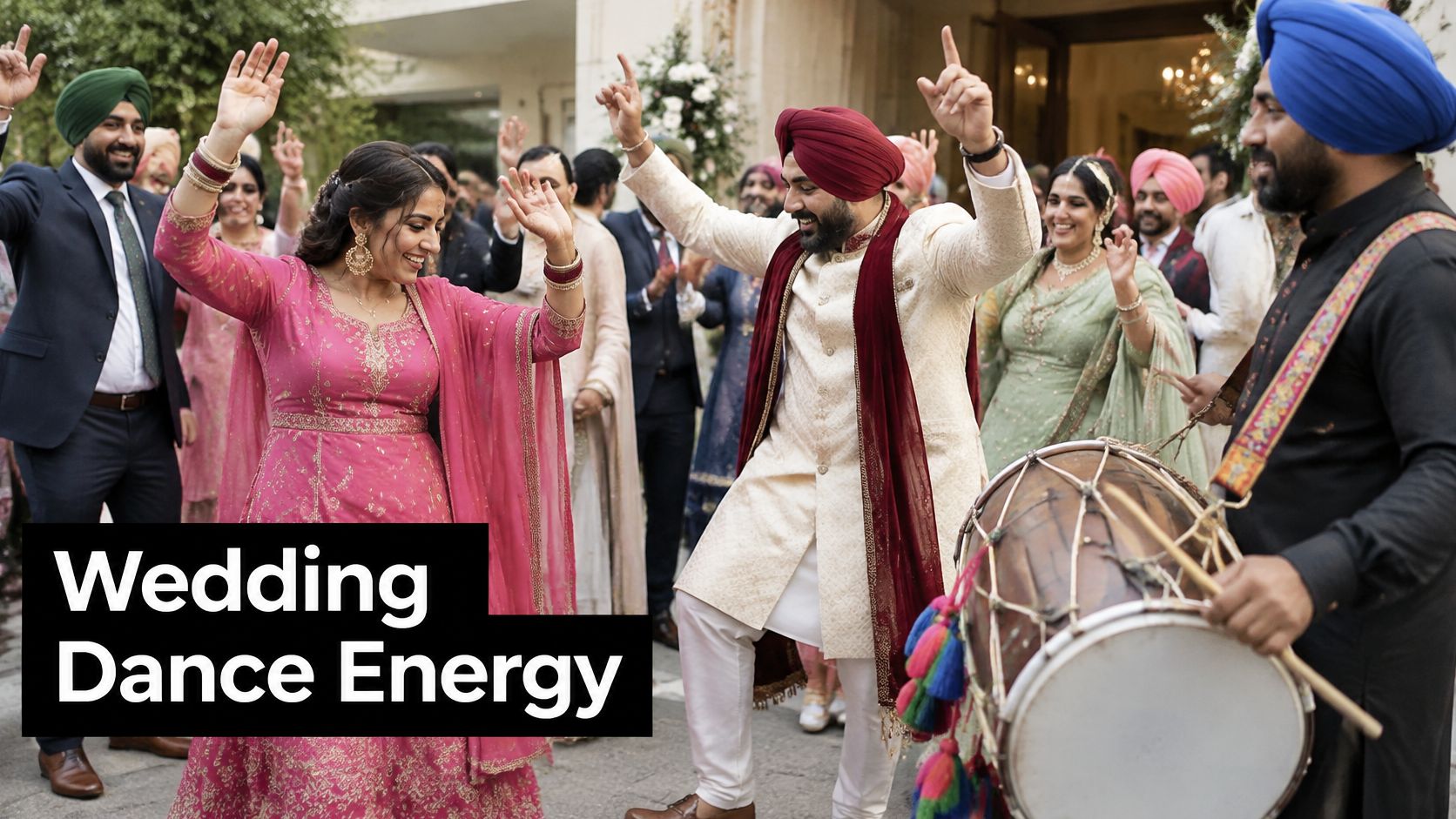 A joyful couple dancing to traditional music at a vibrant Indian Punjabi wedding celebration outdoors.
At a sangeet, a solo showcase and a family singalong are different assignments. “Gallan Goodiyaan” is a useful reference for the latter: changing voices and festive phrasing make room for an ensemble rather than a single dominant performer.
Borrow that arrangement for a celebration roast. Let siblings deliver the setup, friends supply the embarrassing detail, and the whole group return for an affectionate refrain. The target should feel included in the celebration, not trapped in a public interrogation.
- Assign voices: Give each performer a distinct role so nobody fights for the same entrance.
- Write handoffs: End phrases cleanly and leave an audible cue for the next person.
- Protect the refrain: Keep the group section easier than the solo lines.
A wedding version might tease the groom's elaborate spreadsheet planning, then resolve into genuine praise for how much care he puts into the relationship. That turn gives the performance warmth without sanding off every joke.
For the remix, reduce backing vocals beneath live performers. A dense original chorus plus an enthusiastic family can become a blur through a venue PA.
Rehearse with the actual edit, including the ending. A confident final pose beats performers looking at each other while the music keeps going.
6. Mauja Hi Mauja – Jab We Met
Some tracks suit swagger; “Mauja Hi Mauja” suits release. Use its celebratory feel when the room needs to stop watching and start joining in.
For creators, the useful idea is forward movement. A verse can describe a small disaster, build the embarrassment, and then return to a joyful hook. That's a better birthday-roast structure than a pile of unrelated insults.
Give the Joke a Destination
Say your friend appointed themselves the road-trip navigator and promptly sent everyone toward the wrong venue. Start with their confidence, reveal the mistake, and save the destination for the punchline.
Keep the important nouns easy to hear. Listeners shouldn't need captions to understand where the story went wrong.
The groove matters as much as the rhyme: Spotify's Punjabi music feature describes traditional bhangra through the lively eight-beat kaherva meter. Tap the underlying pulse before writing, then place the punchline where you can deliver it without rushing.
In your DAW, record a rough spoken take before polishing the lyrics. If you're swallowing the final word, shorten the setup rather than squeezing harder.
For a dance edit, preserve a clear rhythmic lead-in. Removing every transition may make the file shorter, but it also removes the cues performers need.
7. Patiala Peg – Diljit Dosanjh
The strongest lesson from “Patiala Peg” is delivery. Confidence doesn't require a clenched jaw or a shouted vocal; a relaxed phrase can still sit firmly against energetic percussion.
Use that approach for a party roast about someone with outsized confidence and harmlessly questionable results. A friend who gives cooking advice while burning the snacks offers better material than a generic attack on their intelligence.
Leave room after the detail that proves the joke. Don't bury the laugh under your next rhyme.
The song's drinking theme also makes selection a context decision. For a family function, school setting, or alcohol-free celebration, choose material that fits the audience rather than assuming every Punjabi party track belongs everywhere.
Keep the Swagger, Lose the Clutter
Write the verse in your natural vocabulary first. Add Punjabi phrases only when you understand them and can pronounce them comfortably; decorative slang can make a personal roast sound borrowed.
For video, let the expression and beat accent support the punchline. You don't need a transition effect on every word.
When building an original backing, choose which element leads: dhol, bass, or vocal. Keep the others supportive during dense lines, then open the arrangement at the hook. A confident performer still needs space in the mix.
8. Moosetape – Sidhu Moose Wala
Moosetape is an album, not a song, so use this entry as a Punjabi hip-hop listening reference rather than a single-track wedding recommendation. Choose an individual cut before planning an edit, and check its lyrics against the room you're playing.
Its role here is contrast. For a roast verse, study the relationship between a commanding delivery, narrative detail, and the return to a memorable hook. Don't assume every Punjabi rap arrangement needs an added dhol loop to qualify for your project.
Write Evidence, Not Borrowed Menace
A competitive verse becomes sharper when it points to a recognizable contradiction. Your friend calls themselves the group's financial adviser but never remembers who paid for dinner. That's usable material; vague threats aren't.
- Verse detail: Name the harmless behavior that everyone recognizes.
- Hook restraint: Reduce the central joke to a phrase people can remember.
- Hybrid production: Keep trap percussion light enough that the main rhythmic accents remain clear.
The Egyptian rap music guide offers a useful comparison for listening to regional identity through rap. Compare phrasing and arrangement without treating different languages or scenes as interchangeable.
Avoid copying an artist's persona. Your own conversational detail will sound more convincing than borrowed street imagery, especially when the subject is someone everyone knows personally.
9. Brown Rang – Yo Yo Honey Singh
“Brown Rang” is useful for studying how a repeated melodic phrase can anchor a more conversational verse. Keep that distinction in mind: the verse carries detail, while the refrain gives listeners an easy return point.
For a roast, borrow the structure rather than the song's subject matter. Appearance and complexion aren't useful targets when the stronger joke is sitting right there in someone's behavior.
Try a verse about the friend who calls every casual gathering an exclusive event. Describe the elaborate invitation, reveal the ordinary setting, then return to an original hook about their unnecessary VIP treatment.
Tighten the Cadence Before Adding Drums
Read the verse aloud over a simple kick-and-snare pattern. Remove filler words before adding a busy percussion layer; otherwise, you'll spend the mix trying to rescue a crowded performance.
The hardcore hip-hop songs guide offers a contrasting reference for more forceful delivery. You can borrow that firmness without importing a hostile tone into a friendly roast.
For an edit, keep the melodic hook audible and avoid stacking another lead melody over it. Competing hooks divide attention.
This template works best when you want confident, conversational teasing. If the whole group needs to shout along immediately, a simpler chant will usually serve you better.
10. Bolo Taa Ra Ra – Daler Mehndi
Finish with participation rather than another technically impressive verse. “Bolo Taa Ra Ra” is a useful reference for theatrical delivery, rhythmic vocal shapes, and the pleasure of answering a lead performer.
That makes it a strong model for a live birthday roast finale. The lead supplies a fresh joke, the group answers with a rehearsed original refrain, and the target gets a clear invitation to join in.
Bhangra's adaptability isn't a break from its history. The University of Manchester's account of British bhangra describes immigrant musicians combining Punjabi vocals and dhol-based rhythms with rock, disco, reggae, electronic production, and hip-hop.
Make the Response Easier Than the Call
Give the lead performer the detailed line. Give everyone else a response they can learn by hearing it.
- Live cue: Use a visible hand signal before the group entrance.
- Vocal arrangement: Leave a gap for the response instead of singing across it.
- Remix contrast: Pull back the instruments briefly, then restore the full groove beneath the chant.
Don't keep raising the volume to manufacture excitement. A short reduction in density can make the return feel bigger.
For the last pass, switch the joke into praise. The crowd leaves with a shared refrain, and your friend leaves knowing the performance was for them, not against them.
How the ten picks compare by era, best use-case, hook style and roast potential
| Item | Era | Best For | Hook Style | Roast Potential |
|---|---|---|---|---|
| Mundian To Bach Ke – Panjabi MC | 2003 | Bhangra-rap crossover | Short, chantable call-and-response | Playful rival call-outs; light rather than harsh |
| Tunak Tunak Tun – Daler Mehndi | 1998 | Crowd chants and meme-style roasts | Repetitive, mantra-like phrase | Funny one-line chants; limited room for detailed punchlines |
| Blue Eyes – Yo Yo Honey Singh | 2010s | Club-ready bhangra-pop | Catchy, dance-focused hook | Punchy party roasts; formulaic structure |
| Lungi Dance – Honey Singh (feat. Shah Rukh Khan, Chennai Express) | 2013 | Film-style party tracks | Simple, recognizable dance hook | Playful cultural teasing when the audience knows the references |
| Gallan Goodiyaan – Dil Dhadakne Do (2015) | 2015 | Group celebrations and ensemble vocals | Festive group vocals | Friend-group call-outs; more celebratory than confrontational |
| Mauja Hi Mauja – Jab We Met (2007) | 2007 | Story-driven, character-based verses | Conversational and narrative | Personal roast stories with a setup and punchline |
| Patiala Peg – Diljit Dosanjh | Modern Punjabi pop | Swagger-driven delivery | Party-focused and confident | Relaxed battle-style swagger; party themes may limit sharpness |
| Moosetape – Sidhu Moose Wala | 2020 | Punjabi hip-hop and battle-style writing | Punchy hooks with narrative rap | Strong potential for specific, competitive lines |
| Brown Rang – Yo Yo Honey Singh | Early 2010s | Rap-forward bhangra writing | Repeated hook over rhythmic flow | Swagger-heavy delivery; less suited to complex diss writing |
| Bolo Taa Ra Ra – Daler Mehndi | Classic bhangra-pop | Live crowd interaction | Theatrical call-and-response | Comedic, interactive roasts; limited lyrical density |
Pick One Track, Write One Verse, Then Hit Play
Choose the song that fits the moment, not the one that makes your playlist look knowledgeable. A wedding ensemble needs clear handoffs. A party needs an entrance people recognize. A roast needs words the audience can clearly hear.
Start with an original hook you can say comfortably over the groove. Then write a setup that points toward a specific, harmless detail: the permanently delayed arrival, the overplanned holiday, the supposedly legendary cooking. If the joke could describe anyone, keep writing.
Test the Verse Before Decorating It
Record a rough take on your phone or directly into your DAW. Listen without reading the lyrics, because that's how the audience will hear it. Mark any phrase you can't understand immediately and simplify it.
Then test the hook with someone who hasn't helped write it. Ask them to repeat it back, not to judge whether it's catchy. Their attempt will tell you which words need trimming.
Remix boundary: Borrow the arrangement idea freely. Don't assume that copying a recording, melody, or lyric is the same thing as learning from its structure.
For an original backing, choose a dominant groove and build around it. Don't stack a full trap kit, busy dhol fills, a lead sample, and constant ad-libs beneath every line. Introduce those elements where they create contrast, then pull them back when the words matter.
If you're sampling or releasing a remix, identify the permissions you need before distributing it. An original performance of a borrowed melody can still raise rights questions, so replaying a part isn't a universal shortcut.
At DissTrack AI, our model was trained on thousands of diss tracks, including works by 2Pac, Nas, Eminem, and Pusha T, and generates a draft in 30 seconds. Use that draft as raw material, then edit the phrasing, personal details, and tone until it sounds like something you'd actually say.
Finally, rehearse the ending. Decide whether the music stops on the punchline, the group returns for the hook, or the target gets the last word. A clean finish makes a homemade performance feel prepared.
The best Punjabi bhangra songs give you more than energy to borrow. Listen for how the singer repeats, pauses, cues the dancers, and leaves room for a response. Take that discipline into your own verse, keep the joke personal without getting cruel, and let the room join in.
DissTrack AI turns a target's name, your relationship, and inside jokes into structured roast lyrics you can edit for a Punjabi party groove or wedding performance. Bring your hook idea to DissTrack AI, choose a style and level of savagery, then shape the draft around your own voice.