
8 Rap Battle Lines That Rhyme by Style
The rhyme is only half the attack. Rap battle lines that rhyme work because sound, setup, target-specific detail, and delivery arrive together. Quantitative research reflects that density: one computer-music study found 1.67 rhymes per line in one rap dataset, while a separate corpus examined 1,287 battles, 6,791 verses, and 52,422 sentences.Computer-music study That doesn't mean every bar needs a rhyme in every corner. It means strong battle writing treats rhyme as architecture, not decoration.
Battle rap's modern form is widely traced to the late 1970s East Coast hip-hop scene, with the Kool Moe Dee and Busy Bee Starski clash in December 1981 often described as a turning point toward direct, technical lyricism.Battle rap history The eight frameworks below move from accessible punchlines and compound structures to internal, multisyllabic, callback, and beat-led patterns. Adapt the mechanics, not the exact wording. If writer's block hits, DissTrack AI can help test target names, inside jokes, style tags, and alternate variations before you shape the strongest draft into your own voice.
1. Internal Rhyme Schemes
Internal rhyme turns one bar into a moving pattern of sound. The matching or related sounds appear inside the line, not only at its ending. In “You talk big, but your small plans stall,” talk, small, and stall create repeated vowel and consonant links. The listener hears several contacts before the final word, giving the bar control and forward motion.
Use this architecture when you want technical energy without making every line difficult to follow. Eminem's “His palms are sweaty, knees weak, arms are heavy” shows how closely placed sounds can sharpen delivery. Nas often layers similar echoes through a line before resolving with an end rhyme. Quantitative research on rap lyrics found that internal rhyming patterns can appear multiple times within a bar, rather than depending only on end-line pairs.Quantitative rap rhyme research
 A close-up shot of a person's hands writing lyrics in a notebook with a black pen.
Build density without losing breath
Start with a target-specific detail. Then choose two or three words that connect by sound and sharpen the attack:
Practice line: Your fresh-fit flex gets checked when the thread starts fraying.
Fresh-fit flex creates the early sound cluster, while thread starts fraying carries the image toward the payoff. Alliteration can add pressure, but crowded consonants may slow the mouth. Read the line aloud and simplify any word that interrupts the rhythm.
- Layer sound: Place internal echoes near the middle while keeping the final word easy to hear.
- Support meaning: Each rhyming word should develop the insult, image, or comparison.
- Protect delivery: Leave a natural breath point before the payoff.
- Personalize the angle: Draw from the target's hobby, job, wardrobe, name, or repeated phrase.
For a reusable variation, try: “Write four battle bars about a target who overstates their talent. Use internal rhymes around their name, one alliterative phrase, and a final image that can be delivered in one breath.” Then replace the prompt's generic flaw with a detail only your opponent would recognize.
2. Multisyllabic End Rhymes
Multisyllabic end rhymes turn a line ending into a sustained sound pattern. Instead of matching late with fake, connect several syllables, such as devastating with separating, or methodology with monopoly. The extended pattern gives a verse technical movement, while the wording must still sound natural in performance.
Use this architecture to develop one accusation across several bars. Start with a weakness only your target would recognize, choose a compatible sound family, and make each line add evidence or pressure. The rhyme should work like a rail: it guides the listener forward while the meaning supplies the momentum.
Setup: You borrow every gesture, every pose, every phrase.
Development: Your whole methodology is built from borrowed ways.
Payoff: Call it originality, but it still reads like a counterfeit display.
The spellings do not need to match. Rhyme is heard, so read the draft aloud and listen for the ending sounds and their relationships across lines. Phonetic analysis of rap examines those sound connections rather than relying on visual spelling.Rhyme-density analysis
Keep the chain conversational
A three-line chain can hit harder than a crowded verse when the syntax stays direct. Add an internal echo if an ending feels thin, then remove any extra match that makes the bar difficult to say. The audience should grasp the accusation before noticing the construction.
For focused practice, study this guide to multisyllabic rhymes. DissTrack AI can generate variations around a name, profession, or inside joke, but your target detail should drive the final rewrite.
Use this prompt: “Create a four-line battle scheme using a three-syllable rhyme family about a rival who copies my style. Keep the language conversational and end with a clear punchline.” Replace the generic flaw with a detail your opponent would immediately recognize.
3. Schemes With Double Meanings
 A bald African American comedian smiles while holding a microphone on stage in front of an audience.
A double meaning turns one rhyme into two angles of attack. The first reading establishes a clear scene, while the second redirects the same word toward a metaphor, joke, or threat. Like a camera with two lenses, the bar appears straightforward at first, then reveals another subject when the rhyme lands.
For a rival who works in photography, “exposure” can describe a camera setting and public embarrassment. Build the professional context first, then let the second meaning surface without explanation:
Your shots need better focus, your whole image is exposed.
You frame every little moment, still nobody knows.
The rhyme connects exposed and knows, while shots, focus, image, and frame establish the target's field. The second layer attacks their reputation. Specific vocabulary makes the line feel written for that opponent, not pulled from a generic list. Nas's use of ill demonstrates how one word can suggest danger and exceptional skill, depending on its surrounding lines.
Build the second layer from the target
Start with a detail the opponent already owns: a job, hobby, nickname, favorite team, or repeated boast. List words from that world, then test which ones can also describe failure, vanity, weakness, or contradiction. The strongest double meaning grows naturally from the target's identity.
Keep the setup ordinary enough that the audience follows it on the first pass. If the mechanism is announced, or the reference needs a long explanation, the second reading loses force. Read the lines aloud as well. A clever connection still fails if the wording interrupts your breath or hides the rhyme.
Use this four-part process:
- Context: collect vocabulary from the target's world.
- Second reading: connect one term to a flaw or contradiction.
- Rhyme placement: put the reveal near a clear end rhyme or internal echo.
- Delivery: pause briefly before the second meaning, then let the final word complete it.
Use this variation prompt: “Write three battle lines for a target who treats cooking like a professional career. Use kitchen language and one second meaning about their weak reputation. Keep the tone witty rather than cruel.” DissTrack AI can generate context-based variations, but your edit should decide whether both readings sound clear in your voice.
4. Compound Rhyme Schemes
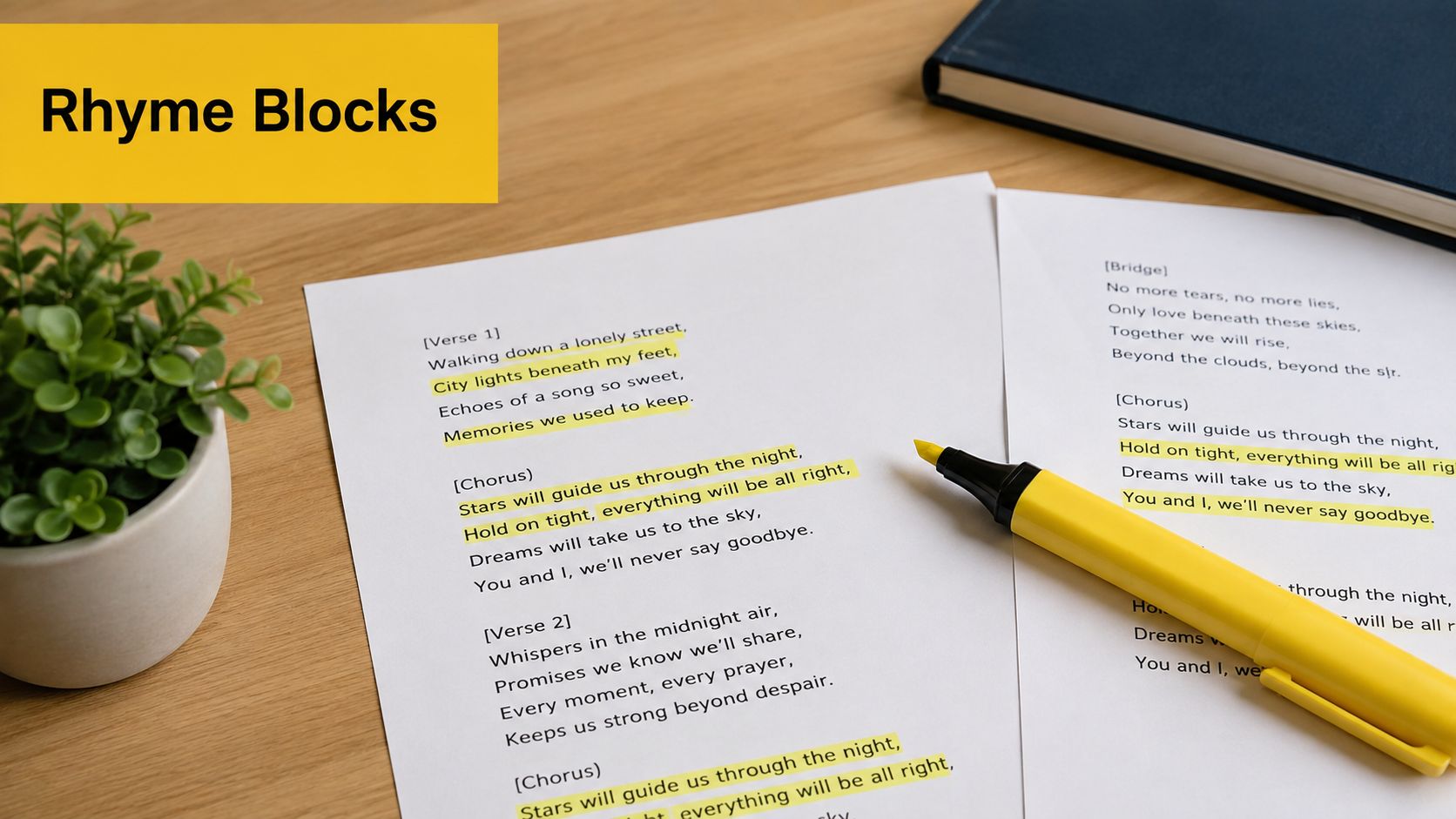
Compound rhyme schemes turn several lines into one controlled attack. Arrange the rhyme families as AABB, with two lines on one sound followed by two on another, or use AAAA for sustained pressure. ABAB creates a return pattern that feels more conversational. The structure works like stepping stones: each line carries the listener toward the final hit.
Use the block to build an argument rather than stack unrelated insults. State the accusation, add recognizable evidence, sharpen the image, then finish with the kicker. Each couplet should make sense alone, while the complete sequence keeps pointing at the same weakness.
Example:
Your whole brand is loud, but the substance stays thin,
You pose like a champion, then fold when we begin.
You claim every victory, rewrite every score,
But the only thing you conquer is the mute button on the floor.
The endings do not share one perfect rhyme throughout, yet their related sounds and repeated subject create forward motion. Research on rap rhyme density treats participating line endings as part of the rhyme measure and describes 60% or more as a strong end-rhyme benchmark.Rhyme-density benchmark Use that figure as a drafting reference, not a target that sacrifices meaning, breath, or delivery.
Use the block as an argument
A compound scheme suits the opening of a round because its logic becomes easy to track. Establish control with AABB, then loosen the pattern when the attack needs greater speed or aggression. The change feels deliberate because the first block has already given the audience a clear rhythmic map.
Build the sequence in four passes:
- Accusation: Name the contradiction.
- Evidence: Point to behavior the audience recognizes.
- Expansion: Add a concrete visual comparison.
- Punchline: End with the line people can repeat.
Try this variation prompt: “Write four lines about a rival who claims to be fearless but avoids direct challenges. Use AABB, include one concrete behavior, and make line four the sharpest.” Draft the argument before polishing the rhyme. Then read it aloud and adjust stressed words, pauses, and line length. The pattern should guide the attack, while your own phrasing keeps it personal.
 A printed lyric sheet with highlighted lines sits on a desk next to a yellow highlighter.
5. Slant and Assonance Rhymes
Slant rhyme makes a near match sound deliberate. Instead of repeating every ending sound, it can share a stressed vowel, a consonant, or a rhythmic shape. Home and come, soul and cell, or breathe and death do not align perfectly on paper, yet timing and emphasis can connect them in performance. The ear follows the sound family much like a listener recognizes related brushstrokes in a rough sketch.
This looser architecture gives you room to personalize an attack. Names, places, unusual hobbies, and slang rarely offer convenient perfect rhymes. For Brandon, try sound paths such as sand in, land spin, or stand in. Keep the surrounding sentence natural, then let the repeated vowel and cadence reveal the connection instead of forcing a dictionary-like phrase.
Near matches also shape tone. A perfect rhyme can make a bar feel polished and final. A slant rhyme leaves an uneven edge, which suits a conversational, rough, or unsettling delivery. One effective design pairs a clear internal perfect rhyme with a less predictable slant at the end. The internal match gives the audience a handrail; the loose close keeps the attack from sounding too neat.
Build around pronunciation
Write the name or difficult phrase as people say it, then identify its stressed vowel. The audience notices timing, emphasis, and repeated sound before judging whether the spelling matches.
- Match the stressed sound: Begin with the vowel the speaker naturally emphasizes.
- Anchor the bar: Add a clean internal rhyme when the ending remains loose.
- Protect authenticity: Keep the target's real name and speech pattern intact.
- Test performance speed: A slant rhyme may sound stronger aloud than it appears on the page.
A Digital corpus study found that rhyme density in rap has changed over time, rather than just increasing. Use that observation as permission to choose the sound that serves your angle. Try this variation prompt: “Write four battle bars around the name Brandon. Use one near-rhyme family, one perfect internal rhyme, and a relaxed conversational delivery.” Read the result aloud, mark the stressed syllables, and replace any phrase that sounds engineered. Your voice should lead the rhyme, not the other way around.
6. Pattern-Based Rhyme Schemes
Some rhyme patterns come from stress placement and syllable timing more than matching end sounds. Marking the stressed words in “I'm the KING of the battle rap SCENE” and “You ain't GOT what it TAKES to be SEEN” reveals a rhythmic relationship. The bars feel connected because the emphasis arrives in similar positions.
This approach matters when you're writing for a beat. Trap, drill, and other rhythm-led styles often give the rapper a strong pocket to occupy. The line can change its final sound while preserving the same cadence, then break the pattern at the punchline for extra force.
Try a simple process:
- Choose the pocket: Tap the kick and snare or count the beat.
- Mark stress: Capitalize the words that should hit hardest.
- Draft short phrases: Keep the first version easy to speak.
- Repeat the placement: Put important syllables in similar positions.
- Break the pattern: Shift the stress when the punchline arrives.
Performance rule: If the bar only works when you read it silently, it isn't finished.
Pattern-based writing exposes weak phrasing quickly. A sentence may look clever but stumble when the beat returns. Say it with a metronome, a simple beat, or no music at all, then remove filler syllables that compete with the target detail.
For a deeper framework, study these rap rhyme patterns and test several cadences around the same attack. DissTrack AI can also help users request style tags such as Trap, Drill, or UK Grime, then compare variations before choosing a flow that feels natural.
A short visual demonstration can help you hear how repeated stresses alter the pocket.
7. Rhyme Chains With Callbacks
A callback returns to an earlier word, image, accusation, or rhyme family and gives it a new job. The first reference introduces the angle. Later references remind the audience of it, add evidence, and raise the pressure. Repetition becomes powerful when the meaning changes as the verse develops.
Suppose your central angle is that the target imitates everyone else. Early in the round, call them a “stand-in.” Later, connect that phrase to their clothing, their catchphrase, and their response to your opening attack. The same sound keeps the structure unified, while each callback supplies a fresh application.
A callback should feel planned, but not mechanically repeated. Change the grammar, image, or emotional temperature each time. The first version may be playful, the second observational, and the final one decisive. That progression gives the audience a thread to follow.
Design the escalation
Choose one weakness the target recognizes and build a vocabulary around it. Appearance, career, relationships, hobbies, and public habits can all support a sustained angle. Avoid collecting unrelated insults. One well-developed idea usually sounds more personal than a long list of random attacks.
- Plant the phrase: Introduce the central rhyme early.
- Attach evidence: Connect it to a specific behavior.
- Shift the meaning: Make the callback more damaging or more absurd.
- Close the loop: Return to the opening image with a stronger payoff.
Try this prompt: “Write eight battle bars about a rival who copies other people's style. Repeat one callback phrase three times, change its meaning each time, and end by turning the phrase against their name.” DissTrack AI's multi-verse workflow can help produce alternate chains, but choose the callbacks that reflect something real about the target and remove anything that sounds generic.
8. Punchline-Driven Rhyme Schemes
Punchline-driven writing delays the main hit until the end of the setup. The audience hears the subject, recognizes the rhyme direction, and forms an expectation. Your final phrase then pivots to a surprising image or interpretation.
Start with a true or recognizable detail. If the target tried online dating, the setup could establish their confidence, the rhyme could suggest romantic success, and the payoff could reverse it: “You tried online dating, talked like you were creating, but every profile swiped left, now your ego's deflating.” The line works because the expected story and the actual conclusion disagree.
The rhyme should support the surprise rather than announce it. Internal rhymes can keep the setup lively, while the final word or phrase gets the clearest stress. Leave a short pause before the payoff if the room needs time to anticipate the turn.
Write the setup before the clever line
Don't begin by chasing a rhyme word. First define what the audience must understand. Then list ordinary outcomes, exaggerated outcomes, and absurd outcomes. The strongest punchline often comes from the option that feels least predictable while remaining connected to the target.
- Set the scene: Give the audience a concrete action or habit.
- Create expectation: Establish a familiar rhyme path.
- Pivot late: Replace the obvious conclusion with a sharper image.
- Make it speakable: Shorten the final phrase so the crowd hears it.
For a structured approach, use this guide to write rap punchlines. DissTrack AI can generate several setup and payoff variations from a target name, relationship, inside joke, and chosen intensity. Treat those drafts as raw material, then keep the version that sounds like something you would perform.
8-Point Rap Rhyme Comparison
| Technique | Implementation Complexity 🔄 | Resource Requirements ⚡ | Expected Outcomes ⭐ / 📊 | Ideal Use Cases 💡 | Key Advantages |
|---|---|---|---|---|---|
| Internal Rhyme Schemes (Multi‑Syllabic Wordplay) | High, dense layering, delivery practice 🔄 | High, advanced vocabulary + rehearsal ⚡ | ⭐⭐⭐⭐, strong technical impression, replay value 📊 | Battle rounds, technical showcases, wordplay streams 💡 | Shows mastery, memorable lines, quotable |
| Multisyllabic End Rhymes (Advanced Rhyme Stacking) | High, requires chaining multisyllables 🔄🔄 | High, broad vocab + careful pronunciation ⚡ | ⭐⭐⭐, respected by judges, polished sound 📊 | Judged competitive battles, advanced AI outputs 💡 | Signals pro-level skill, polished/technical |
| Schemes with Double Meanings (Entendre Layering) | Medium‑High, craft layered meanings 🔄 | Medium, context/persona research, careful wording ⚡ | ⭐⭐⭐, high viral & comedic potential 📊 | Viral roasts, comedy‑leaning disses, personalized attacks 💡 | Humor + depth, works on multiple listener levels |
| Compound Rhyme Schemes (Couplet Stacking) | Medium, structured blocks, momentum building 🔄 | Medium, planning rhyme blocks and flow ⚡ | ⭐⭐⭐, clear narrative impact, easy to follow 📊 | Openers, performance verses, structured arguments 💡 | Builds momentum, judge‑friendly structure, repeatable |
| Slant / Assonance Rhymes (Near‑Perfect Matches) | Low‑Medium, ear for near‑matches 🔄 | Low, trained ear or AI suggestion ⚡ | ⭐⭐⭐, natural, authentic feel; flexible personalization 📊 | Personalization, odd names, conversational bars 💡 | Expands rhyme pool, sounds natural, avoids forced matches |
| Pattern‑Based Rhyme Schemes (Syllable‑Matching) | Medium‑High, stress/syllable mapping to beat 🔄 | High, beat/production coordination ⚡ | ⭐⭐⭐⭐, strong performance over production 📊 | Trap/drill performances, beat‑driven streaming content 💡 | Syncs with production, hypnotic repetition, performance‑friendly |
| Rhyme Chains with Callbacks (Repetition‑Based) | High, multi‑verse planning and escalation 🔄🔄 | Medium‑High, target intel + multi‑verse design ⚡ | ⭐⭐⭐⭐, very memorable, narrative cohesion 📊 | Multi‑verse battles, campaigns aiming for memes 💡 | Thematic unity, cumulative impact, memetic potential |
| Punchline‑Driven Rhyme Schemes (Setup → Payoff) | Medium, precise timing and misdirection 🔄 | Medium, creativity + testing punchline payoff ⚡ | ⭐⭐⭐⭐, high audience reaction and shareability 📊 | Roast battles, viral clips, crowd‑reaction content 💡 | Maximizes laughs/reactions, highly quotable |
Turn a Rhyme Pattern Into Your Own Attack
The best architecture depends on the job you need the line to perform. Choose punchline-driven rhymes when you want an accessible setup and a quick reaction. Choose compound rhymes when you need to explain a contradiction across several connected bars. For an awkward name or unusual reference, slant rhyme opens sound options without forcing an unnatural perfect match.
Use internal rhyme when you want the verse to feel packed and technically active. Use multisyllabic end rhymes when a longer sound chain can carry the attack across multiple lines. If the performance depends on a beat, pattern-based writing should guide stress and timing before you polish the final wording. For a sustained personal angle, callbacks give the audience a phrase to recognize while you escalate its meaning.
A strong draft still needs editing. Check the following before you perform:
- Target specificity: Does the line describe this person, or could it fit anybody?
- Natural pronunciation: Do the rhymes sound connected when spoken normally?
- Escalation: Does each bar add information, pressure, humor, or a stronger image?
- Audience suitability: Is the material appropriate for the room and relationship?
- Live delivery: Can you breathe, remember, and emphasize the key words?
- Voice: Would someone who knows you recognize the phrasing as yours?
Don't confuse density with quality. Research on battle-rap verse generation shows that rhyme writing can be studied through large, structured collections, but a measurable pattern still has to communicate an idea and survive performance.Battle-rap corpus research A simple, specific bar with a clean payoff will often land harder than a crowded line whose rhyme distracts from the point.
DissTrack AI can help you test a target name, relationship, inside joke, style tag, and desired intensity, then generate alternate drafts to edit. Start with one real observation about your opponent, choose the architecture that fits it, and revise until every sound supports the attack. Your voice should make the final version memorable, not the tool that helped you find it.
DissTrack AI offers personalized roast lyrics, rhyme-focused variations, style tags, and structured battle verses for writers working through a blank page. Enter your target details, test several approaches to rap battle lines that rhyme, and visit DissTrack AI to turn the strongest draft into your own performance.