
Fair Use Lyrics: The Creator's Guide to Legal Diss Tracks
You've just generated a vicious diss track with an AI tool. The punchlines land, the chorus echoes a familiar hit, and your finger is hovering over the upload button for SoundCloud or Instagram. Then a less entertaining question arrives: can you use those lyrics, or have you accidentally built your roast on someone else's copyright?
Fair use can protect creative borrowing, but it isn't a permission slip for copying. That distinction matters especially in battle rap, where parody, ridicule, recognizable references, and commercial release often collide in the same verse. The law cares less about whether a track feels clever and more about what you borrowed, why you borrowed it, how much you used, and whether listeners could treat your version as a substitute for the original.
 A person holding a smartphone showing music production software with colorful audio tracks and sound effects.
This guide focuses on fair use lyrics, commercial parody, battle-rap transformation, and AI-generated diss tracks. It also separates two questions creators often blend together: whether your finished track makes a defensible use of lyrics, and whether an AI company was allowed to train its model on copyrighted songs. For background on the first question, see this practical explanation of whether lyrics are copyrighted.
The encouraging part is that copyright law recognizes criticism, commentary, and parody as valuable creative activities. The cautious part is that courts evaluate the whole situation, not just your intention. A roast can be original in spirit and still borrow too much expression. A track can be sold commercially and still have a fair-use argument. Your job is to understand where the line becomes dangerous before the upload becomes evidence.
Introduction to Fair Use in the Age of AI Roasts
AI makes the creative process feel frictionless. You enter a target's name, add an inside joke, choose a style, and receive verses that sound ready for a beat. That speed can hide a legal distinction: generating new wording from a topic is different from asking a system to reproduce a famous chorus, complete a protected lyric, or imitate a song closely enough to compete with it.
Fair use is a defense, not an automatic status. In the United States, it can apply when a new work uses protected material for purposes such as criticism, commentary, education, or parody. But the defense depends on context. A diss track that attacks, mocks, or comments on an original song may have a stronger argument than a track that borrows a recognizable hook because the hook already works.
Battle rap creates a particularly tempting trap. The culture rewards references and quotable lines, so a writer may believe that changing a few words makes the borrowed material new. That isn't a reliable test. Copyright protects original lyrical expression, and a short excerpt can still be significant if it contains the memorable core of the song.
The practical mindset: Borrow a concept, challenge a message, or build a new joke. Be much more careful when you reproduce the original wording, melody, or signature hook.
AI doesn't erase those concerns. It can create fresh lyrics, but it can also produce outputs that resemble training material or reproduce protected text when prompted in a particular way. The creator who publishes the output still has to inspect it. “The tool made it” isn't a substitute for reviewing the lyric, beat, vocal delivery, samples, and promotional video.
A safer creative process starts with separation. Use an existing song as a subject of criticism, not as a replacement backing track. Write new bars that express your own insult. If you want the audience to recognize the target, reference the song title, theme, or cultural moment without lifting its expressive language. That approach preserves the punch while reducing the chance that your track depends on someone else's most valuable lines.
The Four Factors of Fair Use Decoded
Fair use uses a four-factor balancing test, not a word-count formula. U.S. copyright guidance identifies the relevant questions as the purpose and character of the use, the nature of the copyrighted work, the amount and substantiality used, and the effect on the potential market. The U.S. Copyright Office Fair Use Index catalogs decisions by categories including music and parody, which shows how fact-specific the doctrine becomes in practice.
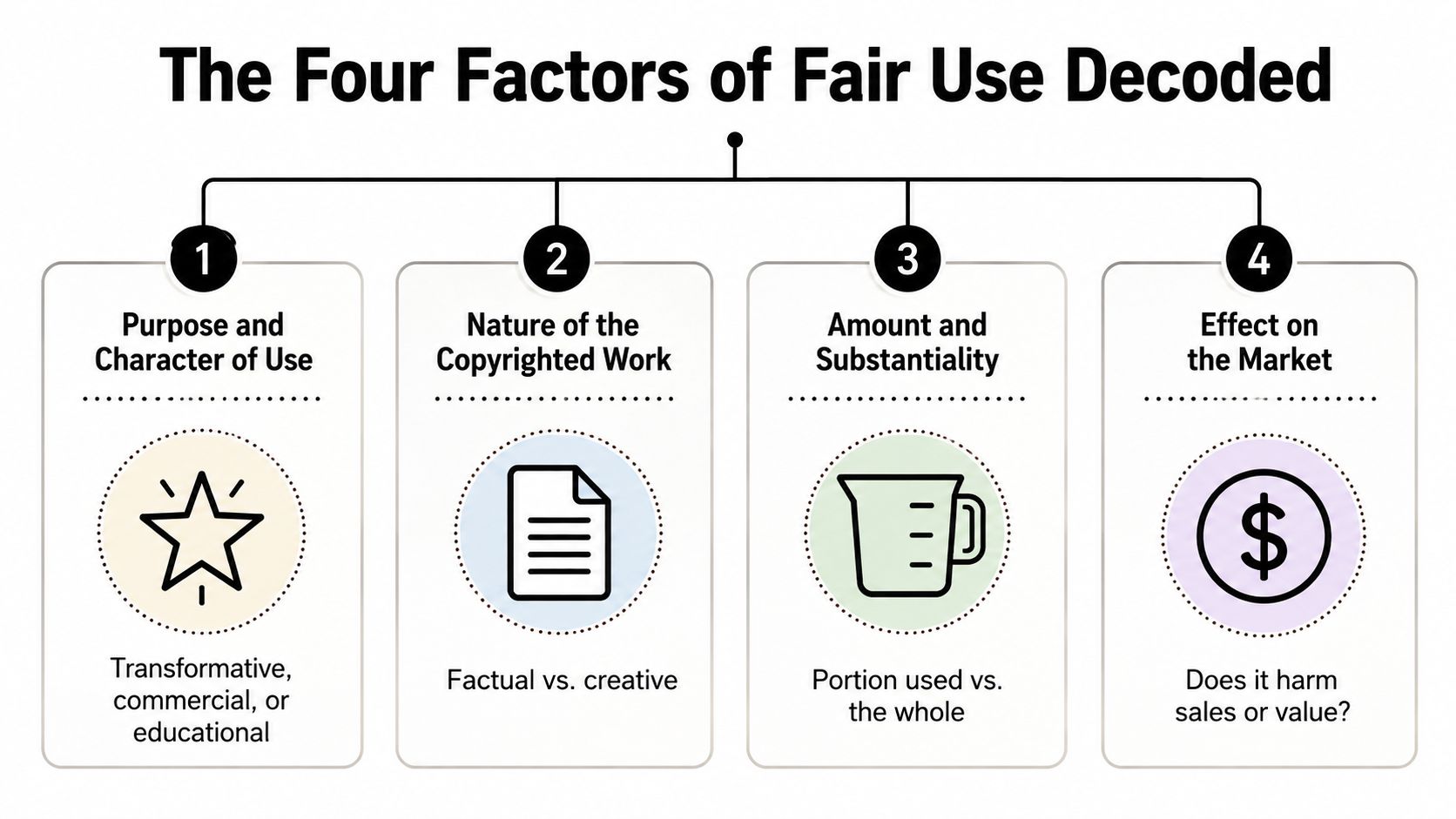 A diagram outlining the four legal factors used to determine fair use of copyrighted material.
Purpose and character
Ask what your track is doing with the borrowed material. A parody changes the target or meaning of the original. A criticism track may quote a phrase to analyze it. A commercial release, by contrast, creates more resistance because profit weighs against the defense, although commercial use doesn't automatically end the inquiry.
The important word is transformative. Your new work should add a distinct purpose, message, or meaning. Replacing a song's singer with an insulting rapper while preserving the same hook may look more like substitution than commentary. Using a small recognizable phrase to expose the target's hypocrisy, then surrounding it with original writing, presents a different argument.
Nature of the work
Lyrics are highly creative expression. That gives them stronger protection than material built mainly from facts, dates, or ordinary information. A battle rapper therefore starts from a more difficult position when borrowing from a song than when discussing an objective event mentioned in that song.
This factor rarely decides the case by itself, but it affects the balance. A song's emotional language, unusual metaphor, and memorable phrasing are precisely the elements copyright law tends to protect.
Amount and substantiality
Courts examine both quantity and quality. You might use only a short phrase and still take the “heart” of the work, meaning the part audiences identify most readily. Copying a chorus or signature refrain can create serious risk even if the rest of your track is entirely new.
The question isn't just, “How many words did I use?” It's also, “Did I take the material that gives the original its identity?” A short, ordinary phrase may raise fewer concerns than a distinctive line that carries the song's emotional or commercial value.
Market effect
The final factor asks whether your use could harm the original's sales, licensing opportunities, or value. This is often the most practical danger for a commercial diss track. If listeners can enjoy your version instead of seeking the original, or if your use takes the place of a license for the hook or melody, the argument weakens.
The Copyright Office's summary of Leadsinger v. BMG Music Publishing reflects the same framework. Commercial use is harder to defend, while criticism and parody help only when the new work adds a different purpose or meaning. Treat the factors as connected questions, not four independent boxes you can tick.
How Parody Law Saved Hip-Hop
In 1994, the Supreme Court addressed a question that still matters whenever musicians turn a familiar song into a joke: can a commercial parody qualify as fair use? The case involved 2 Live Crew's parody of Roy Orbison's “Oh, Pretty Woman.” Acuff-Rose Music, which held rights connected to the original, argued that the commercial release should count against the group.
The Court rejected a bright-line approach. In Campbell v. Acuff-Rose Music, decided on March 7, 1994, the Court held that a commercial parody can still qualify as fair use and reaffirmed the four-factor analysis. Selling the work didn't automatically disqualify it.
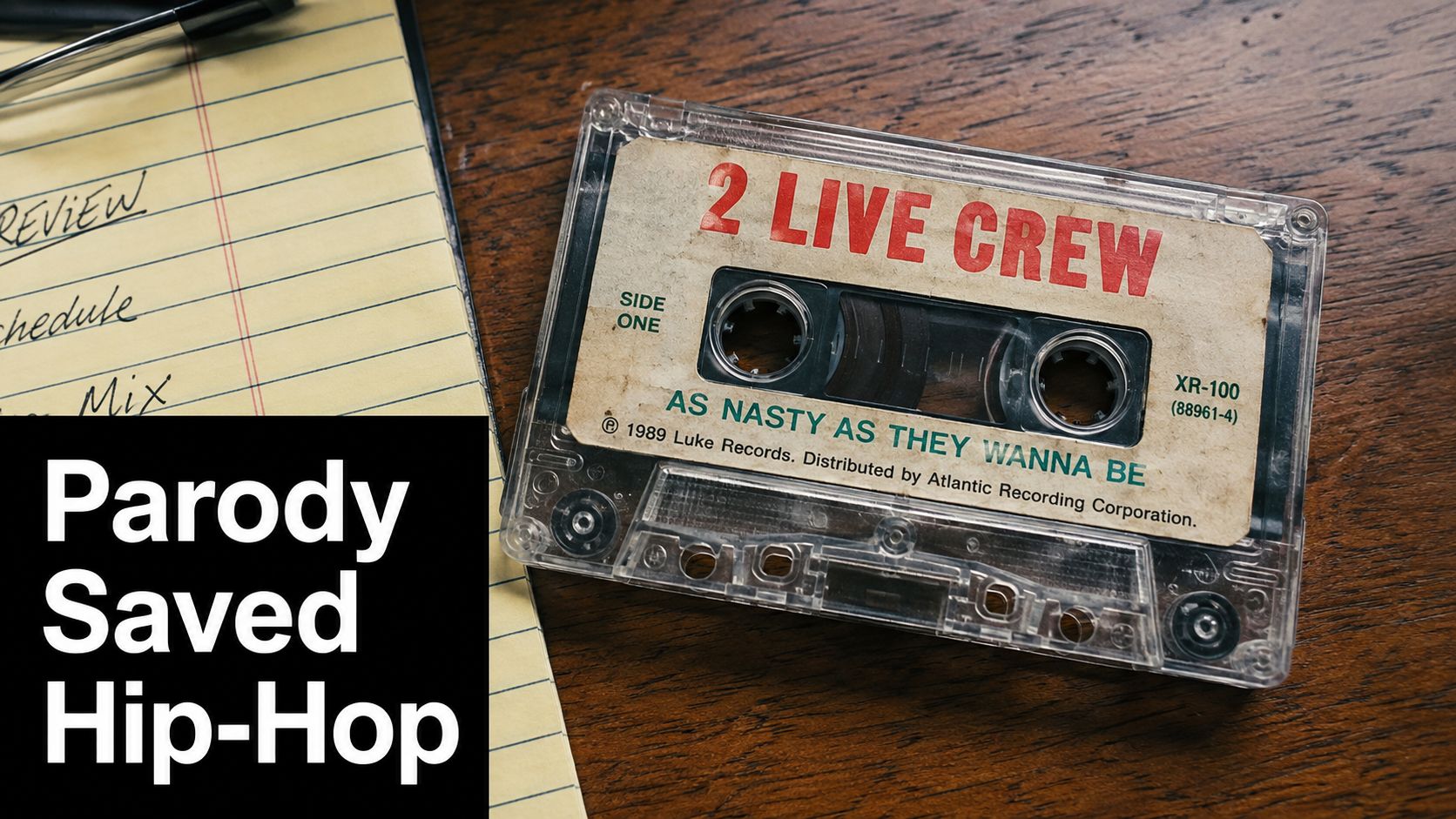 A vintage 2 Live Crew cassette tape resting on a desk next to a notepad.
That ruling matters because parody often needs to evoke the original. If nobody recognizes what you're commenting on, the joke may lose its target. The Court therefore treated the commercial nature of the song as one consideration among several, rather than an automatic loss. Purpose, amount used, and market harm had to be weighed together.
Why the decision matters for diss tracks
A diss track can operate like a musical argument. It may take a familiar cultural reference and turn it against a rival, expose a contradiction, or mock the original message. That kind of transformation gives the creator a plausible fair-use position, especially when the borrowed material is necessary for the audience to understand the criticism.
But parody isn't the same as imitation. A parody comments on the original work itself. A song that uses a familiar melody merely as a convenient vehicle for unrelated insults may be treated differently. The closer your track comes to functioning as a replacement version, the more difficult the defense becomes.
Consider two creative choices. In the first, you quote a distinctive phrase and immediately twist its meaning to criticize the singer's public persona. In the second, you reproduce the chorus, keep the melody, and change only the target's name. The first use has a clearer commentary function. The second may sound like a cover with altered words, which creates a stronger licensing question.
A parody needs a target. If the original song is only decorative, your fair-use argument has less work to do.
The case doesn't guarantee protection for battle rap, and it doesn't bless every musical roast. It gives lyricists an analytical framework and confirms that commercial release alone isn't fatal. That distinction helped preserve room for creative musical expression, but each track still depends on its own facts.
For a concise visual explanation of the case and its significance, this video provides useful context:
The Two-Line Rule and Market Harm Risks
Creators often search for a safe number of lyric lines. There isn't a guaranteed word count under U.S. fair use law. Still, practical industry guidance commonly warns that reproducing more than two lines at a time without permission is generally risky unless the quotation is directly tied to criticism or commentary, as explained in this guide to quoting song lyrics in a book.
Treat that guidance as a caution sign, not a legal shield. Two lines from an obscure verse may raise a different issue than two lines containing the chorus everyone knows. The shorter excerpt can still be the most important part of the song.
A practical lyric audit
Before publishing, examine the track as a rights reviewer would:
- Mark every borrowed word. Include phrases generated by an AI tool, not only text you intentionally pasted.
- Identify the source. If you can recognize the song, assume the rights owner may recognize the use too.
- Ask why the audience needs the quote. Does it support criticism or parody, or does it make the hook catchier?
- Compare the commercial function. Could your track satisfy listeners who might otherwise seek the original or pay for a licensed use?
- Remove anything unnecessary. A reference often survives after the copied wording disappears.
A review video that quotes a line while discussing its writing technique is different from a commercial diss track that lifts the same line and builds a chorus around it. The first use directly analyzes the lyric. The second uses the lyric as entertainment value and may compete with the original's licensing market.
Market substitution is the pressure point
Market harm doesn't require your track to become a chart hit. The question is whether the use takes an opportunity that belongs to the copyright owner. If a label could license the melody, chorus, or lyric for a parody, and your track uses that material without permission, the owner can argue that your release displaced that licensing opportunity.
Promotional packaging can intensify the concern. A social clip that presents your track as “the new version” of a famous song may look more substitutive than a clearly framed commentary piece. If you're planning captions, hooks, or calls to action around the release, resources on hooks, formats, and CTAs for social media can help you make the promotion original without leaning on the source song's wording.
Editing test: If the diss still works after you remove the borrowed lyric, remove it. Keeping the punchline while cutting the legal risk is usually the smarter creative choice.
AI Training and the New Copyright Frontier
An AI-generated diss track raises two separate copyright questions. First, does the output itself copy protected lyrics or other expressive material? Second, did the AI provider lawfully use copyrighted songs as training data? A creator may have a defensible use of an output while the model's training practices remain disputed.
Reuters reported in March 2025 that a federal judge allowed Anthropic to continue using song lyrics in an AI-training dispute, as described in its coverage of the Anthropic music-publishers copyright case. A November 2025 Munich court ruling took a different direction, finding that chatbot memorization and reproduction of copyrighted lyrics violated copyright and required licensing. Those developments show why creators shouldn't treat AI copyright policy as settled or uniform across jurisdictions.
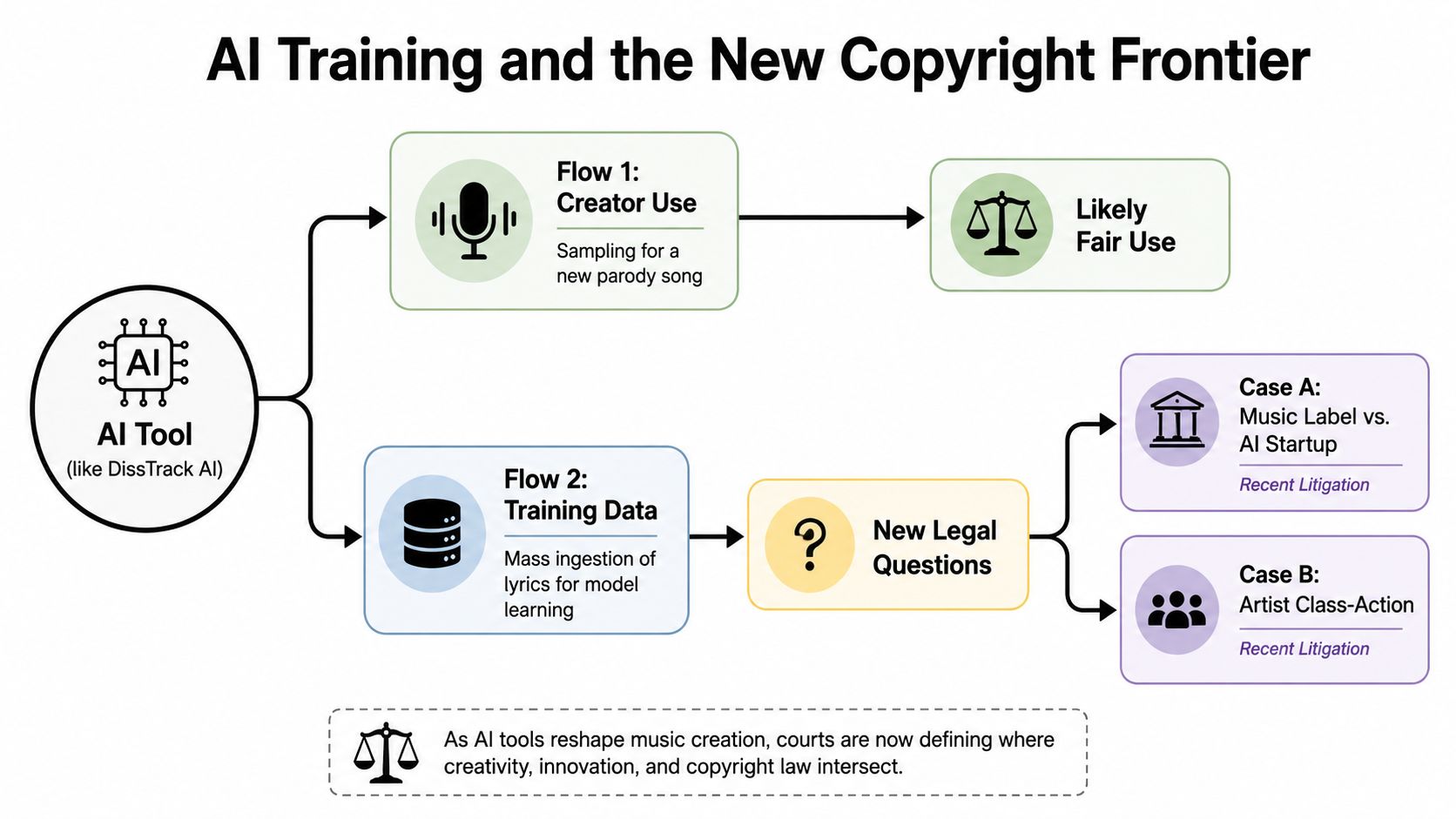 A flowchart diagram illustrating how AI training tools intersect with copyright law through creator use and litigation.
Creator use is not model training
When you prompt an AI system for a new battle verse, you're asking for an output. The provider's training process may involve a much broader dataset, storage architecture, and technical system. Courts may analyze those activities under different legal theories, and a user can't assume that a provider's defense automatically transfers to the user's upload.
The most obvious output risk is memorization. If the model produces a recognizable block of a protected lyric, don't publish it just because the text arrived in a new window. Treat the passage like an unlicensed draft from another songwriter. Delete it, rewrite it, and check the beat and melody separately.
What users should do today
The unsettled litigation doesn't mean every AI-assisted song is unusable. It means you need a human review process. Ask whether the output resembles a specific song, whether the prompt requested imitation or completion, and whether the track contains an existing sample, interpolation, vocal likeness, or melody.
For a focused discussion of publishing AI-assisted music, consult this guide on whether you can publish a song written by AI. Keep records of your prompts and edits, and read the tool's terms before commercial release. Those steps won't guarantee a legal result, but they make your creative decisions more deliberate and easier to explain.
Safe Alternatives and Licensing Strategies
The easiest way to avoid a fair-use fight is to create a track that doesn't need the disputed material. Write an original hook, commission a fresh beat, and use a vocal performance that doesn't reproduce another artist's recording or distinctive delivery. You can still make the target obvious through new wordplay, specific details, and a clear lyrical point of attack.
Licensing becomes the cleaner route when the original song is essential. A cover may require a mechanical license for the underlying musical work, while video uses can raise synchronization rights. Sampling a recording can involve separate permissions from the sound-recording owner and the musical-work owner. The exact permissions depend on what you use and where you release it, so don't assume one clearance covers every element.
Build a low-risk track
Use this decision path before release:
- Original composition: Start with a melody and chord progression you created or commissioned.
- Cleared production: Confirm that the beat license covers your intended release, monetization, and promotional uses.
- Public-domain material: Verify that the specific work and arrangement are free to use. A modern recording of older material may still carry separate rights.
- Minimal quotation: If criticism requires a lyric excerpt, use only what you need and place direct commentary around it.
- Human revision: Rewrite AI output that sounds close to a known song, then check the entire recording rather than only the written words.
A rights audit should also include the marketing. Captions, thumbnails, reaction clips, and short-form videos can introduce copyrighted music even when the main diss track is original. If revenue, sponsorship, or a label release is involved, get advice from a qualified music lawyer before publication.
For a clearer explanation of ownership, licensing income, and payment streams, this royalties guide for musicians offers useful background. And if you need professionally prepared lyrical material rather than an improvised quote, review the options for purchasing song lyrics, then confirm the supplied rights before using the work commercially.
The strongest safe-harbor strategy is creative rather than bureaucratic: make the joke yours. Reference the song without reproducing it, use an original melody, avoid prompts that request exact completion, and remove any output that sounds memorized. Fair use can support a sharp parody, but a clean original track gives you more control and fewer uncomfortable calls from rights owners.
DissTrack AI generates personalized roast lyrics from a target, relationship, inside jokes, and style preferences, giving you original material to edit instead of relying on borrowed hooks. Visit DissTrack AI, review every output for recognizable lyrics or melodies, and turn the raw bars into a track that sounds like your voice.